



GRAND RAPIDS, Mich. — The shooting death of Da-Quain Johnson, a Grand Rapids man, has again prompted discussion on how officer-involved shootings are handled in the city.
If an officer with the Grand Rapids Police Department fires their gun and injures or kills another person, a series of protocols are triggered.
In most cases, the officer is placed on administrative leave, Michigan State Police investigates the case and the Kent County Prosecutor decides whether the officer's actions were deserving of a criminal prosecution. The same holds true for when there are multiple GRPD officers involved in a shooting.
Still, there variables in this process, too, including whether GRPD releases video from the shooting, the speed at which this video is released and also the speed of the prosecutor's charging decision.
Da-Quain Johnson
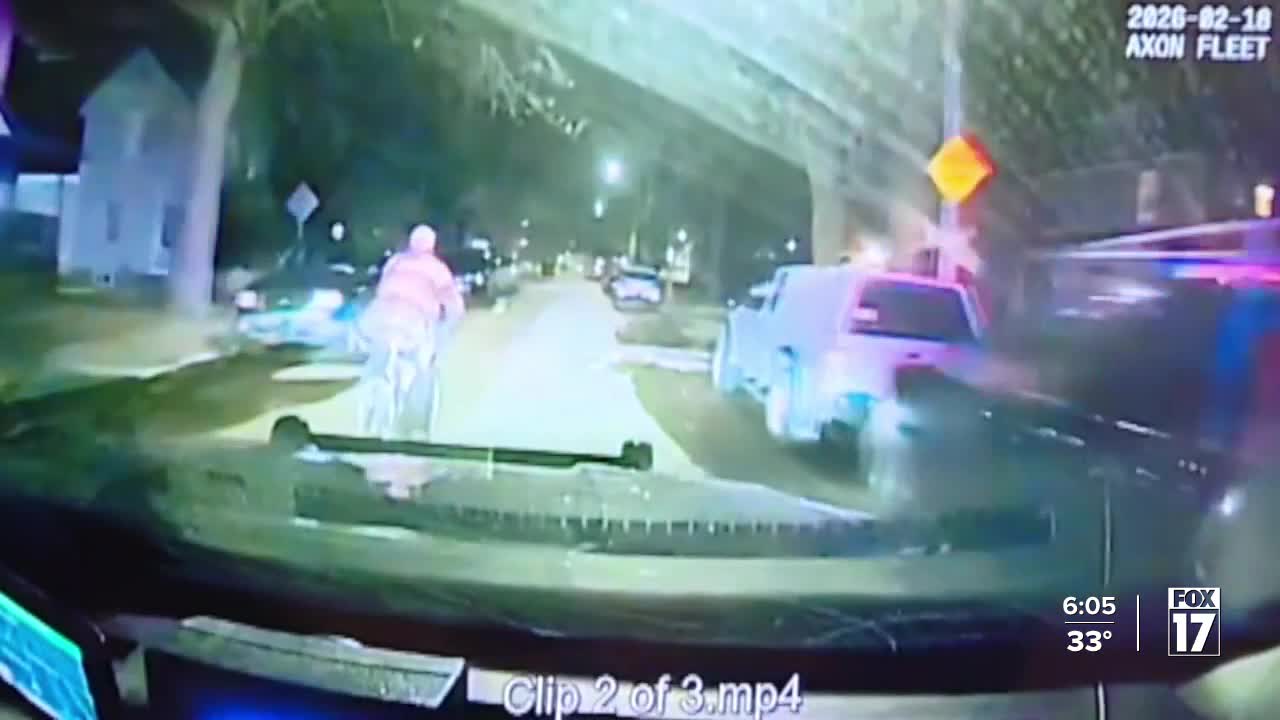
On Wednesday, February 18, 32-year-old Da-Quain Johnson was fatally shot by a Grand Rapids police officer in the parking lot of an apartment complex near M.L.K. Jr. Street and Eastern Avenue.
A day later, GRPD released a portion of body and dash camera footage from the shooting and, later that evening, community activists shared an additional angle filmed by a bystander.

Grand Rapids
GRPD releases body, dash camera video from deadly officer-involved shooting
Martin Martinez-Salazar
On Saturday, December 6, 2025, a trio of GRPD officers were involved in the fatal shooting of Martin Martinez-Salazar, a 51-year-old man who reportedly fired a gun at them on Tremont Boulevard.
Two days later on a Monday, the department released body and dash camera video from the shooting.
Around six weeks later, Kent County Prosecutor Chris Becker announced he would not file charges against the officers involved in the incident
"The officers were also justified in attempting to stop Martinez-Salazar as he drove away from his home," Becker said. "They had information that he had threatened his wife with a gun, he was suicidal, and he posed a danger to himself and others that necessitated them taking some sort of action."

Local News
Prosecutor: No charges against GRPD officers involved in deadly shootout
Henry Wymer
On Friday, November 8, 2024, a trio of GRPD officers were involved in the fatal shooting of Henry Wymer, a 38-year-old man who reportedly pointed a gun-shaped object at police near Trinity Health Hospital.
A day later, the department released body and dash camera video from the shooting.
Around six weeks later, Becker said he would not file charges against the officers involved in the incident, citing a precedent for self-defense as defined by state law.
"This is a terrible tragedy," Becker said.
"Clearly, Mr. Wymer had a history of mental health issues. It is extremely difficult to tell if he was in the proper state of mind when he engaged in the behavior he did that night."

Grand Rapids
Man's heartbreaking notes found; no charges issued in officer-involved shooting
Patrick Lyoya
Nearly four years ago, Becker chose to file charges against a GRPD officer in the shooting death of Patrick Lyoya.
On April 4, 2022, the 26-year-old man was shot in the back of the head by Grand Rapids Police Officer Christopher Schurr after the two struggled over Schurr's taser during a traffic stop.
Nine days later, the department released video from the shooting, including body and dash camera footage as well as video from a Ring doorbell and a bystander.
On June 9, more than two months after the deadly shooting, Becker announced his decision in the case, charging Schurr with second-degree murder.
In May 2025, the former officer's criminal trial ended in a mistrial after a jury was unable to reach a unanimous verdict. Becker chose not to retry the case.

Shooting death of Patrick Lyoya
Christopher Schurr will not be retried, prosecutor drops murder charge
What's Next?
When Michigan State Police concludes its investigation into the shooting death of Da'Quain Johnson, the agency will deliver its report to Becker, who will then make his charging decision.
"I think you're probably looking at something a couple weeks down the line," Lew Langham said. "It just depends on how many people [Michigan State Police] has to interview and speak with, including the officers, and any physical evidence that may need to be analyzed."
Langham, who is a retired Michigan State Police detective and a professor emeritus Western Michigan University Cooley Law School says the "biggest issue" isn't how soon the decision will be reached, but what will come with it.
"There's no rush to get this done," he said. "The idea is to get it right."


