

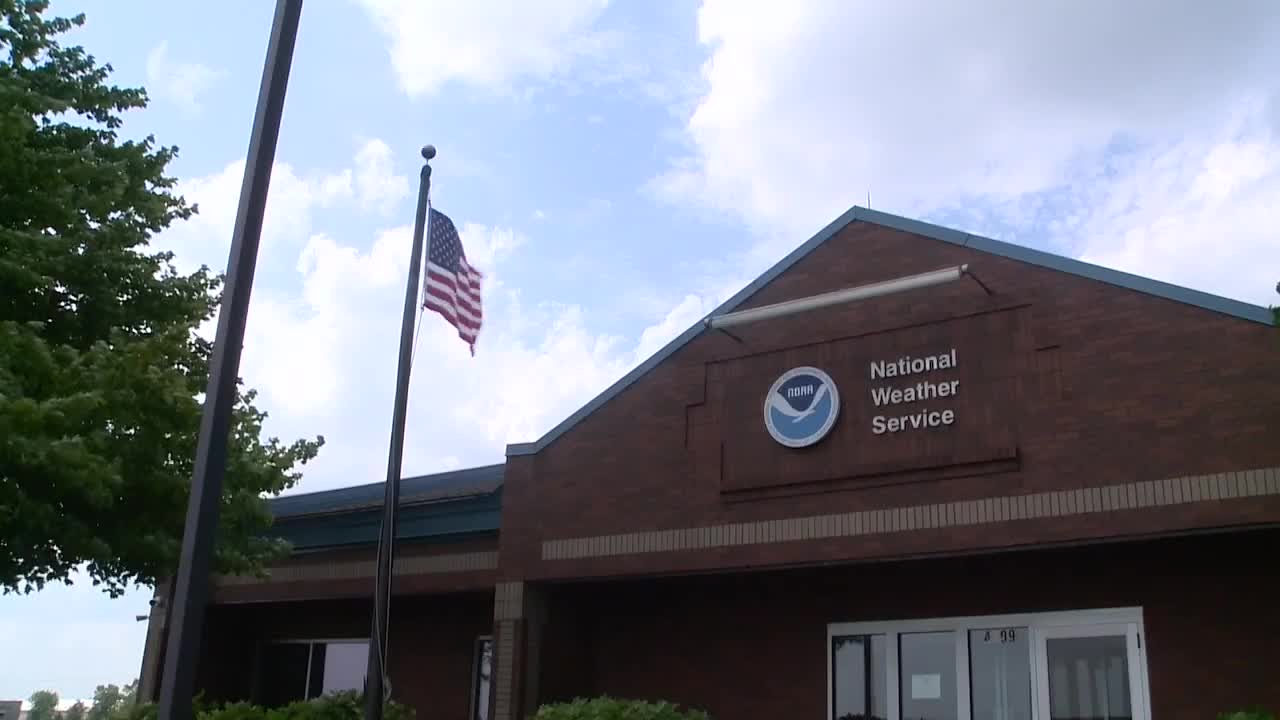


GRAND RAPIDS, Mich. — Heat advisories and warnings from the National Weather Service are triggered when specific criteria are met — much like wind chill advisories in winter — and they exist because heat combined with humidity can have a real, tangible effect on the human body.

Today's Forecast
Tonight's Forecast: Heat wave continues this week
"We talk about heat as the silent killer," said Ernie Ostuno, lead forecaster at the National Weather Service in Grand Rapids.
The saying "it's not the heat, it's the humidity" is more than a figure of speech. For Ostuno, forecasting heat events means thinking beyond radar data and temperature numbers — the impact on public health is always part of the equation.

Kentwood Wyoming Byron Center
West Michigan heat wave: Tips to keep your AC costs low
"It takes a toll on people over several days, so that's what we worry about with these type of events," Ostuno said.
Criteria for heat advisories vary by region. In Grand Rapids, a heat index of 100 degrees is the threshold for an advisory. When that level of heat persists for multiple days, forecasters can escalate to a warning.

Weather Articles
Weather Ready Alert: Severe storms with heat and humidity
"Like two or three days of that, which we're expecting now, then we would bump it up to a warning because of the cumulative effect," Ostuno said.
Overnight lows that stay above the 70s also factor into the danger, as they provide less relief from the daytime heat.
There are also subjective elements forecasters consider. The first major heat wave of a season is more likely to trigger a warning than later events, because the body has not yet had time to adjust.
Regardless of timing or frequency, the combination of heat and humidity poses a real danger — and physical activity in those conditions increases the risk.
"Mostly it's over exerting yourself out there and becoming dehydrated," Ostuno said.
The science behind why humidity matters comes down to how the body cools itself. When sweat evaporates from the skin, it carries heat away with it. In humid conditions, that evaporation slows down.
"It doesn't have as much of a cooling effect, which causes the body to sweat even more. And if you're not drinking a lot of liquids, especially if you're, you know, exerting yourself outside, you become dehydrated very quickly," Ostuno said.
Follow FOX 17: Facebook - X (formerly Twitter) - Instagram - YouTube
