

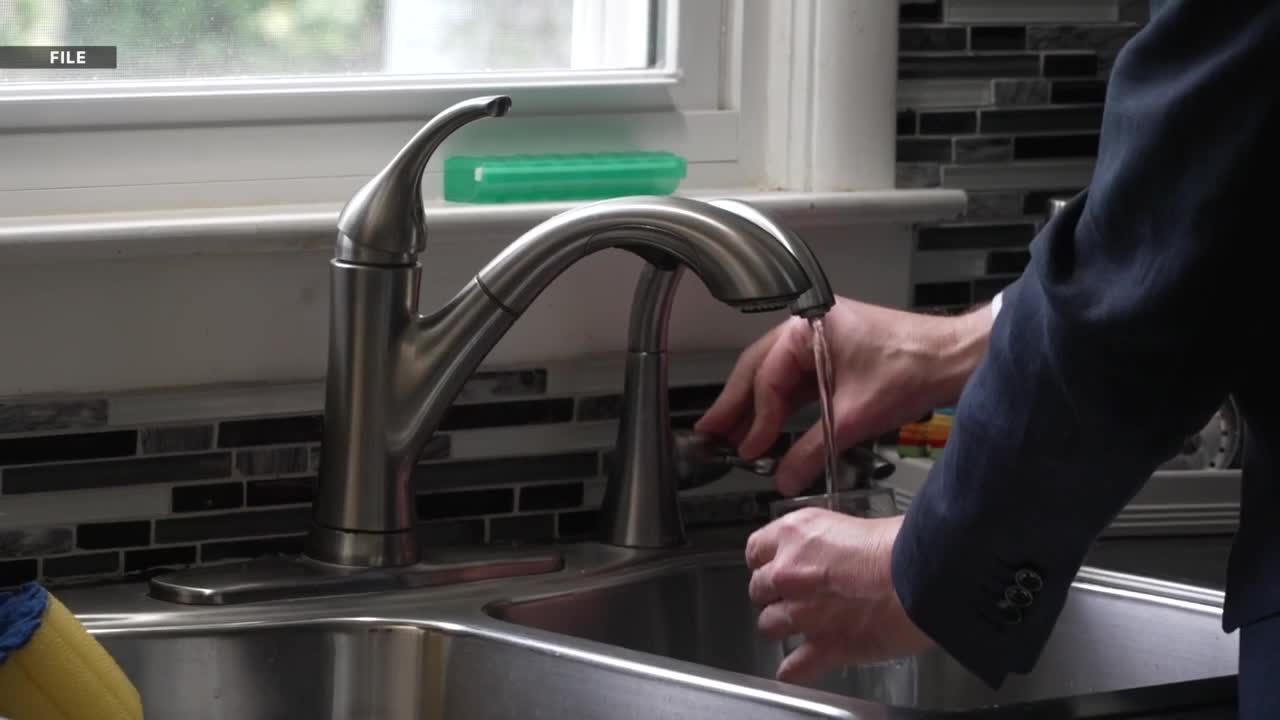


CASCADE TOWNSHIP, Mich. — Some families in Cascade Township are still waiting for answers about their drinking water as state officials continue investigating high levels of PFAS.
PFAS are man-made chemicals linked to long-term health implications including cancer. They are often called "forever chemicals" because they don't break down naturally.
The Michigan Department of Environment, Great Lakes, and Energy (EGLE) has sampled an additional 20 to 30 homes as part of the Aspenwood Drive area investigation. Results from those homes are coming in, and the state health department is contacting neighbors to inform them of their results before sharing them publicly.
In a June update to neighbors, EGLE officials said that more results have come in since their last update in April.
Jeff Marion, a Cascade Township resident, has dealt with PFAS contamination at two properties. His rental property in the Irene and Linda area of interest tested above state drinking water standards in 2023 and is still waiting for city water connection. Fox 17 spoke to Jeff in May after his home in the Aspenwood area tested in exceedance.
For previous coverage, click here.
"This one already took three or four years, so that's giving me a little bit of a preview of what could happen at my other home," Marion said.
Despite the latest update from EGLE, Marion said his feelings haven't changed about the situation.
"It doesn't really change how I feel about it. I at this point want results, and I would like this to be remedied for everyone's health and safety," he said.
State Plans Underground Investigation
State officials are reviewing draft underground maps to determine where groundwater monitoring wells should be installed later this year. EGLE is examining individual drinking water well depths to see where PFAS is located beneath the surface and creating cross-sectional drawings through the sampling area using well log data.
The cross-sectional drawings will help EGLE visualize where PFAS could be flowing underground and determine locations for groundwater monitoring wells to identify potential sources and site-specific groundwater flow directions.
EGLE will meet with local and state health departments within the next two weeks to discuss whether the sampling area should be expanded further.
WATCH THE VIDEO STORY
Neighbors Call for Action Over Investigation
Tom Gottlick, another Cascade Township neighbor who learned about contamination at his home in February, said the focus should be on addressing the problem rather than continuing to search for the source.
For initial coverage on Tom, click here.
"We can see we have a problem here. Now is not the time to find out who, what, where," Gottlick said.
Marion echoed similar concerns about prioritizing solutions over source identification.
"My main goal is to get it resolved, and then it's kind of a secondary concern what the source is," he said.
Funding Challenges Ahead
The City of Grand Rapids originally estimated connecting affected homes to municipal water would cost around $12.5 million. However, EGLE officials said they will work with the city to update that estimate since more homes have been sampled and additional PFAS exceedances have been identified. The state expects to request more than $12.5 million.
EGLE is waiting to see what funding will be available in the next fiscal year's budget. The agency typically submits funding requests through meetings in September and October, with decisions announced by late November or early December.
State officials said federal infrastructure funding has been cut in recent years, and they've been told the current federal budget eliminates primary infrastructure funding sources altogether.
"Realistically, it will be years before a long-term solution is fully in place," EGLE officials said, noting that even if funding is secured, the project must be bid out, engineering work completed, and construction finished during construction season. Municipal water will likely be installed in phases as funding allows.
Township Seeks Additional Funding
Cascade Township Supervisor Grace Lesperance said the township's application for federal funding was not selected this year, but she promised to pursue other possible funding sources.
"There's a federal discretionary fund that we applied to on behalf of the township residents. Unfortunately, we did not receive any money," Lesperance said. "We're going to continue to work with the county, the state, and even federal opportunities too."
Lesperance emphasized the scope of the financial challenge, noting that even if the township allocated all available funds, it would represent only a fraction of the estimated costs.
Health Concerns Persist
The state has provided filters to neighbors whose homes have PFAS-contaminated water, but neighbors remain concerned about continued exposure.
"People are still brushing their teeth and washing with it, giving it to their pets maybe, so that does concern me," Marion said. "My last set of renters had a baby, and I was really, you know, worried about that as well."
Marion has been a Cascade neighbor for 14 years. As a realtor, he says he must disclose the contamination to renters and potential buyers, which could affect property values.
For more information about the Aspenwood Drive area of interest, click here.
This story was initially reported by a journalist and has been converted to this platform with the assistance of AI. Our editorial team verifies all reporting on all platforms for fairness and accuracy.

