

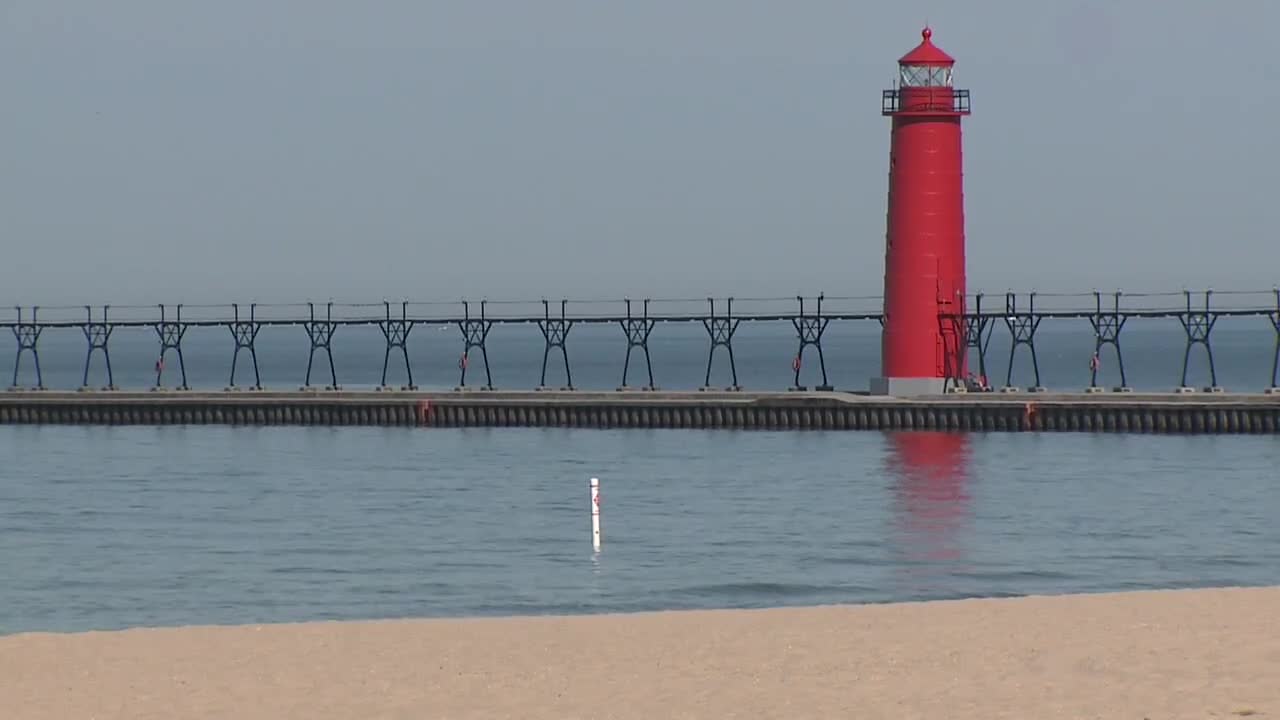



WEST MICHIGAN — It's feeling like summer in West Michigan, and many people are heading to the beaches to enjoy the warm weather. However, a quick dip of your toes in the water is a reminder that Lake Michigan is still quite cold, raising the question of whether it's warm enough for a swim yet.
When it comes to your safety, you need to be paying close attention to water temperatures before you dive in.

We’ve been enjoying a stretch of sunny, warm weather across West Michigan for the past week and a half with temperatures in the 70s and 80s.
However, warm air doesn’t mean warm water. Even after several days of summer-like warmth, lakes and rivers can still be cold and potentially dangerous.
As Lake Michigan beaches become increasingly popular destinations heading into the summer season, anyone dipping their toes in the water may quickly notice just how cold it still feels, raising questions about when water temperatures will warm up enough to make swimming safe and comfortable.
The average water temperature across Lake Michigan in early June is around 50°F.
Take a look at the image below at the beach forecast for Wednesday, June 3. Water temperatures along the shore from Muskegon to South Haven are in the 50s, with Grand Haven being a chillier spot in the 40s.
Note that these observations were reported early Wednesday morning, so conditions can and will likely change throughout the day.

Generally light southerly winds will keep wave heights below one foot, creating excellent conditions for boating and fishing.
While it may be tempting to go for a swim on a hot day, the water is still too cold.

Cold water shock and hypothermia can set in within minutes in water below 60°F.
After suddenly entering cold water, you have about one minute to regain control of your breathing and assess the situation. The abrupt temperature change can trigger a "cold shock" response, causing gasping and making it difficult to catch your breath. If breathing is not quickly brought under control, the risk of drowning rises significantly. In some cases, people begin to hyperventilate, lose consciousness, or drown before they are able to recover and steady their breathing.
Once you've regained control of your breathing and assessed your situation, you typically have about 10 minutes during which you can make purposeful movements. As cold water exposure continues, muscle function in your hands, arms, and legs can rapidly deteriorate, making it difficult or impossible to swim. If you're unable to get out of the water within that timeframe, experts recommend conserving energy by remaining as still as possible and assuming the Heat Escape Lessening Position (H.E.L.P.). Excessive movement can accelerate heat loss and drain your energy more quickly.
When going into the water, always remember to wear a life jacket. It won’t keep you warm, but it can keep you afloat until help arrives.
When does swimming season arrive?
While the official beach season runs from Memorial Day to Labor Day, water conditions are still just too cold to swim in at this point in the month.
Water temperatures usually change by around 10 degrees each month. By July, the water warms to the mid 60s to low 70s. The best month for swimming is August, when water temperatures typically peak in the mid-70s.
For now, you can still have a fun beach day on shore, but you’ll have to wait a bit longer before it’s safe to jump in the water.
It's also important to remember that water temperatures in Lake Michigan can change dramatically in a short period of time because of a phenomenon known as upwelling. When persistent east or north winds push warmer surface water away from the shoreline and toward the middle of the lake, much colder water from deeper depths rises to replace it. As a result, nearshore water temperatures can drop by 15 to 30 degrees in as little as a day, turning what felt like comfortable swimming conditions into a much colder and potentially dangerous environment.
Click here for a list of Observations (wind, wave height, water temperature, surface pressure, and air temperature) across all of the Great Lakes.
Want alerts when inconvenient or severe weather is headed your way? Download the FOX 17 Weather app and set up notifications for where you live.
For the latest details on the weather in West Michigan, head to the FOX 17 Weather page.
Follow FOX 17: Facebook - X (formerly Twitter) - Instagram - YouTube
