

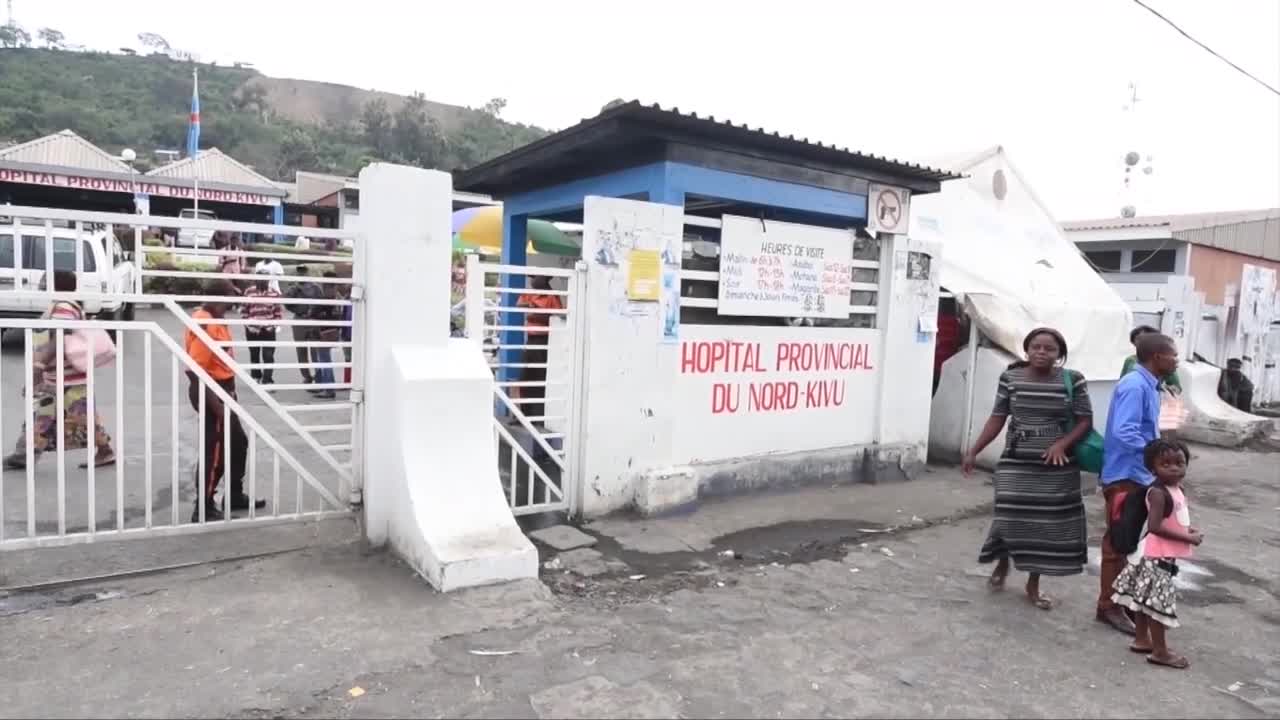



KENT COUNTY, Mich. — Ebola cases are rapidly spreading in Central Africa, but an infectious disease expert says the U.S. public health infrastructure can handle any cases that arrive here.
The Ebola outbreak in Central Africa has grown to become the third largest in history, raising questions about whether the virus could spread to the United States — especially with World Cup matches upcoming and a plane scare last month in Detroit.

So far, there are no confirmed cases of Ebola in the U.S. Dr. Andrew Jameson, an infectious disease doctor with Trinity Health in Grand Rapids, says the deadly virus has appeared here before, however.
"Back in 2014... mid 2000s we actually had some cases that happened here with healthcare workers that got infected from caring, caring for people that came back with Ebola," Jameson said.
The latest outbreak is spreading in parts of the Democratic Republic of Congo and Uganda. Jameson explained how the virus is transmitted.
"Ebola virus is close person to person contact, and it's contact with those bodily fluids, and it can be blood, it can be urine, it can be stool, it can be saliva, it can be tears," Jameson said.
The incubation period adds to the challenge of containing the virus.
"The incubation period's a little bit shorter, so typically about 21 days is where everyone who gets exposed will start developing symptoms, but the symptoms are so vague early on that you don't always know it's going to be Ebola virus," Jameson said.
Efforts to contain the outbreak are complicated by weak healthcare infrastructure, ongoing political conflict, and a slow start to diagnosing the most recent strain — the Bundibugyo virus.
"It's less dangerous than the more common one, but the treatments don't exist, vaccines don't exist, and diagnostics are much more challenging," Jameson said.
Certain traditional burial practices may also be increasing the spread.
The World Health Organization has declared the outbreak a public health emergency, but the global risk remains low. Jameson said he does not expect a significant outbreak to occur in the U.S.
"The cases are skyrocketing, so I do think it's very possible we're going to have cases that spill in the US. It will not spread significantly because of our public health infrastructure and our ability to protect healthcare workers and family," Jameson said.
He added that the greater concern lies elsewhere.
"This is one of those times when the risk is not significant to the United States, but the risk to that community in Congo is huge," Jameson said.
Along with enhanced public health screening, travel restrictions are in place for certain travelers coming to the US from affected areas in Africa.
This story was reported on-air by a journalist and has been converted to this platform with the assistance of AI. Our editorial team verifies all reporting on all platforms for fairness and accuracy.
Read more stories from the FOX 17 Morning News team
Do you have an idea for the Morning News team or maybe an idea for a guest segment or something for the gang to come out and try? Send them an email at mornings@fox17online.com or call 616-447-5252 and leave a message.
Follow FOX 17: Facebook - X (formerly Twitter) - Instagram - YouTube
