




BATTLE CREEK, Mich. — Downtown Battle Creek holds an ugly chapter of American history, made beautiful through art.
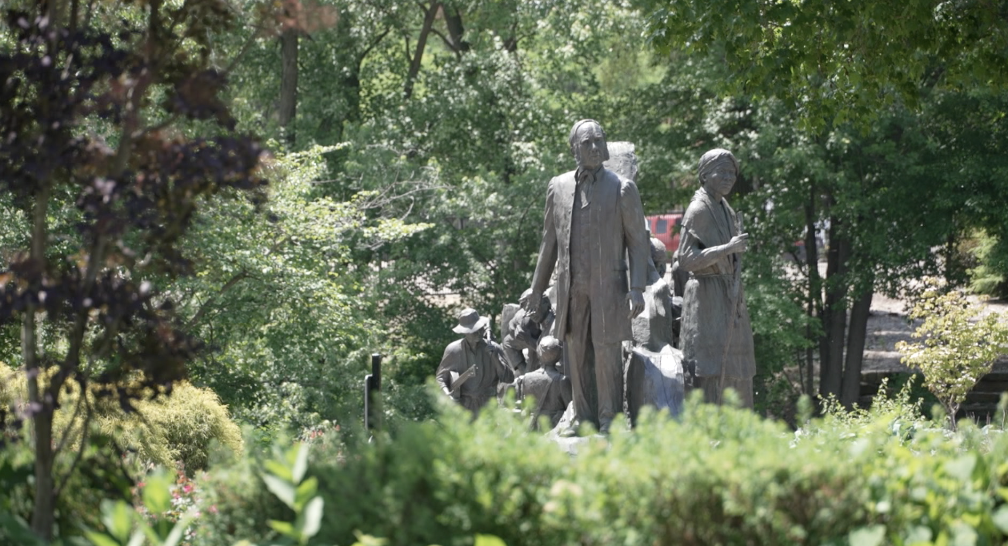
A sculpture marks the intersection of art and history in the city, and it is recognized as the largest Underground Railroad monument in the country.
"It's a sorry sad piece of history, but it's very true," Donna Rickman said.
Rickman, a former public school teacher and Sojourner Truth re-enactor, has spent many hours in the archives learning about Battle Creek's connection to the Underground Railroad.
The Underground Railroad was the secret network that helped Black people escape slavery in the South. People used code words, traveled at night, and moved north guided by the stars instead of a map.
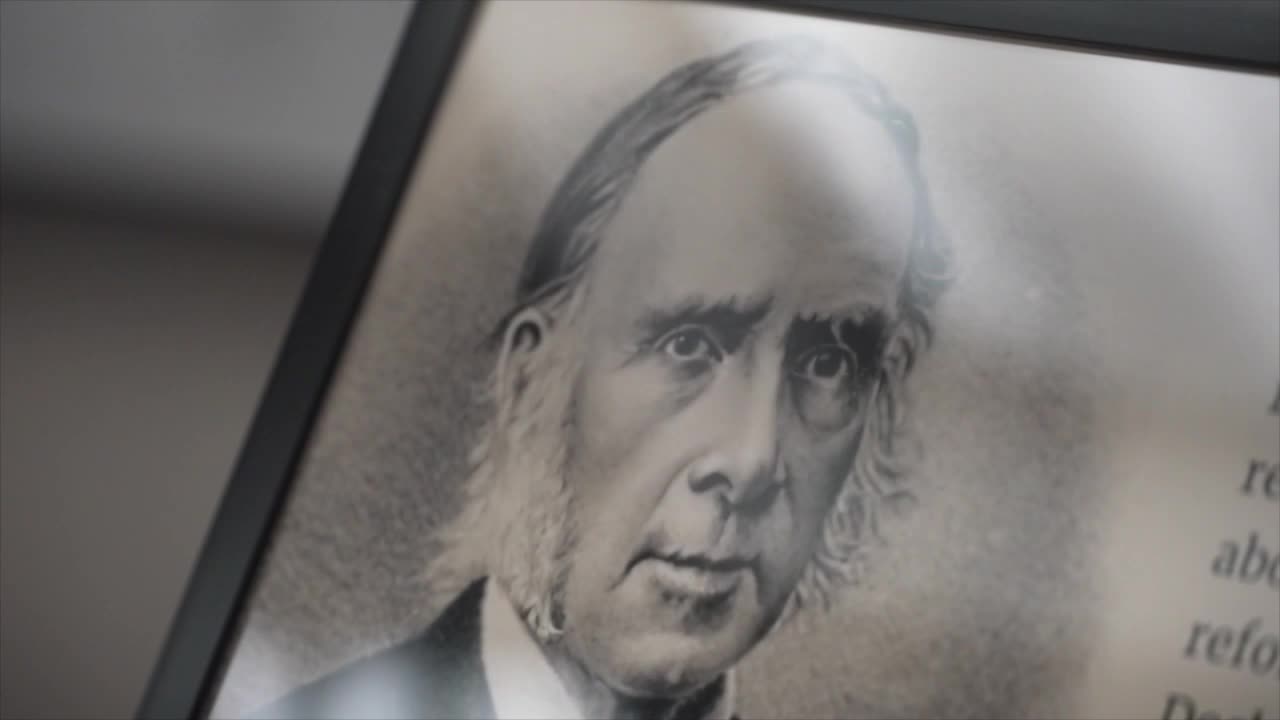
At the Willard Public Library, Mack McCullough talked with me about Erastus Hussey, a prominent abolitionist that called Battle Creek home. Hussey was also was the editor for a newspaper.

"The Liberty Press. Which had a short life here, before it was burned down," Mack McCullough said.
McCullough explained to me that Hussey was the owner of a dry goods store. He was risking his livelihood in order to help people find their way to freedom.
"He was really putting it all at risk, to do what he saw as the right thing to do. He helped hundreds of people escape slavery, through Battle Creek," McCullough said.
A file at the Battle Creek City Archives offers a closer look at just how significant the local station was.
Watch: Battle Creek's hidden history: The Underground Railroad network that helped hundreds escape slavery
"It also says no fugitive slave was ever retaken from the Battle Creek station. It does say, however, there were times of great alarm, rumors of impending attack by armed slave owners were not infrequent," I said, reading from the file.
Donna Rickman reflected with me on the scope of the network and the people who built it.
"It's really amazing who was called on to get that network together. And the seven different routes in Michigan, alone," Rickman said.
When asked whether the history is a testament to the human spirit, Rickman offered a more measured response.
"Yeah. But it makes you wonder what spirit. For that time. I mean, I guess if you say for those who were willing to risk their lives, to try to save others—yeah. But for those who sat back, and just wanted to whip that chain, and kill another….because, they weren't thought of as human beings," Rickman said.
As America celebrates its 250th birthday, the history of the Underground Railroad serves as a solemn reminder that in those first 89 years, not all Americans were free. Juneteenth, which marks the day all enslaved people were freed, turns 161 years old this year.
McCullough offered perspective on who drove the Underground Railroad movement.
"The underground railroad was not generally run by Black people. It was run by white people, who were committed to this idea that slavery was odious. It was unacceptable," McCullough said.
"It was, again, simply the right thing to do," McCullough said.
This story was reported on-air by a journalist and has been converted to this platform with the assistance of AI. Our editorial team verifies all reporting on all platforms for fairness and accuracy.
