

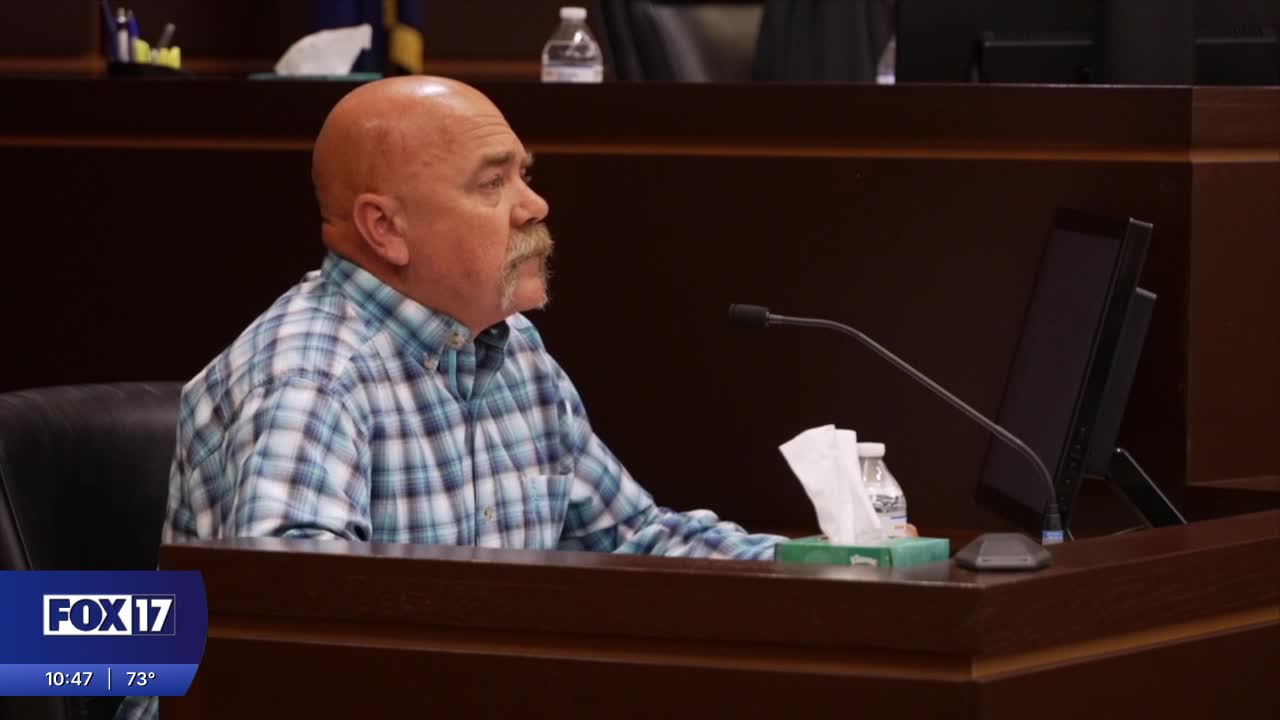


GRAND HAVEN, Mich. — An Ottawa County judge is deciding whether a proposed utility-scale solar project can move forward after hearing hours of testimony over a key question: Did the developer properly notify a local farming family before a critical deadline?
WATCH: Ottawa County judge weighs future of Silver Maple Solar project in dispute with farming family
RWE Solar Development says it properly exercised its option agreements with the Smallegan family before a Nov. 19, 2025 deadline, giving the company the right to move forward with its proposed Silver Maple Solar Farm project. Members of the Smallegan family argue they never received the notices required to activate those agreements.
The dispute centers on about 562.8 acres owned by members of the Smallegan family. According to court filings, those properties make up roughly 30% of the acreage planned for the proposed 200-megawatt project, which would span 1,900 acres in Zeeland and Jamestown townships and generate enough electricity to power more than 34,000 homes.
The company argues the disputed acreage is critical to the project and that losing it would significantly reduce the project's planned generating capacity.
A disagreement over a 2020 agreement
The conflict dates back to 2020, when members of the Smallegan family signed agreements with RWE covering hundreds of acres of farmland. During the five-year option period, the family received annual option payments while the company studied the property.
RWE says the agreements gave the company five years to evaluate the land and the option to later lease it for solar development. The company says it exercised those options before the 2025 deadline.
The Smallegans testified they understood the agreements differently.
“I personally, James M. Smallegan, signed up as the RWE team portrayed in 2020 as a five-year viability study,” James Smallegan testified.
Family members said they believed the project would remain a study unless they later agreed to move forward with solar development.
RWE representative Joseph Brochu testified the company met with the family in March and September 2025 and sought extensions to the agreements.
According to testimony, the Smallegans declined those requests, and RWE says it then moved to exercise its options before the Nov. 19, 2025 deadline.
The central issue: notice
Much of the day-long bench trial focused on whether RWE properly delivered notices exercising the options.
RWE employees testified the notices were prepared in the company's Austin, Texas, office, emailed and sent overnight through FedEx before the Nov. 19, 2025 deadline.
Brochu, RWE's development manager for the Silver Maple Solar project, testified he emailed copies of the notices to the Smallegan Farms email account on Nov. 14, 2025, after informing the family that the company would exercise its options if they declined to extend the agreements.
But Patricia Smallegan and her adult children, James Smallegan and Kristi Smallegan, all testified they never received the notices RWE claims activated the agreements.
James Smallegan testified he never personally saw Brochu's email and said the account was managed by his sister, Sherry Egan.
“If you don't have it, it's not delivered,” James Smallegan testified.
RWE, however, pointed to testimony showing family members discussed project-related emails and ownership questions before the Nov. 19 deadline, arguing they were aware the company was moving to exercise the agreements.
Defense attorney David Delaney argued RWE failed to prove the notices were actually delivered.
“There's a gap here in your delivery aspect. All we know, or all we can believe is that packages sat in a basket in Austin, Texas, on November 13th. That's all we know. There's nothing else after that,” Delaney argued during closing arguments.
RWE attorney Brandon Hubbard countered that the contracts did not require proof the family physically received the paperwork.
“Whether they physically received it or not, under the contract, it doesn't matter because all we have to establish underneath the contract at 10.6 is that we delivered it. Strike that. That we deposited it with FedEx, and once we've deposited it with FedEx, it is deemed delivered and received three days thereafter,” Hubbard said.
Hundreds of thousands of dollars in payments
The hearing also focused on payments sent after RWE says it exercised the options.
Court testimony showed Patricia Smallegan deposited two checks worth more than $140,000 each after RWE says it exercised the agreements.
RWE argued those payments demonstrate the agreements remained in effect.
Patricia Smallegan testified she did not view the checks as confirmation that the project could move forward.
“I still thought we had the option to make that decision yet,” she testified.
James Smallegan testified he accepted payments during the original five-year option period but did not cash larger payments sent after the disputed deadline.
Meanwhile, Kristi Smallegan testified she received a check from RWE but did not cash it.
Daniel Kerkstra's role
Another key witness was Daniel Kerkstra, who is set to become Zeeland Township's next supervisor.
Court testimony showed portions of the original leased property changed ownership after the death of family patriarch Jim Smallegan, eventually leading to ownership transfers involving both Kristi Smallegan and Kerkstra.
Kerkstra testified he was never told the property he purchased in 2025 was connected to RWE's solar agreements.
Court testimony showed RWE later released Kerkstra's property from the proposed solar project after learning he had purchased the parcel from the Smallegan family.
Unlike members of the Smallegan family, however, Kerkstra testified he did receive and open a notice package from RWE.
RWE pointed to that testimony as evidence its notification process was working.
Delaney argued questions surrounding Kerkstra's address and the handling of related paperwork showed why there are still doubts about whether notices were properly delivered to all parties. During testimony, Kerkstra said one notice package was initially sent to a vacant parcel he purchased from the Smallegan family.
Delaney argued that issue highlighted potential flaws in RWE's notification process.
Access dispute also highlighted
The hearing also revisited allegations included in RWE's lawsuit that project contractors were prevented from accessing property after the company exercised the options.
One contractor testified she felt threatened during a confrontation on the property involving James Smallegan and Daniel Kerkstra.
According to her testimony, she recalled hearing: “Trespassing is a good way to get shot. You're lucky we didn't shoot you.”
RWE argues disputes over access have prevented the company from completing surveys and studies needed to keep the project moving forward and is seeking a court order requiring access to the land.
What's next?
By the end of the hearing, Judge Jon Hulsing indicated the case largely comes down to one question: Whether RWE properly delivered the notices required to exercise its options before the Nov. 19, 2025 deadline.
The judge ordered both sides to submit additional legal arguments before issuing a ruling Wednesday.
This story was reported on-air by a journalist and has been converted to this platform with the assistance of AI. Our editorial team verifies all reporting on all platforms for fairness and accuracy.
