

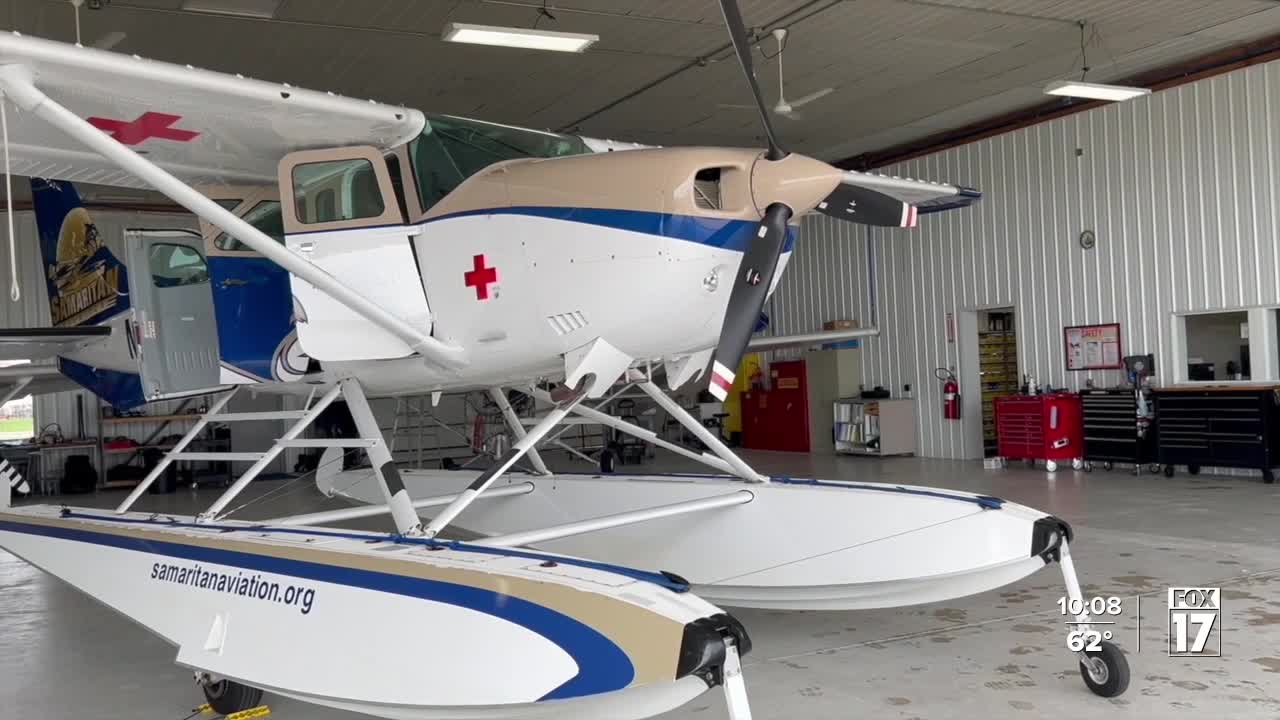


IONIA, Mich. — At the School of Missionary Aviation Technology in Ionia, a float plane is being restored and used to train future pilots. Soon, it will be sent overseas where it will help deliver life-saving care to some of the most remote villages in Papua New Guinea.
“Without Samaritan Aviation there, there is no other option for getting to the hospital faster,” said Case Visser with Samaritan Aviation.
WATCH: Plane that will rescue people in Asia Pacific being restored in Ionia
Visser, a Grand Rapids native and former missionary pilot, says the organization uses float planes to reach communities in isolated regions where access to medical care can take days.
“The people we serve live 1 to 5 days from the hospital, down a 7 mile river,” Visser said.
In many cases, that distance can mean the difference between life and death. Visser says the non profit works to close that gap by dramatically cutting travel time for patients in need.
“We can fly out and we can change what is, on average, a 2 to 3 day trip to the hospital, to a one hour flight,” he said.
The nonprofit currently operates three float planes in Papua New Guinea. The aircraft being worked on in Ionia will soon join that fleet, supporting the group’s expanding mission.
“We’re adding a new base in Papua New Guinea as we speak, where people can’t get to a hospital,” Visser said. “Once that base is fully operational, they’re going to need this airplane.”
Over the next year, the plane will continue to be repaired and used for hands-on training before it is deployed overseas.
According to Visser, Samaritan Aviation transports roughly one patient per day. But for the former missionary pilot, the mission goes beyond the flights themselves.
“To be able to encourage students and people heading that way to make a lifestyle choice of service and missions aviation, I love being able to encourage them,” he said.
From an airport in Ionia County to remote villages across the globe, the impact of this work is far reaching.

