

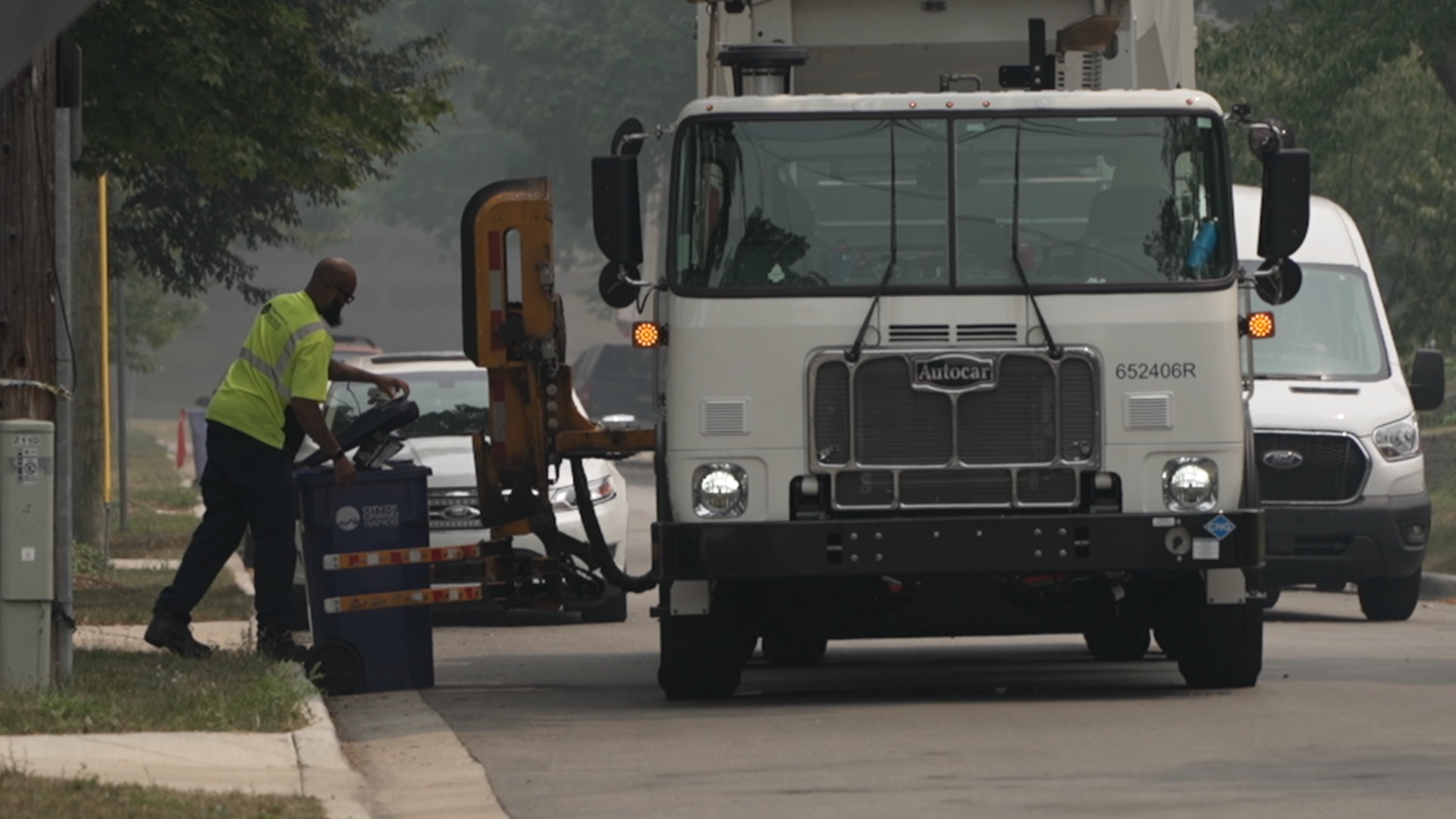


GRAND RAPIDS, Mich. — Outdoor workers in Grand Rapids Thursday faced dangerous air quality conditions.
WATCH: What protections outdoor workers have amid dangerous air quality
The city's air quality index (AQI) reached well over 500 Thursday, far above the U.S. Environmental Protection Agency's threshold of 300, at which point everyone should avoid outdoor activities.
The Grand Rapids Department of Public Works responded by offering workers water and N-95 masks and shortening the amount of time employees spend outside.
"It has been [a challenging week], first the heat, but today added another layer of complexity," Public Works Manager Robert Swain said.
Swain said their street maintenance workers were brought inside around midday, but essential services continued.
"On the trash and recycle side, those are considered essential services, which do have to get done. So, but most of their time is spent inside the truck, so there's limited exposure to the smoke out there," Swain said.
Despite the dangerous conditions, a local employment attorney says Michigan law provides no specific protections for outdoor workers during an air quality event.
"If you don't have an actual disability and you just refuse to work outside in these conditions, then you know you could be subject to termination. Unfortunately, it's it's not fair, but it's not illegal," Rob Howard, a partner at Cunningham Dalman Law Firm, said.
In states that do have protections like California, when the AQI is above 151, employers must inform their workers and provide training, instruction and N95 masks for employees. If the AQI exceeds 500, respiratory protection is required and employers must also implement fit testing and medical evaluation for workers using respirators
In Michigan, Howard says workers with respiratory conditions may have additional options.
"Somebody who's got COPD or asthma, now they may be entitled to additional protections because those could be qualifying disabilities," Howard said.
He added that if employers don't make accommodations for workers with medical conditions then legal action could be taken.
"If you do have a medical condition and the employer doesn't engage in what they call the interactive process, then there are administrative paths through the Michigan Department of Civil Rights or the Equal Employment Opportunity Commission for disability discrimination claims," Howard said.
Swain said the department remains committed to balancing worker safety with community service.
"We have to take some extra steps and find that balance between completing essential city services and taking care of the employees," Swain said.

