

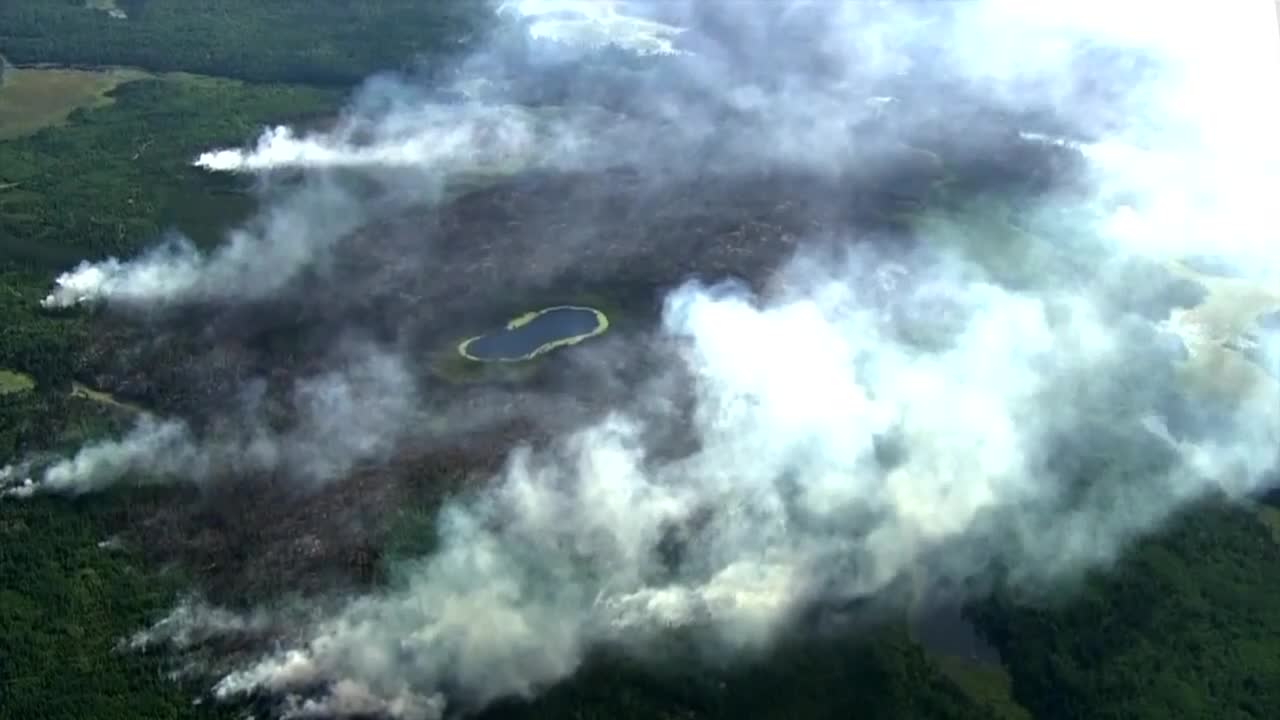


GRAND RAPIDS, Mich. — Nearly 1 million acres are burning across Canada and Minnesota, and the wildfire smoke has made its way into West Michigan over the past couple of days.
Todd Aschenbach, a professor of natural resources and environmental management at Grand Valley State University, says the scale of the fires is massive.
"There's about 55,000 acres in Minnesota currently burning, and about 800,000 acres in Ontario," Aschenbach said. " To put that in perspective, that's a little bit bigger than Kent and Ottawa counties combined," Aschenbach said.
Aschenbach says the fires in Canada are largely a natural occurrence that happens throughout areas in the wild.
"It's dry lightning, basically hitting a flammable source, and no one's there to recognize it until it's moving along," Aschenbach said.
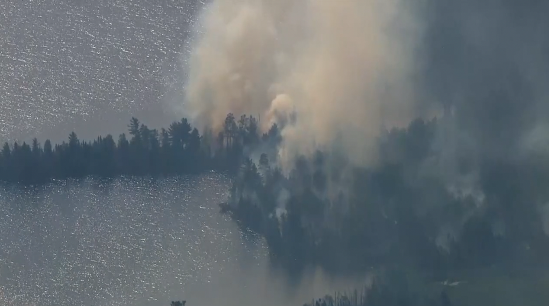
While the smoke is an inconvenience for neighbors across Michigan and other states, Aschenbach says suppressing the fires doesn't make much sense — largely because of where they are burning.
"There's not roads, there's not people around them. It's in the middle of nowhere. And so, unless a fire is risking human life or property, there's not a big reason to go put a bunch of resources into that," Aschenbach said.
The cost of fighting the fires is another major factor.
"It's not a big reason to go put a bunch of resources into that, and when I say resources, there's the economic resources. It's incredibly expensive to fight wildfires," Aschenbach said.
The risk to the firefighters themselves also plays a role in that decision.
"People die fighting wildfires, then there's also the long-term risks of smoke inhalation. Firefighters are breathing in the thick smoke all day, every day, for weeks on end, and they do it over and over again, and so that's one of the reasons, you know, risking firefighter health, right, is something they don't necessarily do," Aschenbach said.
Aschenbach says the problem is likely to get worse over time as global temperatures continue to rise.
"If we have an increase in global temperatures, well, then by default things are hotter. Some places can be not only warmer globally speaking, but then also drier. And so what happens is the fire season starts sooner in the year, and it lasts longer in the year," Aschenbach said.
This story was reported on-air by a journalist and has been converted to this platform with the assistance of AI. Our editorial team verifies all reporting on all platforms for fairness and accuracy.

