

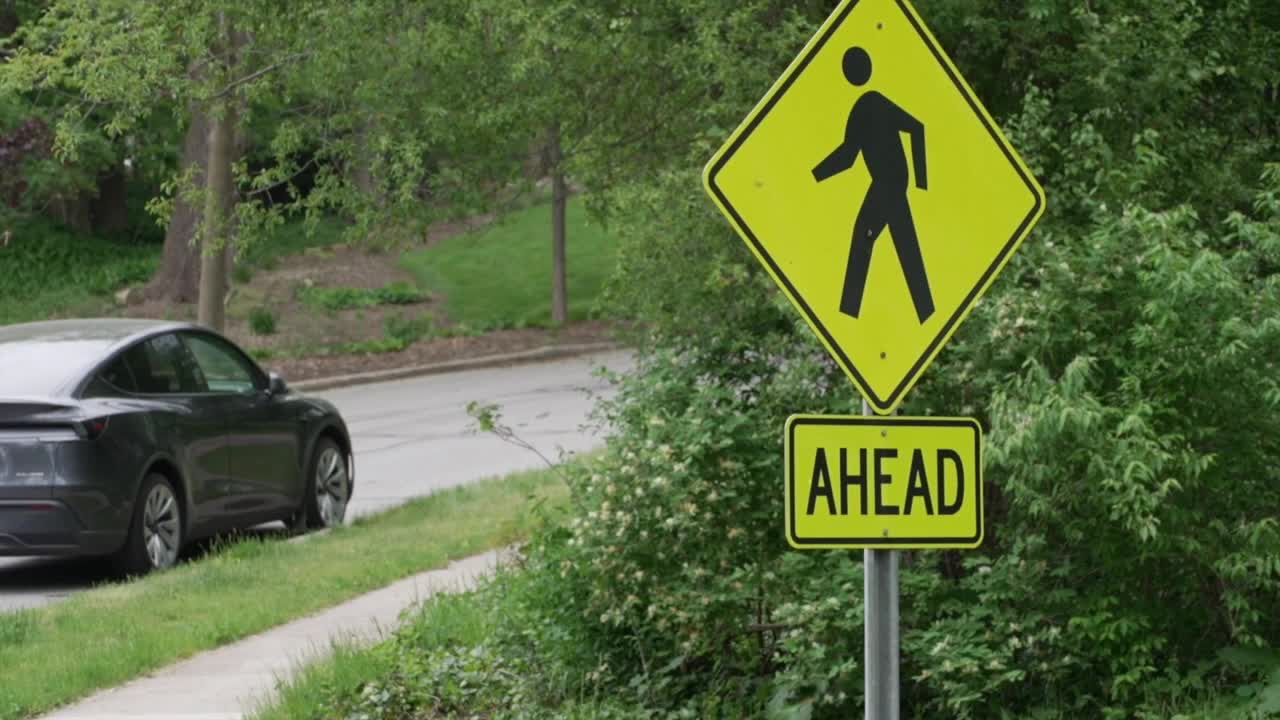


EAST GRAND RAPIDS, Mich. — Neighbors along Reeds Lake Boulevard in East Grand Rapids are pushing back against a proposed sidewalk project, questioning whether federal 'Safe Routes to School' funding is being used where it's needed most.
The sidewalk is part of East Grand Rapids' 'Safe Routes to School' improvements aimed at enhancing student safety throughout the city. The project would add a 5-foot concrete sidewalk along the south side of Reeds Lake Boulevard from El Centro Boulevard to Manhattan Road.
Matt and Jenna Christy, who live along the stretch where the new sidewalk would be built, said they support safety improvements, but believe the city's priorities are misplaced.
"We all want student safety, but I just don't think that this is the way to do it," the couple said.
The Christys, who have five children ranging from 12-to-22-years-old, argue the funding should be directed elsewhere. They've lived in East Grand Rapids for 10 years and currently drive their children to school because they live about a mile from campus.
"We would all prefer that the city concentrate on spending money where it's more needed, closer to the schools, closer to where the near misses and accidents happen," they said.
Project Details and Data
According to city documents, the stretch was chosen because the north shore area lacks pedestrian infrastructure compared to the rest of the community. Currently, Reeds Lake Boulevard has a 5-foot sidewalk only on the north side of the street.
The city cites data from the Grand Valley Metro Council (GVMC) showing this segment has among the highest pedestrian activity in the entire region.
"When we're looking at those types of studies with ped counters and those different things, we can't tell, you know, how tall somebody is or what their age is," La Fave said. "So it's telling us that we have this many pedestrians that are moving through an area."
However, neighbors question whether the pedestrian counts reflect high student usage versus recreational activity.
"I feel like it's a real misuse of government money that was intended to be for getting kids to school safe," Jenna Christy said.
WATCH THE VIDEO STORY
Design Changes Based on Feedback
The project has evolved based on neighbor input over several years. Community feedback about insufficient pedestrian infrastructure in the north shore area dates back to the 2021-2022 Mobility/Bike Action Plan public engagement process.
Neighbors first learned about the specific sidewalk project in 2023. The city's original concept called for a 10-foot shared asphalt pathway, but after engagement with neighbors and property owners, the design was changed to address concerns about existing landscaping and trees in the public right-of-way.
"We didn't stick with the original plan because of the feedback the residents helped us to shape that vision for a future project in a different manner," La Fave said.
Broader Project Scope
The Reeds Lake Boulevard sidewalk is one component of a larger 'Safe Routes to School' initiative. The program also includes sidewalk improvements on the north side of Cascade Road, a refuge island crossing on Cascade Road in partnership with Kent County Road Commission and Grand Rapids Township, connectivity improvements at Manhattan Park, and ADA accessibility upgrades around school campuses.
"It's multifaceted, it is tied together, that's what we're talking about primarily is one piece of the puzzle, but really it's how it all integrates together," La Fave said.
The improvements are designed to connect students who live in Grand Rapids Township but attend East Grand Rapids schools. La Fave noted that about 94% of the city has sidewalks on both sides of streets, making the North Shore area a gap in the pedestrian network.
Ongoing Concerns
Neighbors expressed concerns about property impacts, including tree removal and reduced yard space.
Despite the city's modifications to address neighbor concerns, some feel their voices haven't been fully heard.
"I know that the city has talked to us, but I don't know if it's really, we feel like it's fallen on deaf ears," Jenna Christy said.
When asked about residents' concerns that federal money could have been used in another community that may need it more, La Fave says they followed the program's guidance.
"We apply through the program, we meet the criteria, and if we meet the criteria and are offered an award and accept that, that's really more of an opinion based of they don't necessarily particularly care for that program," La Fave said.
The city commission is scheduled to discuss the Safe Routes at a meeting on Monday evening.
This story was initially reported by a journalist and has been converted to this platform with the assistance of AI. Our editorial team verifies all reporting on all platforms for fairness and accuracy.

