

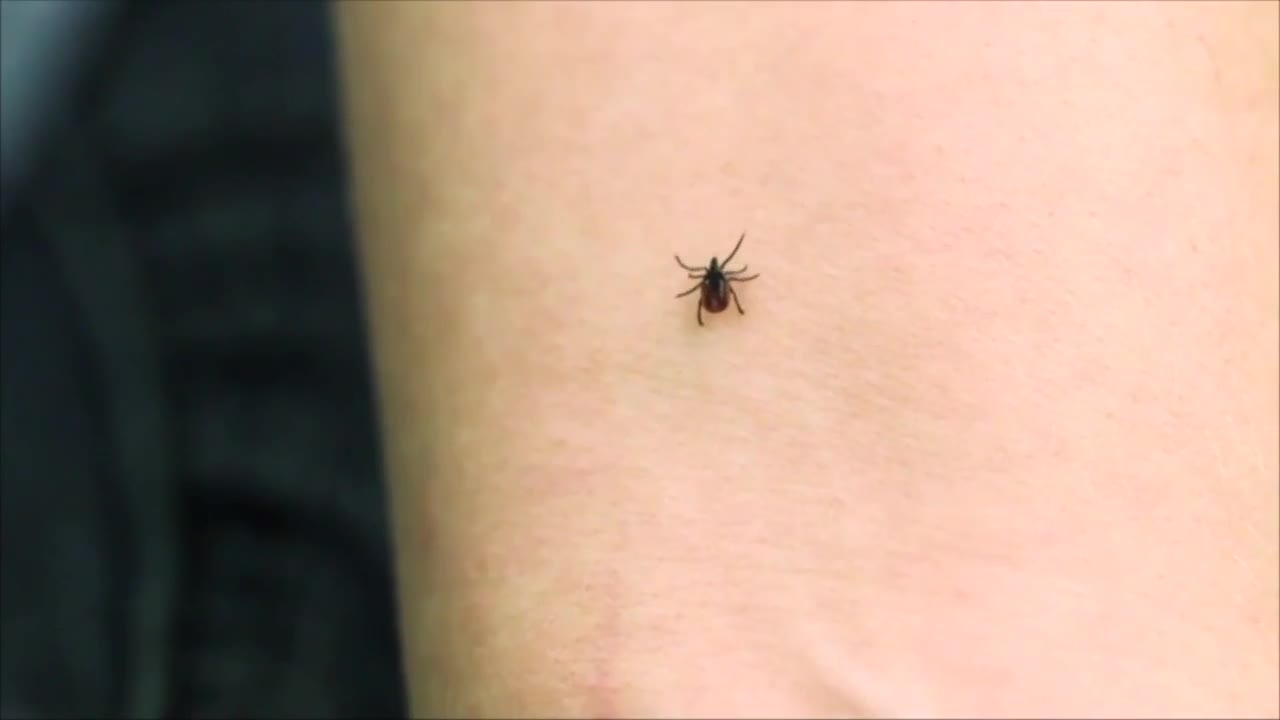



KENT COUNTY, Mich. — Warmer weather brings the welcome return of outdoor activities to Michigan, but it also brings the unwelcome return of ticks.
Ticks become active when temperatures reach 40 degrees and are commonly found in brush and long grasses.
Dr. Andrew Jameson with Trinity Health sees firsthand how the tiny pests can cause serious health problems.
"I always ask people when I'm kind of clinically seeing them, you know, do you like to hike? Do you like to walk outside? Do you like to go places where there's long grasses on the side? Because the ticks can actually kind of like, springboard off the long grass at people," Jameson said.
Black-legged ticks spread Lyme disease, which is a primary concern for those spending time outdoors.
"It can affect the heart, it can affect the brain, it can affect your nervous system. Lyme disease is probably our most significant, because it has that long, lasting aspect," Jameson said.
However, Lyme disease is not the only tick-borne illness to have on your radar.
"Anaplasmosis is the second most common tick borne illness in Michigan. Ehrlichiosis is next, and then something called Babesiosis, or Babesia, is kind of a last one," Jameson said.
"Babesia is interesting because it's kind of like Michigan's malaria. It's a parasite that lives in our red blood cells," Jameson said.
Cases of anaplasmosis, which is caused by dog ticks, are on the rise. The illness causes symptoms like fatigue, body aches, and liver inflammation.
"It doesn't typically have kind of the longer term effects that Lyme disease does, though. So you just get a course of antibiotics for a couple weeks and you're done," Jameson said.
The Lone Star tick is also on the move in Michigan.
"The milder the winter, and the less significant weather we have, and the warmer it gets, they're just moving north," Jameson said.
A bite from a Lone Star tick can cause a permanent food allergy.
"That is the primary cause for something called Alpha- gal syndrome. So it's Alpha galactose... and then we shorten it to a special type of allergy you get to protein that's in red meat and other type of like cow milk products," Jameson said.
To protect yourself and avoid ticks, use insect repellent with DEET. Cover any bare skin by tucking your pants into your socks and your shirt into your pants. After spending time outdoors, always do a tick check.
"Ankles, behind your knees and waistlines, armpits," Jameson explained. "Ticks like to go to warm places that are dark, that it can kind of hide from you."
"If you catch it before it actually is embedded and burrowed in. You can prevent anything," Jameson said.
If you find a tick on you, the best way to remove it is by using tweezers to grab it at the base. If the tick is engorged and you think it has been embedded for longer than 12 hours, call your doctor to get a tick identification.
Jameson said just one dose of antibiotics can help prevent Lyme disease.
This story was reported on-air by a journalist and has been converted to this platform with the assistance of AI. Our editorial team verifies all reporting on all platforms for fairness and accuracy.
Read more stories from the FOX 17 Morning News team
Do you have an idea for the Morning News team or maybe an idea for a guest segment or something for the gang to come out and try? Send them an email at mornings@fox17online.com or call 616-447-5252 and leave a message.
Follow FOX 17: Facebook - X (formerly Twitter) - Instagram - YouTube
