

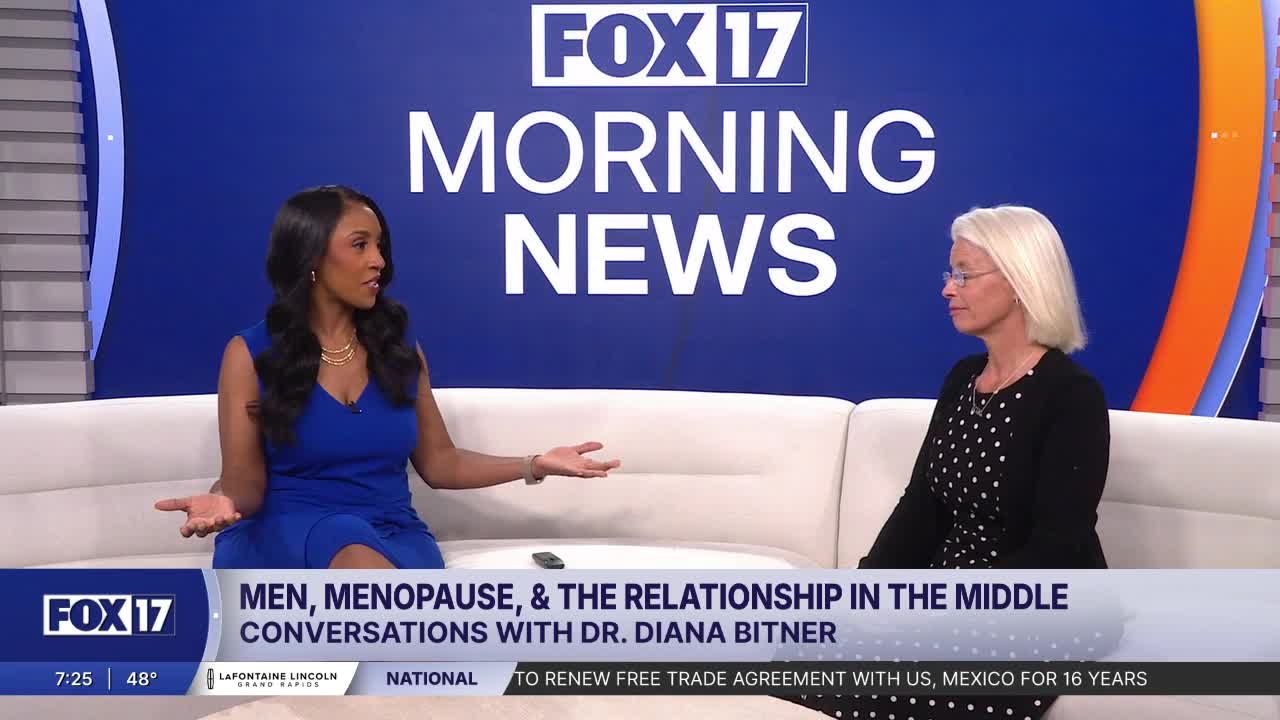

WEST MICHIGAN — Dr. Diana Bitner is the Co-founder of True. Women's Health, and while she usually talks about women's health, June is Men's Health Month. Menopause is a condition that affects women, but it doesn't happen in a vacuum. It happens in a relationship.
What does the research say about the men's experience?
The MATE study was published in 2018 in the Journal Menopause. The survey took men in partnered relationships, and asked which symptoms their partners were experiencing and how it affects their lives. The top 5 symptoms they knew were:
- Sleeplessness
- Low energy
- Less desire for intimacy
- Mood swings
- Hot flashes
When asked why they thought the symptoms were happening, it's thought to be menopause or life stress. 63% of men surveyed say menopause affected them by causing strain, arguments, reduced intimacy and disturbances to sleep. More than half of men didn't know there were treatment options, and the one who did know saw their partners seek care and felt influential in women getting treatment.
Knowledge is key. Studies show 73% of women blame menopause for their marriage breaking. The research also shows when husbands want to learn about their wives, their wives satisfaction goes up. It's not because he fixed anything, but because he understood it.
Menopause can often happen while children grow older and become more independent, both partners are likely to have more job responsibilities, and the couple may be dealing with other aging hurdles. It's also around the time men start having health challenges of their own.
For men, if this is happening to you or the women in your life, it's valid to consider how it's also affecting your health. It can commonly cause:
- Sleep disturbance: if she is hot then you are likely to be cold with open windows or a fan. This can lead to fatigue, weight gain, high blood pressure and less concentration.
- Reduced intimacy and concerns for sexual health: relationship stress, concerns about sexual desirability, increased anxiety and depression.
- Increased stress: feelings of helplessness, caregiver fatigue, and tension in the home.
- Lifestyle changes: affecting exercise activities, travel, diet, alcohol consumption and mental health.
- Changes in everyday flow, meals, rest, activity.
What can men do?
- Learn what perimenopause and menopause are, and learn it from a real source. ask her doctor, and maybe come in for an appointment.
- When she seems irritable or distant, try curiosity before frustration. Ask how she sleeps, and if she needs anything.
- Do not take the low libido personally. Her desire has disappeared because of hormone drops, less sleep, mood changes, weight gain and more.
- Keep physical connection going in ways that aren't about sex, like holding her hand or sitting close.
- Encourage her to get care if she has not. Not because something is wrong with her, but because she deserves to feel like herself again.
Dr. Diana Bitner says the couples navigating menopause well aren't the ones where everything goes smoothly. They're the ones where the husband decides to be on her team. The ones who say "I don't understand this, but I want to."
Menopause isn't the end to intimacy. For couples, when getting through together, it's new and better. Menopause can be a negative for many, but those who get help and go through it together often get closer as a result.
Read more stories from the FOX 17 Morning News team
Do you have an idea for the Morning News team or maybe an idea for a guest segment or something for the gang to come out and try? Send them an email at mornings@fox17online.com or call 616-447-5252 and leave a message.
Follow FOX 17: Facebook - X (formerly Twitter) - Instagram - YouTube
