

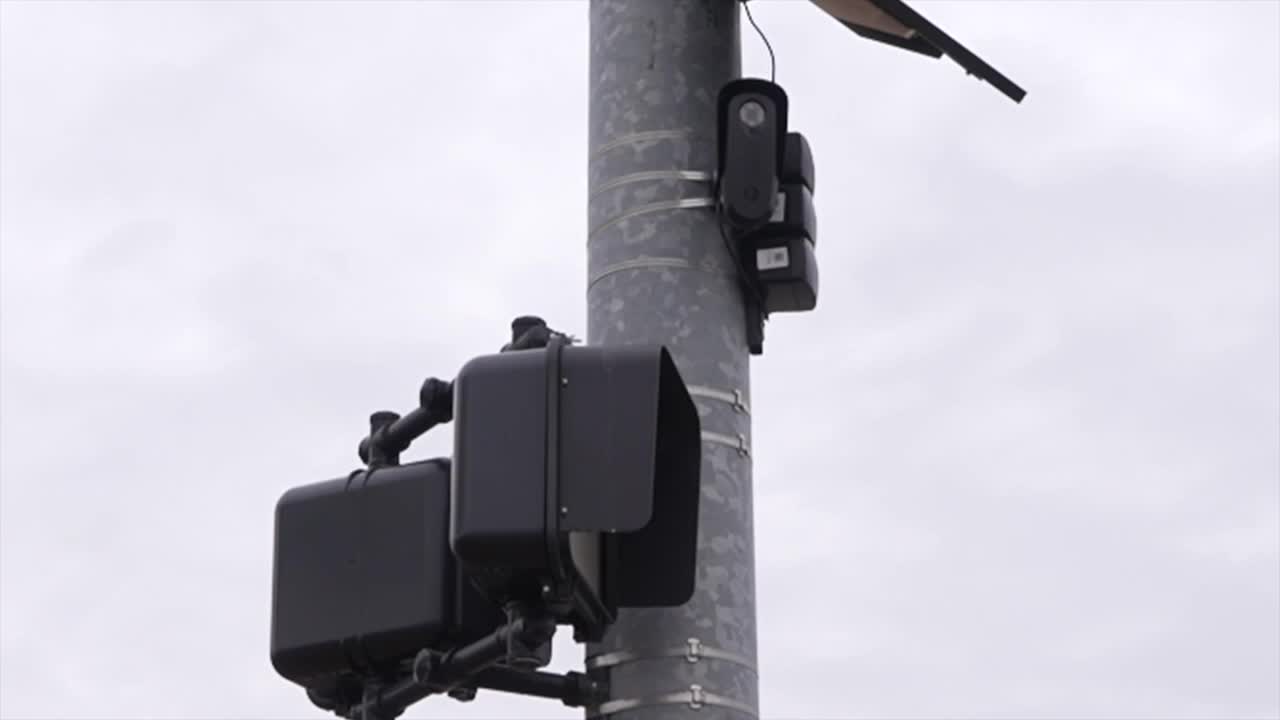


KENTWOOD, Mich. — The Kentwood Police Department is entering its third year using license plate reading cameras, a tool that scans about 3 million plates a month and has led to dozens of arrests, though some neighbors and civil rights advocates are raising privacy concerns.
There are more than 20 cameras set up around the city. I sat down with Kentwood Police Chief Bryan Litwin to find out exactly how they are used.
"We use them in areas that we from our stats and our numbers show like high crime areas or areas that there are high like traffic accidents," Chief Litwin said.
The cameras scan about 3 million license plates a month.
"Last year, just reviewing this, we had 52 successful outcomes that we looked at," Litwin said."We had arrests for assaults, for robberies, for stolen vehicles."

However that concept is not sitting well with some of my neighbors, who did not want to go on camera but told me they do not like the constant oversight. The American Civil Liberties Union of Michigan agrees with those concerns.
"These present serious privacy risks. So the ACLU of Michigan's stance is typically around surveillance technology," said Gabrielle Dresner, policy strategist for ACLU of Michigan. "It's best not to use it. However, if it is going to be used, then guardrails need to be put into place."
The ACLU is fighting to create statewide guidelines through Bi-partisan bills in the Michigan House, including limiting data retention to 14 days, making numbers publicly reported, and ensuring cameras are only used on active criminal investigations or missing persons cases.
"So when we're looking at surveillance technologies, we really need to be careful about what we're implementing and how we're implementing it," Dresner said.
Kentwood police already have similar guardrails in place, Chief Litwin told me. Data is wiped after 30 days, and the cameras only scan license plates.
"It doesn't capture any personal identifying it doesn't take pictures of people. You don't see who the driver is. All you're literally catching is the back of that vehicle and that license plate," Litwin said.
I asked the chief about privacy issues and whether the cameras are invasive.
"It's all tracked. So if an officer is looking for a specific plate, they have to document why. They have to document so they just can't randomly be searching people for no reason. It has to be tied to a crime, some type of investigation, and that's all tracked," Litwin said.

For some neighbors, like Joyce Collier, the cameras are a positive addition to the city.
"it might be safe, it might prevent a lot of mistaken identity, far as police versus civilians, and it'll give them a more of a better view of who they really looking for," Collier said."If you're not involved in any criminal activity, I don't, I don't see how it would be a problem."
This story was reported on-air by a journalist and has been converted to this platform with the assistance of AI. Our editorial team verifies all reporting on all platforms for fairness and accuracy.
