

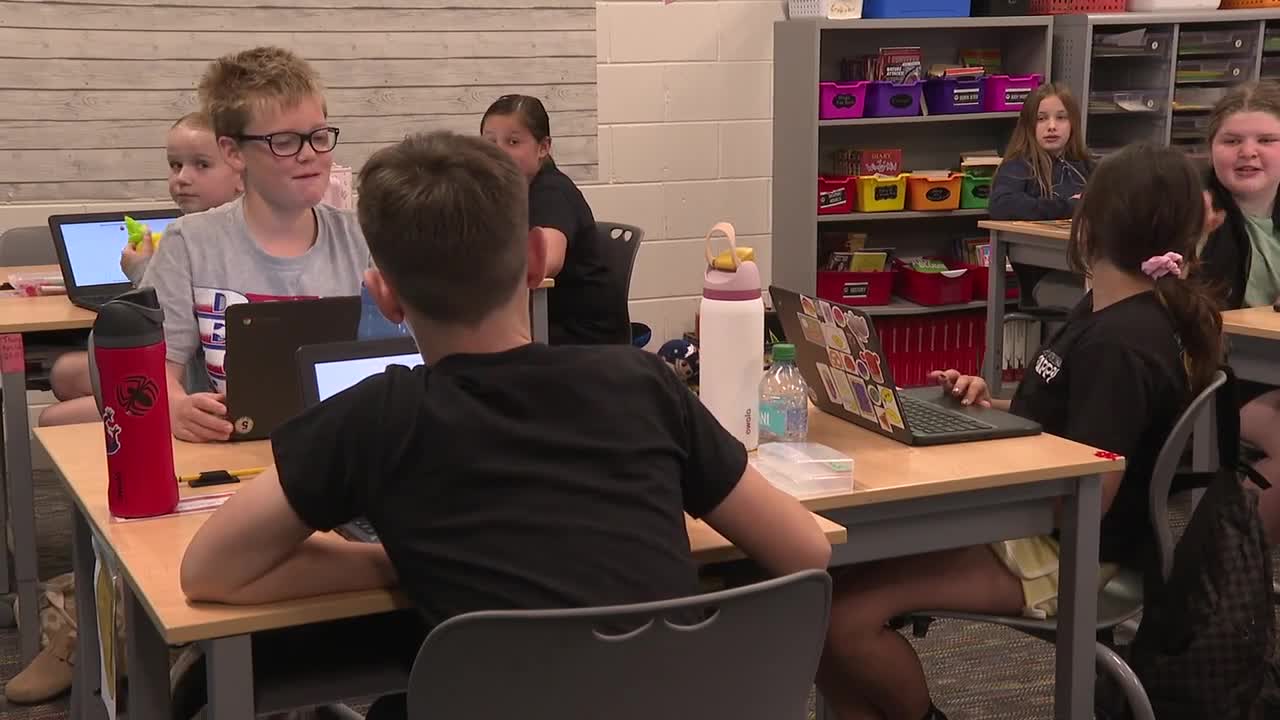


WALKER, Mich. — A group of fourth-grade students at Kenowa Hills' Central Elementary has earned statewide recognition for their innovative AI project, placing first in Michigan out of 2,800 entries in the Presidential AI Challenge.
The students, under the guidance of teacher Jessie Wiercinski, developed an ambitious solution to combat invasive sea lamprey in the Great Lakes. Their project, called "Guardian of the Lakes," features a sophisticated underwater drone design equipped with advanced AI capabilities.
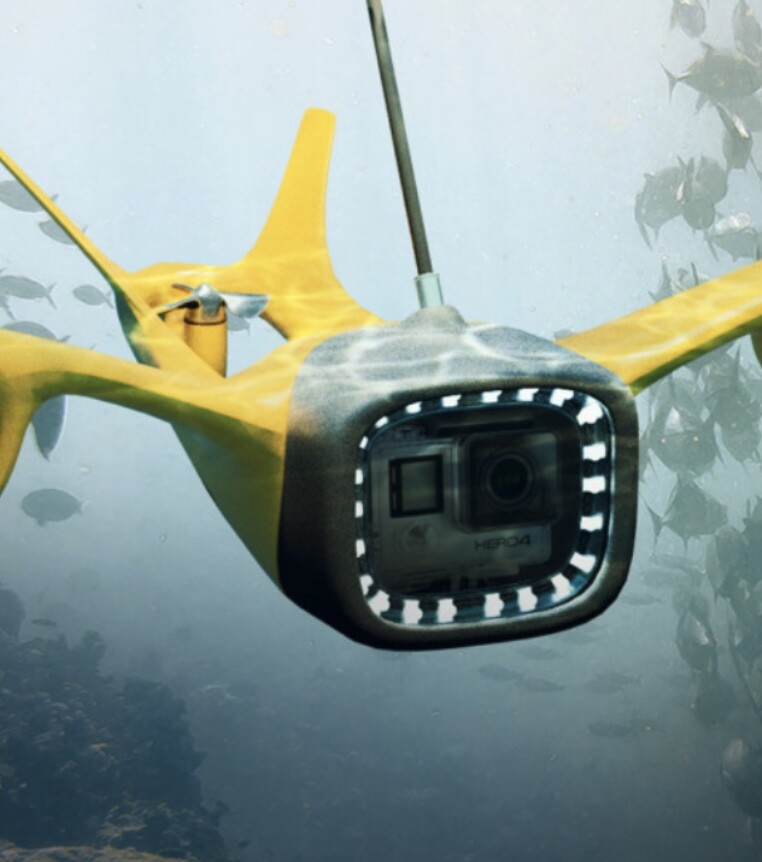
"The drone has silent propellers and can scan the lamprey to look for seven gills to know that it's a lamprey and not a fish," explained Wiercinski, who has been teaching for 20 years but only introduced AI education last year. "Then it can suck it into its vacuum to bring it back to scientists."
The innovative design includes features that impressed judges, such as octopus-like camouflage technology that allows the drone to blend with its surroundings to avoid startling the invasive species.
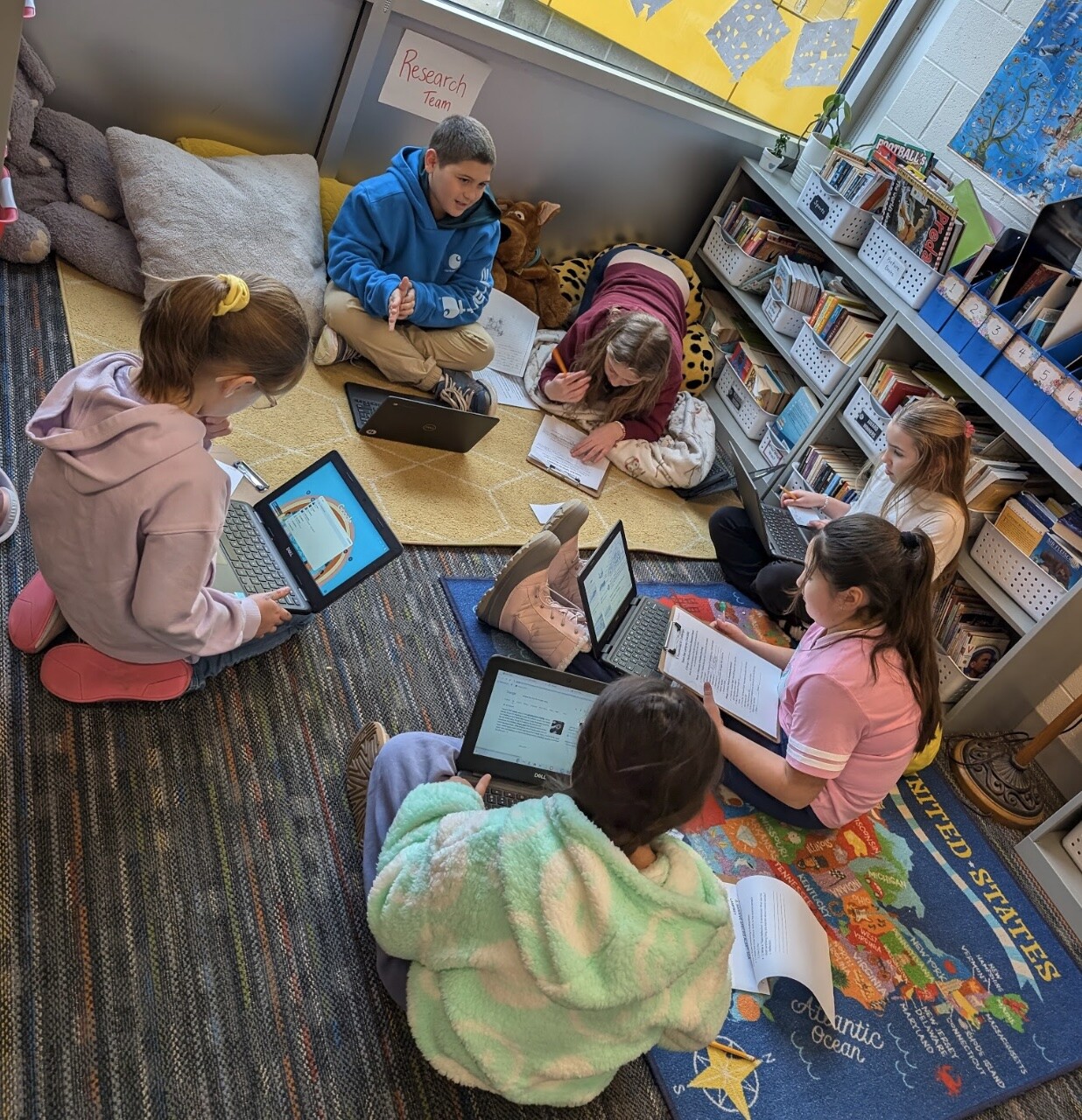
The project began in November when students were assigned to identify local problems during Thanksgiving break. Working as "top secret field agents," they documented issues in their community before narrowing their focus to the Great Lakes' invasive species problem.
The class divided into specialized teams: researchers studied sea lamprey behavior, writers documented their solution, a tech team designed the drone's AI features, and a design team created the presentation materials.
Their success in the state competition has advanced them to the regional level, which took place last Saturday via Zoom. Results for the national regionals will be later this week for the right to compete in the finals in June. The the winning school wins $10,000.
"The kids are really excited," Wiercinski said. "Out of 2,800 entries, we were first in the state of Michigan."
The AI education initiative at Kenowa Hills represents a broader shift in elementary education. Wiercinski, who connects with other educators through an AI ambassadors group with Michigan Virtual, emphasizes responsible AI use from the start.
"It starts with AI literacy, teaching them about data privacy and how AI can hallucinate and not always give you the right response," she explained. Students learn to identify AI-generated content and understand the technology's limitations before using tools like Curipod and Brisk for writing feedback.
The classroom uses AI as a "think partner" rather than a replacement for critical thinking. When students complete writing assignments, they use AI tools for feedback after peer editing and self-checking, then apply the suggestions to improve their work.
"I feel like every sector is using AI in some way, shape or form, and if schools aren't doing it, we're not really preparing them for the future," Wiercinski noted. "My goal is hoping that if I can introduce them early on, then they know how to use it responsibly as they move forward."
The district is developing broader AI policies through a technology committee, recognizing the rapidly evolving nature of artificial intelligence in education.
For these Kenowa Hills students, the Presidential AI Challenge represents more than academic achievement—it's preparation for a future where AI literacy will be as fundamental as traditional reading and writing skills.
This story was initially reported by a journalist and has been converted to this platform with the assistance of AI. Our editorial team verifies all reporting on all platforms for fairness and accuracy.
