

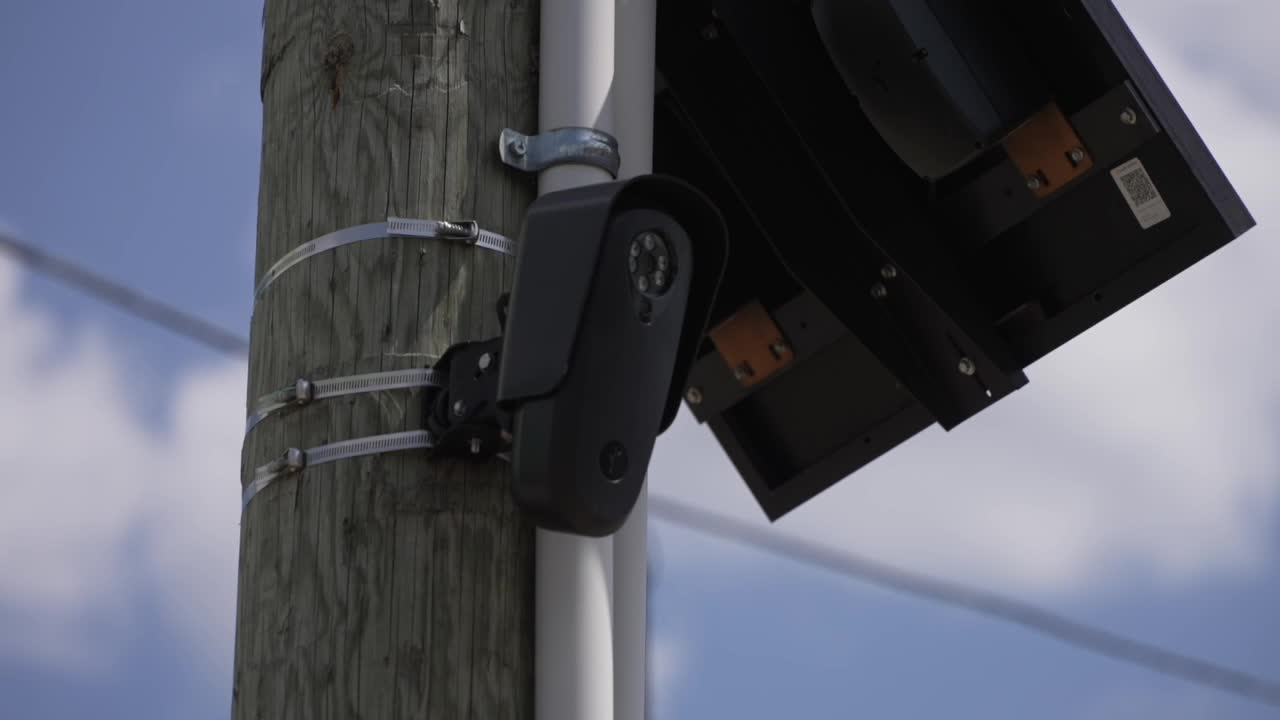


GRAND RAPIDS, Mich. — Legislation recently introduced in Lansing aims to put restrictions on automatic license plate readers — the controversial tool used by police that has led some residents to raise concerns and questions over privacy, oversight and whether the technology violates constitutional rights.
WATCH: Lansing lawmakers propose restrictions on Flock camera use
Under the proposed legislation, law enforcement could only access the Flock database with a signed warrant or during a criminal investigation. Any license plate data would be automatically deleted after 14 days.
The bills were originally introduced in the Republican-led State House by Rep. Douglas Wozniak (R-Shelby Township) in January. By the end of July, a separate version of the bills was introduced in the Senate by Sen. Jim Runestad (R-White Lake Township).
Adam Ardolino, a Grand Rapids resident, said the cameras appeared quickly and without much public notice.
"A lot of these cameras just popped up, and everybody was kind of surprised by it, how fast they came in," Ardolino said.
Ardolino said his concerns center on how much data the cameras collect and how long it is kept.
"Just the data retention and the scale of how much the search does," Ardolino explained. "It's a total invasion of our and a violation of our Fourth Amendment rights."
Lt. Pat Agema with the Michigan State Police said they already have requirements in place for troopers to access license plate reader data and that the cameras are a benefit to public safety, having helped address crimes that would have otherwise gone unsolved.
"We had a non-fatal shooting on the freeway that occurred, and through the Flock system, I was able to identify suspect vehicles, and then ultimately identify the suspects that were involved in the shooting," Agema said.
Agema said the department does not use the system to monitor residents for no reason.
"We're not going to use it just to track somebody down that is just a civilian individual. We're going to target criminal investigation and public safety," Agema said.
Despite the proposed restrictions and assurances from police, Ardolino said he still has reservations about the legislation.
"I mean, I think it's in the right direction. But it is my understanding that an active investigation can be described pretty much in any vague way," Ardolino stated. "If you ask me, I would say the only legislation to propose would be an outright ban on all ALPR software."
While the legislation would not outright ban the cameras, it would provide regulations that lawmakers hope could address concerns while continuing to help solve crime. Agema said the Michigan State Police would be able to operate effectively under the proposed parameters.
"We would [be able to] work with that. We work within parameters right now," Agema said.
The bills in the House have been stuck in the Judiciary Committee awaiting a hearing since February. The legislation in the Democrat-led Senate has been referred to the Senate Committee on Civil Rights, Judiciary, and Public Safety.


