



GRAND HAVEN, Mich. — A new study shows West Michigan's economy grew in April, but rising oil prices and shifting tariffs are creating uncertainty about whether that growth will continue — and what it could mean for local farms and grocery store prices.
WATCH: West Michigan economy grew in April, but rising fuel costs are creating uncertainty
The study from Grand Valley State University shows production and employment in West Michigan continue to show positive signs. However, Brian Long, Grand Valley State University's director of supply chain management research, says rapidly rising fuel prices and changing tariffs have created a bit of pause for area buying managers.
"Business is still marginally strong in West Michigan, at least in the industrial economy. Unfortunately, everybody is having trouble right now trying to figure out what the future is," Long said.
Buying managers who responded to Long's survey described the pressure they're feeling firsthand.
One said, "Price increases are requesting faster and furious, and the increase amounts are like nothing I've ever seen in my 20 years of purchasing."
Another said, "These times are still uncertain [...] hopefully the war will be over soon to keep prices lower."
Long says the fuel cost surge is hitting delivery services and farmers especially hard.
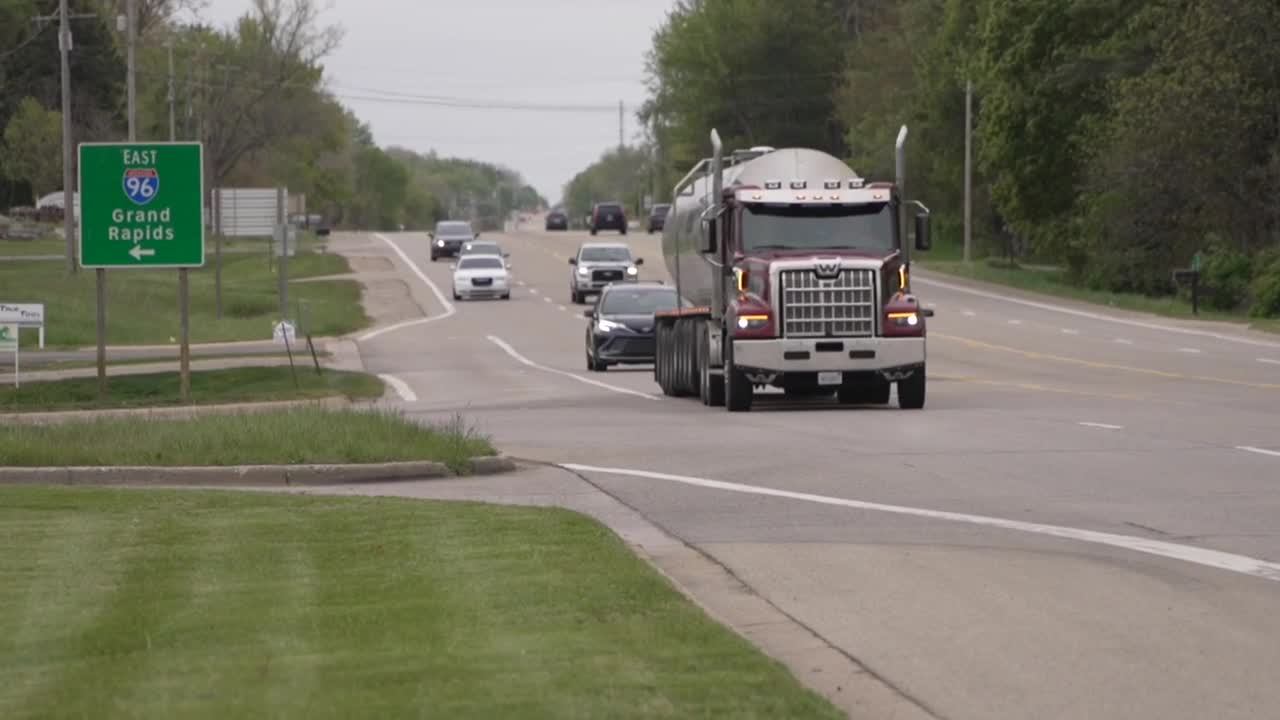
"Trucks get about six miles to the gallon on diesel, and that means that regardless of what you are buying, if it's delivered by truck, it has to be costing more money to be delivered, and this is particularly the case for farmers," Long said.
Local grocery stores like Orchard Markets in Spring Lake say they've noticed an extra fuel surcharge on their delivery bills. Farms like Crossroads Blueberry Farm in West Olive are also feeling the pinch.
Luke DeHaan, co-owner of Crossroads Blueberry Farm, says the farm's fuel bill has jumped almost 50% in the past month — but they've been absorbing the cost rather than passing it on.
"In April, we're starting to do some horticultural practices in the fields. And so we don't stop for the fuel price. It just costs us more to do that work," DeHaan said.
DeHaan says the farm has no way to offset those rising expenses through higher prices for their product.
"We don't necessarily get paid more. So, yeah, the big price increase, it just affects us on the expense side," DeHaan said.
Long says that despite rising industrial prices, consumer prices have largely not followed — at least not yet. As for what comes next, Long says the outlook remains unclear.
"I anticipate that we will have a positive result this next survey. But guessing beyond that is just that — it is guessing because we don't know where all the chips are falling right now," Long said.
