

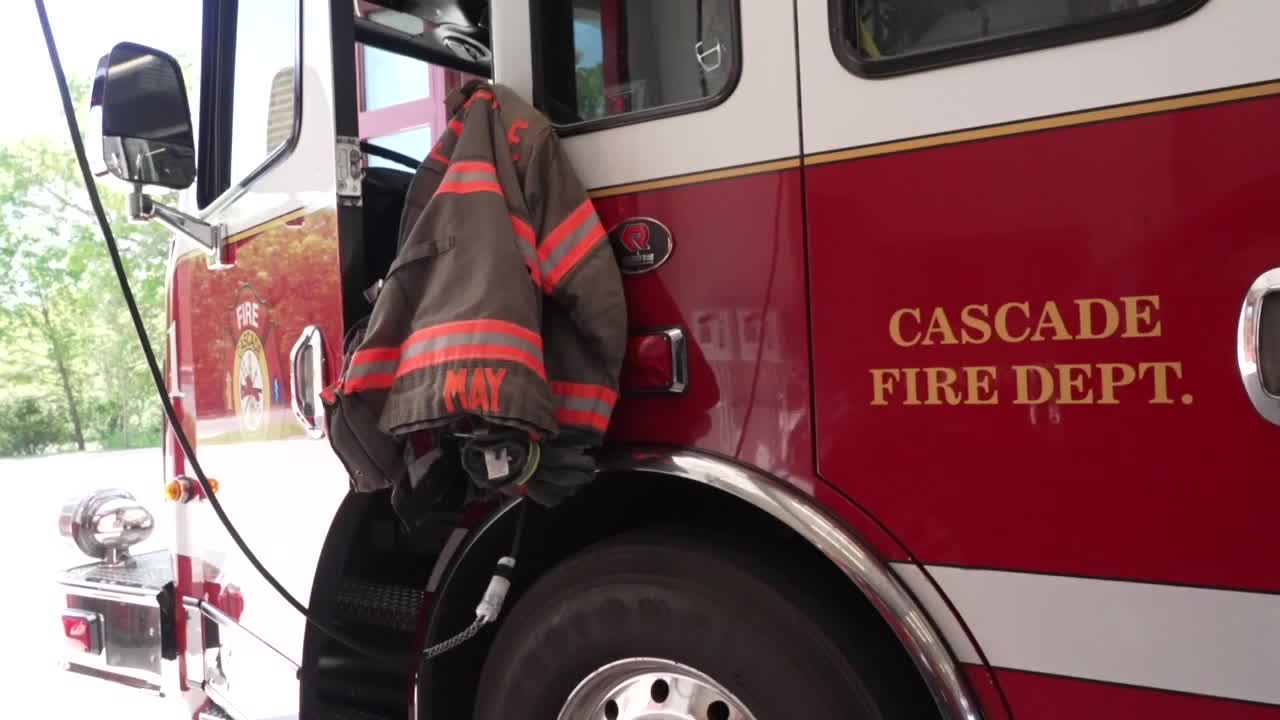


CASCADE TOWNSHIP, Mich. — The Cascade Fire Department responds to about 3,000 calls each year, with more than 1,000 of them being non-life-threatening medical calls. As these calls continue to grow, fire leaders say they can tie up crews while other emergencies continue to come in.
Township leaders are now exploring a new ambulance transport program to help fill what they call a gap in the community.
Cascade Fire Chief Adam Magers said the department has been analyzing data for the past 18 months and noticed trends that are "unsustainable." The high volume of medical calls — including falls, helping to lift someone, medical alarms and general illnesses — is putting increased demands on department resources.
About 1,000 of the department's annual calls are what officials call "low acuity" or "med three" responses, which are non-life-threatening injuries, general illnesses, psychiatric evaluations and lift assists. These calls often face delays in ambulance response because higher-priority calls take precedence for private ambulance companies.
As a combination department staffed by both full-time and on-call firefighters who also provide emergency medical care, those calls can tie up engines and crews when other emergencies happen at the same time.
Magers recalled a specific incident that highlighted the problem.
"We had a busy day a few years ago, where we had multiple calls for service and then we had a structure fire with a victim inside, and basically we didn't have engines to respond," Magers said. "We got lucky on that one, where I was able to pull that victim out, but that could have went a lot worse."
The department sees a 5% increase in calls year after year, with about 25% of daily calls overlapping. Magers said the department averages seven to 10 calls per day.
"Just about every day we'll have an instance where the township has a gap in coverage, and so every day we see that issue, and this would eliminate having those gaps," Magers said.
WATCH THE VIDEO STORY
Community Support and Industry Need
Emily Gugino, an owner of Senior Helpers of Grand Rapids, a home care agency, sees the need firsthand. Her company provides personal care and companion services to seniors in the community.
"We hear of falls quite often," Gugino said. "It's our main area that we try to educate on and prevent. Falls for our seniors can be catastrophic and result in hospital stays."
When clients fall, Senior Helpers always recommends calling emergency services for proper assessment, even if the person doesn't appear injured.
"It'd be extremely helpful to have a specific group that focuses on that," Gugino said of the proposed ambulance program. "I know there's a high need, and it also requires specific training, and so I know that they are dealing with a lot on a daily basis."
Moving Forward
The township board approved the concept Wednesday night, allowing fire officials to continue developing a Basic Life Support (BLS) transport program. If ultimately approved, the proposal would add an ambulance and could include additional staffing.
Fire leaders say the program would be designed to support itself through insurance reimbursements and transport revenue rather than requiring a new tax increase for neighbors.
"There is a funding mechanism, so it wouldn't be a tax burden on our residents, it would hopefully sustain this operation and allow us to hire firefighters," Magers said.
If approved, Cascade would become the first fire department in Kent County to provide its own ambulance transport service. While fire-based EMS transport is common on Michigan's east side, it's less typical in West Michigan.
Fire leaders say they've looked at communities already operating similar programs, including Ann Arbor and departments in Barry County.
"Firefighters don't love change, but this is an example where I think they see the benefit of it, and it has been supported," Magers said.
Fire staff will now work on refining the plan, including staffing, equipment, billing and operational details, before returning to the township board in August.
This story was initially reported by a journalist and has been converted to this platform with the assistance of AI. Our editorial team verifies all reporting on all platforms for fairness and accuracy.

