

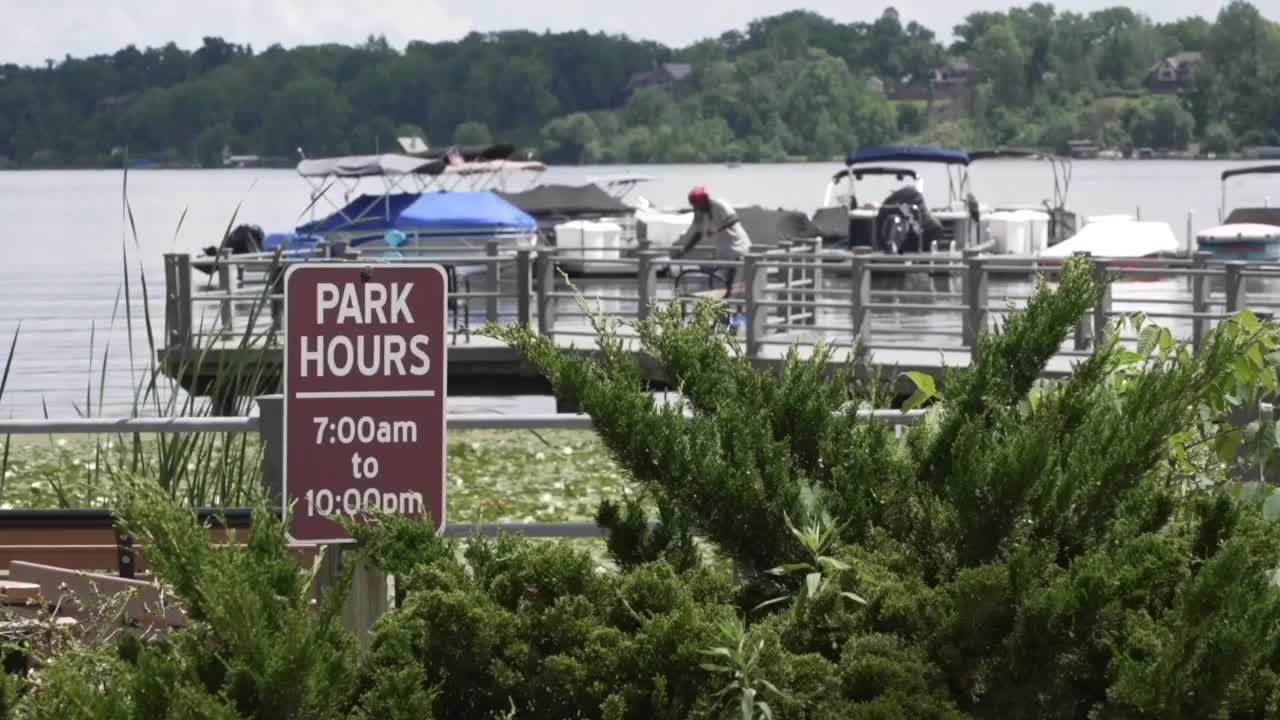


EAST GRAND RAPIDS, Mich. — East Grand Rapids is moving forward with plans to transform Waterfront Park, but some neighbors worry the changes could go too far.
The city has approved advancing the project to its final design efforts. The plans include wetland restoration, invasive species removal, native plantings, trails, overlooks, a playground, an outdoor classroom and additional parking.
The project has confirmed funding of $1 million — $500,000 from a parks millage and $500,000 from a state grant. The project has a preliminary estimate of $2.2 million. Total construction costs are not yet final.
Decades in the Making
The city acquired the 10.3-acre property in 1991 through an $800,000 DNR grant — described by the city as the largest DNR grant ever awarded at the time. The property had been clear-cut and filled in 1973 for residential development that never happened.
City Manager Shea Charles said intentions for future park development were always there. The project has been listed as a priority in the city's parks master plan since 1998.
Environmental Challenges
According to a 2007 botanical assessment, the park's ecosystem is heavily degraded by invasive species. The site scored just 12.4 on a floristic quality index — where high-quality sites score 50 or higher.
The assessment found three of the most common plants are harmful weeds: Oriental bittersweet, common buckthorn and Morrow's honeysuckle. In the woodland area, 14 of 26 identified species are non-native.
A follow-up assessment conducted in 2021 found conditions unchanged from 2007.
Charles said the city works with the Kent County Conservation District on invasive species removal and will continue that work.
WATCH THE VIDEO STORY
Community Concerns
Adam Piotrowski, who has lived in East Grand Rapids for 15 years, appreciates the area's natural character.
"Reed's Lake is special. You can walk around there, and it is very much like a park all the way around it. Nature's part of that, so I think it's important that we keep the nature aspect of it alive," Piotrowski said.
He has concerns about the proposed additions.
"I'm not so sure that we really need that right by the water," Piotrowski said.
Judith Baxter, a longtime resident and former Parks and Recreation commissioner, believes city leaders aren't listening to neighbors.
"It's another loss of green space for East Grand Rapids, which I think is far more valuable than a playground, playground equipment, and the things they want to put into the park," Baxter said.
Neighbor James Sears said he supports most of the plan but opposes the toddler playground and additional parking. He believes any changes should minimize the impact on the natural environment.
"There's a line there somewhere. I don't know where it is, but I believe there's a line there," Sears said.
The city conducted two rounds of community engagement in May and June 2026, collecting feedback through public meetings and surveys that led to changes in the original design.
Parking Remains Unresolved
The current plan calls for additional parking. During community engagement, 35% of respondents opposed adding any parking at all.
The City Commission indicated the parking lot size may impact wetland permits and left the door open to revisit the question based on guidance from the state Department of Environment, Great Lakes and Energy. Charles said the city is currently working with design consultants to provide additional parking options for the Commission to review at a future meeting.
Balancing Access and Preservation
Charles acknowledged the challenge of balancing development with preservation.
"The balance between development and preservation remains a community decision-making process, and while it isn't easy — nor possible to please everyone — the sustainable trails, public access areas, and plans overall will ensure the park's accessibility to all who want to experience the area's natural landscape and wildlife," he said.
Next Steps
The city cannot sign the project agreement with the DNR until it receives an environmental permit. City leaders say a pre-application meeting with state regulators should happen sometime in the coming weeks.
If approved, final design would continue through 2026, with construction potentially beginning in 2027 and completion in 2028.
For more information about the project, click here.
This story was initially reported by a journalist and has been converted to this platform with the assistance of AI. Our editorial team verifies all reporting on all platforms for fairness and accuracy.

