



Disclaimer: This is sponsored content. All opinions and views are of the advertiser and do not reflect the same of Fox 17.
Deep vein thrombosis (DVT) and pulmonary embolism (PE) are two serious and frequently connected vascular conditions in which blood clots can become life-threatening if left undetected.
Dr. Dustin Harmon, interventional cardiologist and medical director of Trinity Health's Venous Thromboembolic Disease Program, visited the Morning Mix to share more about DVT and PE, including risks, warning signs, and treatment options.
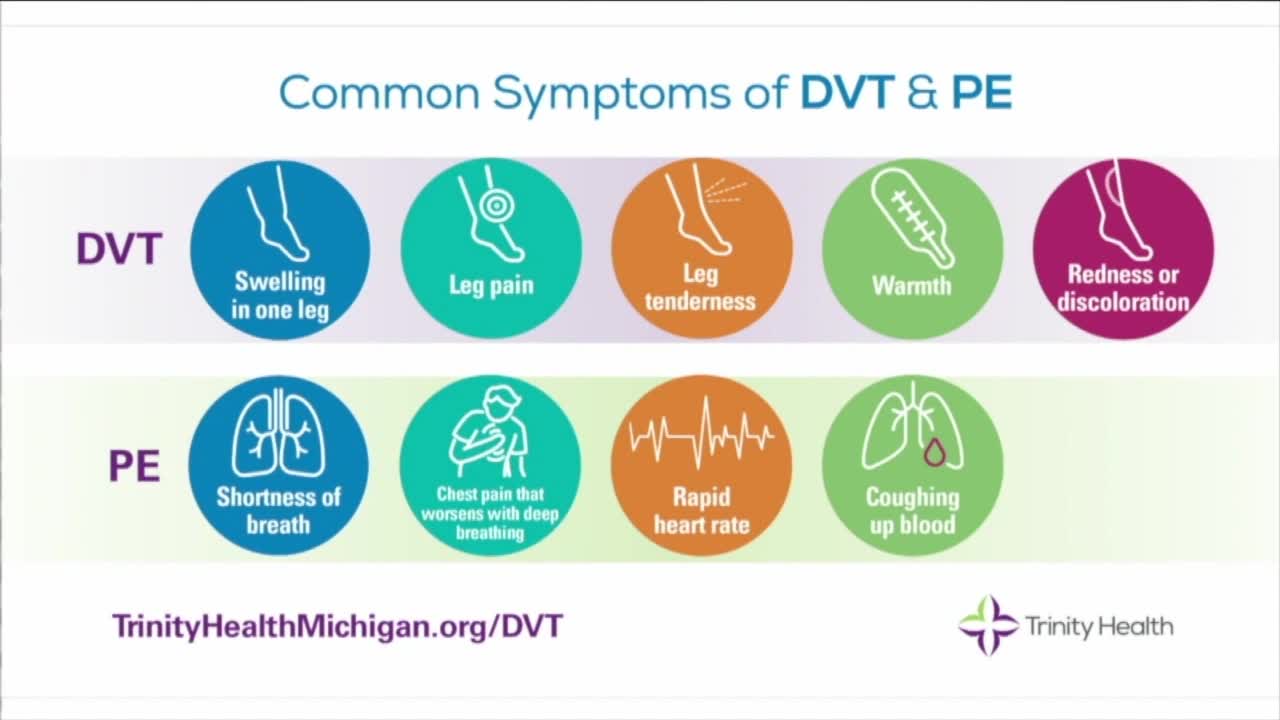
DVT begins when a blood clot is formed in a deep vein. It usually begins in the legs, and when that clot breaks off and travels through the bloodstream to the lungs, it becomes a pulmonary embolism. PE blocks blood flow in the lungs, resulting in a lack of oxygen circulation. The most common symptoms of DVT include leg swelling, pain or tenderness, warmth, and discolored skin. PE symptoms are more severe and include a sudden shortness of breath, chest pain that worsens with deep breathing, a rapid heart rate, and coughing up blood. PE is a medical emergency and symptoms should never be ignored.
Risk factors include prolonged immobility such as long travel, bed rest, surgery, as well as certain medical conditions or family history. DTV and PE are treatable when caught early, and Trinity Health offer treatment options that include blood thinners or minimally invasive procedures to break up clots.
To learn more, visit TrinityHealthMichigan.org/DVT.
Follow the FOX 17 Morning Mix on: Facebook, Instagram, & TikTok
