



The dust settles overnight in Gloster, Mississippi. Surveillance cameras catch it floating through the air, swirling across town on windy nights. By morning, it often coats residents’ cars, porches, and sometimes finds its way into their homes. They say they become accustomed to wiping it away, only to find it back again, sometimes in the same week.
Melvin Whigham says he can feel it in his body.
“It just feels like something caught up in there,” he told Scripps News during an interview in his home, his voice strained. “Every once in a while, I can spit up stuff. I don't have no cold. And my voice starts going … then I get a shortness of breath.”
Doctors, he says, haven’t been able to explain what’s happening to him.
He lives in Gloster, a town of roughly 800 people tucked into the pine forests of southwest Mississippi, where many residents believe they already know the answer.
Just beyond their backyards sits a sprawling wood pellet mill operated by Amite BioEnergy, a subsidiary of the British energy company Drax Group. Since the facility began operating in 2015, residents say their small, predominantly Black and low-income community has been blanketed in wood dust, exposed to harmful air pollution from a form of energy production that’s marketed overseas as sustainable.
The mill is part of a growing global biomass industry, one that turns American timber into compressed wood pellets and ships them across the Atlantic to be burned across the United Kingdom and Europe for electricity and heat. Governments and energy companies often classify the process as renewable, arguing that trees can be replanted and regrown.
RELATED NEWS | In the US, where people breathe increasingly dirty air, one small city stands out
But for many in Gloster, the promise of “green” energy feels painfully disconnected from life on the ground, as they say they are getting sicker.
For years, residents whispered about patterns they couldn’t ignore. Asthma. Chronic respiratory problems. Lung cancer. Persistent headaches. Heart complications.
“Our community is really small,” said Dr. Krystal Martin, a practitioner and administrator in higher education, who is one of the leading organizers opposing the plant. “So how do we experience so [many health issues] in a small community like ours?”
Another resident, Christie Harvey, said she was diagnosed with cancer herself. Her granddaughter, Leslie, was diagnosed with precocious puberty after starting her menstrual cycle at just eight years old, a condition Harvey says doctors told her may be linked to chemical exposure.
“They found a bunch of hazardous air pollutants in her,” Harvey said.
There is not yet definitive public-health data proving a direct causal relationship between Gloster residents’ illnesses and emissions from the plant. But environmental regulators have documented repeated violations of pollutant emissions that have been tied to health issues.
In 2020, the Mississippi Department of Environmental Quality fined the company $2.5 million its emissions of volatile organic compounds, or VOCs, which are pollutants associated with respiratory illness, neurological effects, and increased cancer risk after prolonged exposure. Drax has been found to emit these pollutants at four times the legal limit.
According to an investigation by Land and Climate Review, Drax facilities across the Southeast have accumulated 18,000 environmental violations.
And in Gloster, residents say the evidence is visible, everywhere.
“It’s all over the house,” Whigham said, wiping down a surface inside his home. When asked whether the dust was coming from outside, he looked up toward his ceiling and answered plainly: “It’s the only place it can come from, I reckon.”
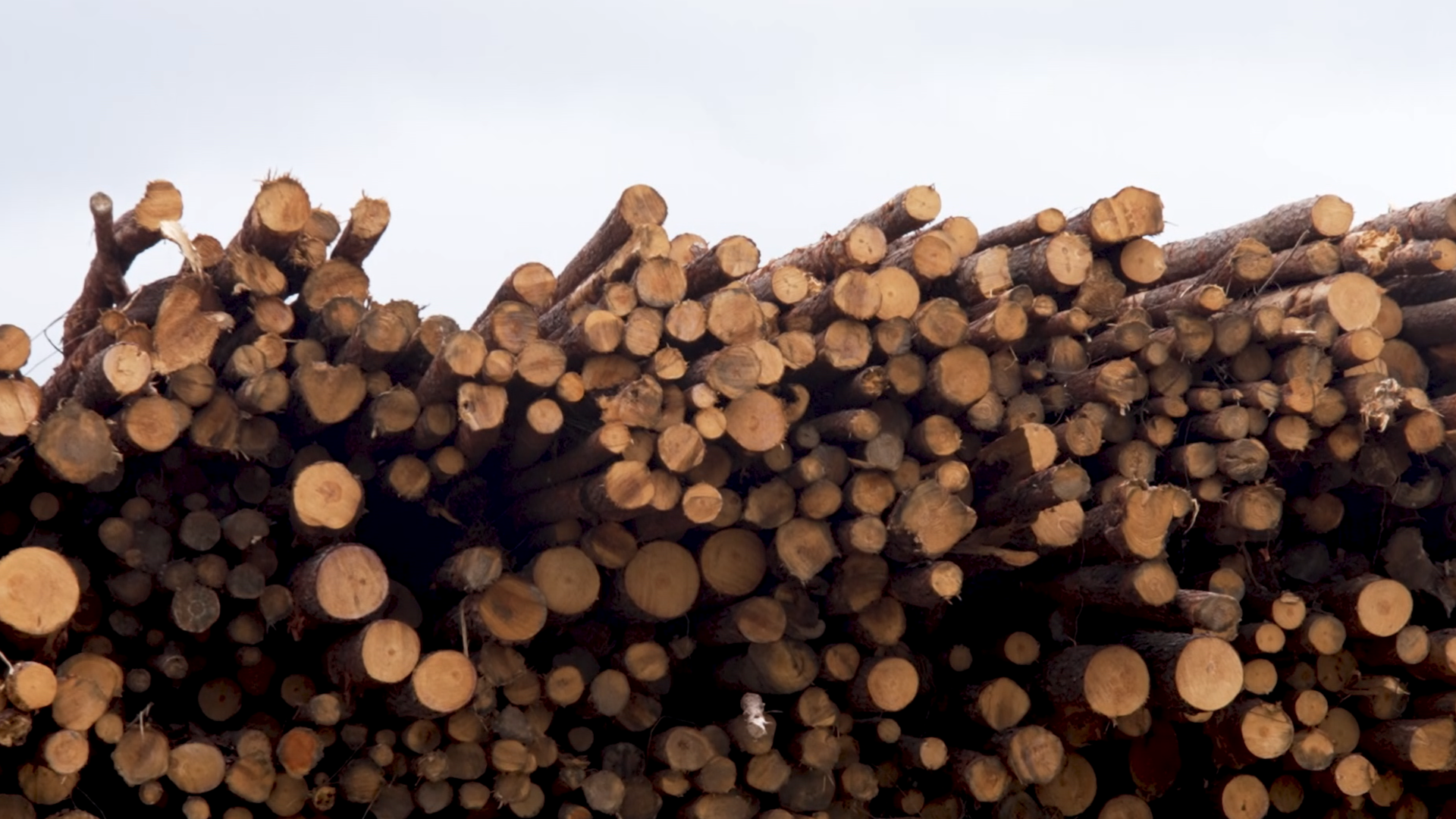
Standing across from the plant with Scripps News, Martin pointed toward stacks of timber waiting to be processed.
“They say they use scrap logs,” she said. “But I don’t know… these look like perfectly healthy logs to me.”
As wind shifted across the property, dust sat visibly on nearby surfaces. She believes that same dust is what settles over Gloster each night.
“We feel the wind right now,” she said. “And it’s shifting and that dust is just sitting there out in the open. Once that dust gets into your nose, it also gets into your lungs, and it gets into your bloodstream.”
RELATED STORY | Trump's EPA revokes scientific finding that underpinned US fight against climate change
The debate over biomass has become a bitterly contested question in climate policy.
Supporters argue wood pellets offer a cleaner alternative to coal, helping countries meet carbon-reduction goals while transitioning away from fossil fuels. Trees absorb carbon as they grow, and proponents say new forests can offset emissions released when pellets are burned.
But critics say that accounting ignores both the emissions created during production and the time it takes forests to recapture lost carbon.
“I believe it started as a genuine attempt to address climate change,” said Heather Hillaker, an attorney with the Southern Environmental Law Center, who specializes in the biomass industry. But, she added, “burning wood pellets emits more carbon dioxide per unit of energy generated than the fossil fuels that it’s often replacing.”
She argues the word “renewable” has become misleading, considering there aren’t firm regulations requiring companies harvesting the trees used for wood pellet production to replant them.
“Renewable is used as the catchphrase to equate to carbon beneficial,” she said. “And that is not the case.”
Last year, Mississippi environmental officials initially denied Drax’s request to increase emissions at the Gloster plant after residents raised concerns. But six months later, the state reversed course, granting approval for the facility to become a “major source” of hazardous air pollutants.
The decision stunned residents, and ultimately has divided the town.
Mayor Jerry Norwood says Drax has brought jobs and tax revenue to Gloster and told Scripps News he has long supported the company.
When asked why he submitted a letter supporting the company’s request to increase operations, he replied simply: “I haven’t seen a correlation between pollution and health issues.”
But nearly a hundred residents disagreed strongly enough to file a federal lawsuit, alleging Drax illegally exposed them to toxic pollutants and subjected them to ongoing noise pollution.
A spokesperson for Drax denied the allegations and declined further comment.
The fight is bigger than just Gloster, with dozens of similar plants across the Southeastern U.S., and as bioenergy companies plan to expand into the Pacific Northwest.
In hopes of persuading lawmakers to support legislation that would require greater accountability around toxic air pollutants, Gloster residents have planned an annual trip to the state capitol in Jackson, Mississippi and recently helped draft a bill that would do so, but the bill failed to advance.
This year, standing outside the statehouse, state Rep. Zakiya Summers voiced frustration shared by many in the crowd.
“Who knew that in 2026, in the state of Mississippi, we have to fight for the right just to be able to breathe?”
Back home, Martin worries about what happens if communities like hers are ignored.
“It’s really disheartening,” she said, fighting back tears. “I wouldn’t want to see somebody else going through what we’re going through.”
