

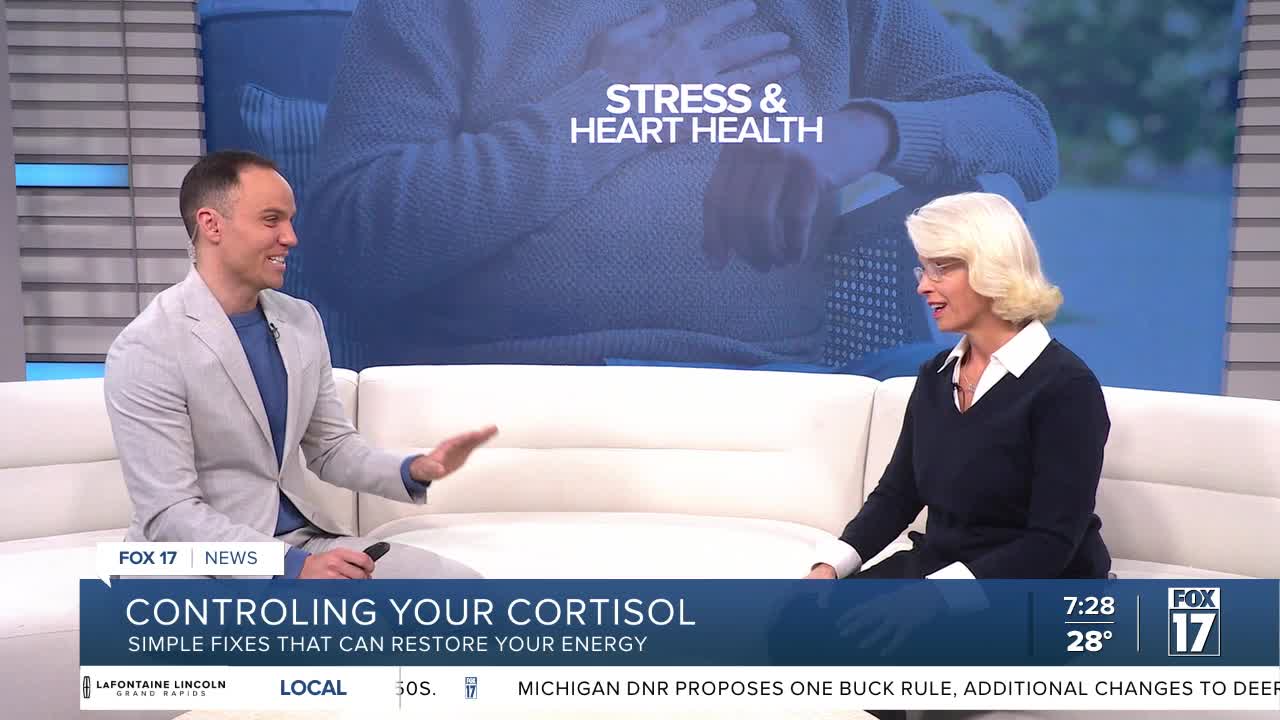

WEST MICHIGAN — Viral videos have put the spotlight on cortisol, and while it can help to monitor it, it's not the enemy. Dr. Diana Bitner is the cofounder of True. Women's Health, and she says it's more like the body's built-in gas pedal. The problems arise when life turns the gas pedal into an all-day stop-and-go rollercoaster.
Instead of one smooth acceleration into the day, women are pushing hard from:
- Caregiving stress
- Poor sleep
- Work overload
- Blood sugar crashes
- Food-restricting
- Over-caffeinating
- Intense exercise without recovery
- Perimenopause night waking
- 3:00 A.M. mind racing
Repeated stress activation can dysregulate the HPA axis, flattening the normal cortisol rhythm overtime. In menopause, sleep fragmentation and estradiol decline can independently disrupt the stress system, causing women to feel "tired but weird".
Dr. Bitner says cortisol is like gas in your car. You need gas to run the engine, but if you're flooring it and braking all day long, you can burn through your fuel fast. The problem is not that your body "has no gas", the problem is that your busy modern life is asking for maximum acceleration all day.
Midlife women feel this even more because in perimenopause and menopause:
- Estrogen and progesterone fluctuate
- Sleep becomes lighter
- Hot flashes increase nighttime waking
- Women are often peak caregivers and peak professionals simultaneously
- Mood sensitivity rises
- Blood sugar becomes less forgiving
- Many women try to over-exercise to fight unwanted belly fat
This means the same life stress now feels louder in the nervous system.
Some studies show cortisol rises in late menopausal transition and may relate to sleep, mood and cardiometabolic risk. Dr. Bitner says menopause doesn't create stress, but it can make the body's stress thermostat far more sensitive.
What can I do about this?
1) Protect the morning rise
- Sunlight early
- Protein breakfast
- Delay caffeine 60-90 minutes after waking if possible
- Move the body gently first-stretch, yoga even before a workout
2) Reduce fake emergencies
- Blood sugar swings
- Food-restricting
- Doom scrolling
- Overtraining
- Constant notifications
- Too much caffeine
3) Fix the nighttime leak
For women, the biggest cortisol disruptor is often poor sleep, not emotional stress alone.
4) Address menopause symptoms
Hot flashes, sleep disruption, anxiety and untreated vasomotor symptoms can all keep stress systems activated.
If you are feeling run down, count the ways you are pushing your body without replenishing. Your body isn't broken; it likely needs to replenish and recover.
Read more stories from the FOX 17 Morning News team
Do you have an idea for the Morning News team or maybe an idea for a guest segment or something for the gang to come out and try? Send them an email at mornings@fox17online.com or call 616-447-5252 and leave a message.
Follow FOX 17: Facebook - X (formerly Twitter) - Instagram - YouTube
