

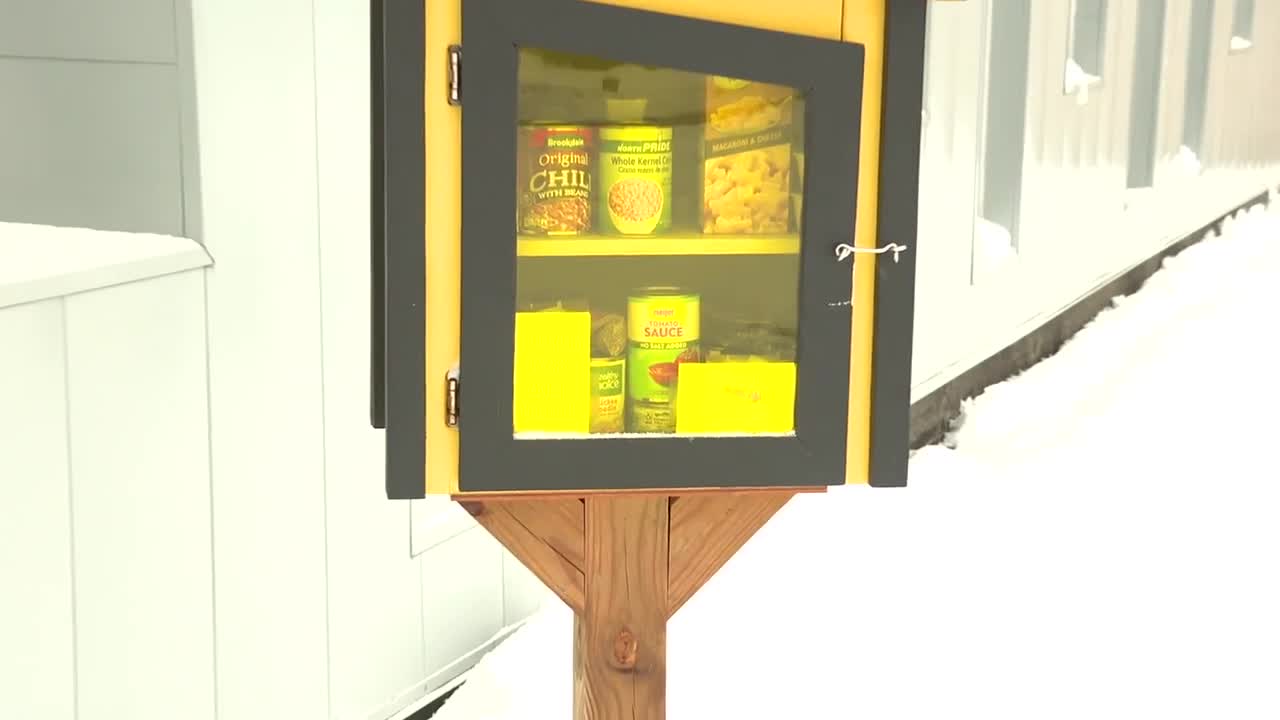


WALKER, Mich. — Sometimes help is available in unexpected places and unexpected ways.
Stopo by the Walker Ice and Fitness Center and you'll find something that has nothing to do with breaking a sweat and everything to do with breaking down barriers. A bookshelf converted into a small food pantry. The day I was there, the shelves were well stocked. This is what they looked two days earlier:
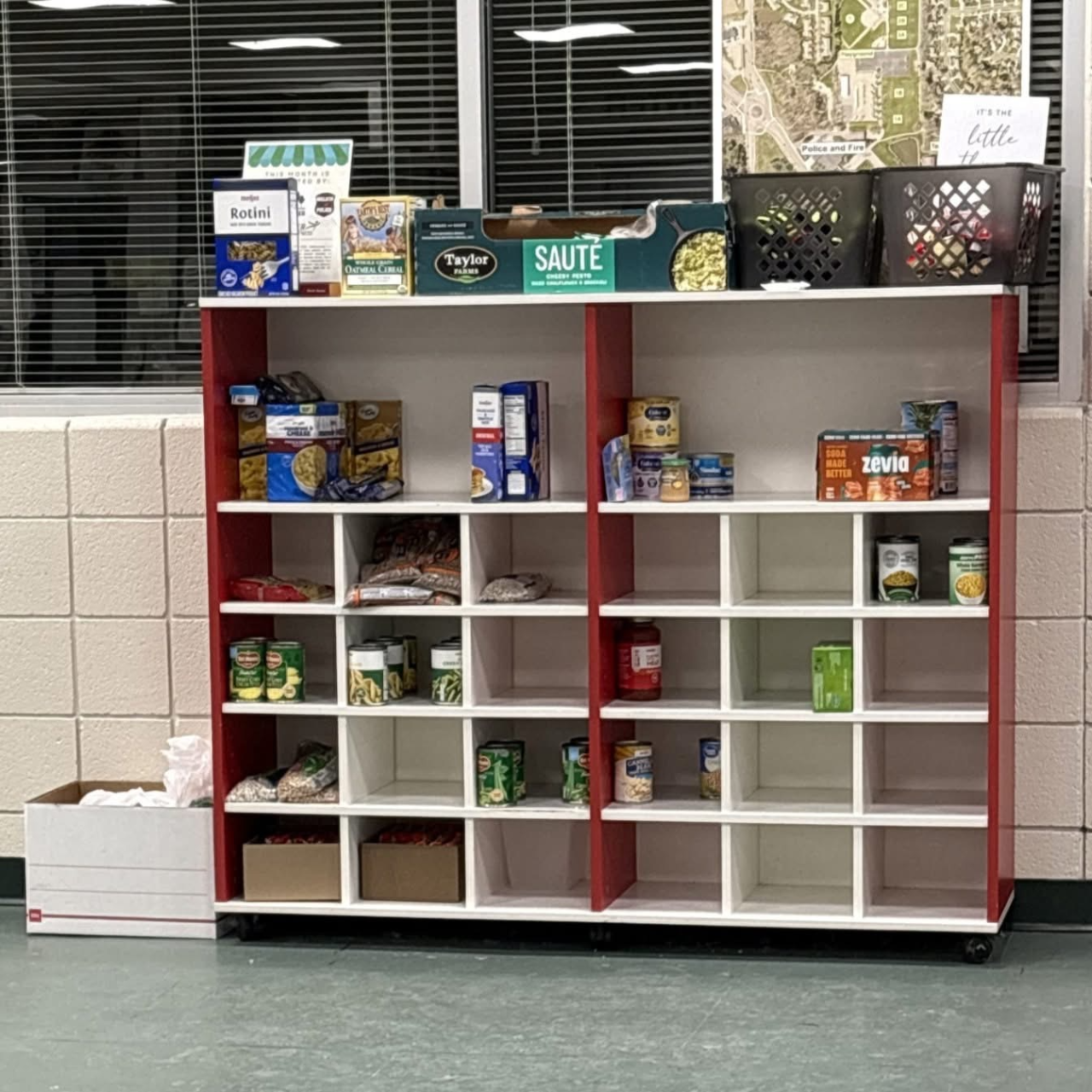
"Within the last year, specifically the last six months, we've seen a huge uptick in people using it and clearing out the shelves," Harkema explained.
This isn't the Walker most people envision when they think of suburban Kent County communities. But according to a survey conducted by the Walker Hope Collaborative last fall, food insecurity ranks among the top three issues facing local families, alongside concerns about housing and mental health.
"It was surprising to see that food was one of them," admitted Brooke Johnston, principal at Zinser Elementary School and a member of the Hope Collaborative, "because we think there are so many resources out there, and there's so many places that they can go and ask for help, but not everybody has those connections."
The pantry system started a few years ago when officers began encountering families dealing with food insecurity. What began as one shelf has evolved into a network that now includes traditional Little Free Libraries transformed into little free pantries throughout the community.
"We've had some conversations with other community partners," Harkema said. "Why don't we turn our little free library that we have in our neighborhood, or that we have out in front of our school or the main office of a mobile home community? Why don't we turn that into a little free pantry also?"
The transformation is practical — books that have sat untouched for months make way for mac and cheese boxes, canned soups, and personal care items like deodorant and toothpaste. At ZInzer Elementary, Johnston has watched the community embrace this dual-purpose approach.
"People weren't taking the books at that time, we thought, we'll put some food out there and not monitor it," she said. "We just kind of make sure that anybody can come and get it."
For Jason Chapin, the pantry provided crucial support during a seven-year period when he was unable to work while pursuing disability benefits. "My food stamps didn't go as far as they went, and I had to seek other means for food," he explained. "I was very grateful that it was there."
The Walker Hope Collaborative — a partnership between the police department, city government, community groups, churches, and schools — has shouldered much of the responsibility for maintaining the pantries through 2025. But with increasing demand, they're expanding their reach to include more local businesses and community organizations.
Currently, the system needs a sponsor for February, though March is already covered and city employees adopted January. The sponsorship model is straightforward: organizations collect donations from employees or customers, stock the shelves, and maintain them for a month.
"We do not take monetary donations at this time," Harkema clarified. "Typically, what they're doing is they grab their staff, their employee group, or they put a collection bin out in their business for a period of time."
The most needed items reflect both practical necessities and the reality that some families lack basic kitchen equipment. Canned goods with pop-top lids are crucial because "some people that need these things legitimately do not have a can opener," Harkema explained. Personal care items — toothpaste, shampoo, deodorant — disappear quickly, as do baby supplies like diapers and formula.
"Those will go very quickly," he said. "Those are the types of items that we would love to be donated."
Johnston emphasizes that the stigma around accepting help is slowly diminishing as the community recognizes the reality of food insecurity.
"I think when the need is so great, eventually people realize, hey, we're not judging. This is not us handing out. We're just helping," she said. "It's a hand up, not a handout."
Looking ahead, the pantry system may expand further when Walker's new library opens. The hope is to establish a main location there while maintaining the network of smaller pantries throughout the community.
Organizations interested in sponsoring a month can contact Harkema at mharkema@walker.city.
Do you have a story idea in Walker, Northview, or Comstock Park? Email robb.westaby@fox17online.com
This story was initially reported by a journalist and has been converted to this platform with the assistance of AI. Our editorial team verifies all reporting on all platforms for fairness and accuracy.
