




OAKFIELD TOWNSHIP, Mich. — If you dig deep into the history of Wabasis Lake Park, you'll find a tale of treachery and buried treasure. If you bring a shovel to its grounds, you may find the rumored gold.
The towering trees in this pristine portion of Oakfield Township whisper of a $50,000 dollar fortune hidden beneath their roots, stashed away by a Native American man who took for himself what was meant to be shared with his tribe, a selfish act which he later paid for with his life.
Those who balance their childlike wonder with a dose of realism, though, know the legend of Chief John Wabasis and his buried treasure has perhaps grown like a great fish story and turned nearly entirely fictional. While there are kernels of truth to this tale and its various versions, there is likely not a field of gold waiting to be discovered only a short distance from the banks of Kent County's largest lake.

"If you see it, you can believe," said Ron Yob, chairman of the Grand River Bands of Ottawa Indians. "You've got to believe your own eyes before a thousand tongues."
Yob searched the Wabasis Lake area as a kid, hoping he'd be so lucky to be the one to unearth the buried treasure. To this day, he believes there's something to be found.
"Oh, yeah," Yob said. "You're always going to stash your money somewhere."
As for how much money was possessed by Wabasis and why he chose to bury it with such secrecy, if he buried it at all, the chairman says those things are up for debate.
"It's like fishermen," Yob said. "They'll catch a fish that's 10 inches. By the time they get to the car, it's 12 inches. By time they get home, it's 14 inches. Five or six years later, they got this big, 20-inch bass."
"The story keeps getting bigger," he said.

The typical tale of Chief Wabasis dates back to the mid-19th century, when the Ottawa agreed to cede a portion of their territory in the Lower Peninsula as part of a treaty with the United States government.
This deal is historically referred to as the Treaty of Washington (1836), according to Yob, who says members of the tribe were individually paid and likely weren't made filthy rich by the deal.
In the legend, though, Wabasis ran off with a large amount of money from the treaty, a heaping sum of $50,000 dollars in gold, and buried it near the lake that would one day bear his name.
As punishment, he was banished to this area. Years later when he tried to leave, he was killed.
Wabasis' rumored treasure has never been found.
"I'm glad generations are still talking about it, and still researching it," Yob said. "Someday, someone might uncover something."
During our interview, Yob detailed a number of discrepancies with the legend. While Wabasis was a real person and his descendants are current members of the Grand River Bands of Ottawa Indians, there is no record of him being a signatory on the treaty that allegedly allotted him his ill-gotten fortune. Yob says it's also unlikely that any one person would have received such a large amount of money from the federal government, even if they were told to distribute it with other members of their family or tribe.
"If he got it for the whole tribe, that positively would have been identified," Yob said.
Wabasis may not have been a chief, either.
"I cannot find no documentation of that," Yob said.
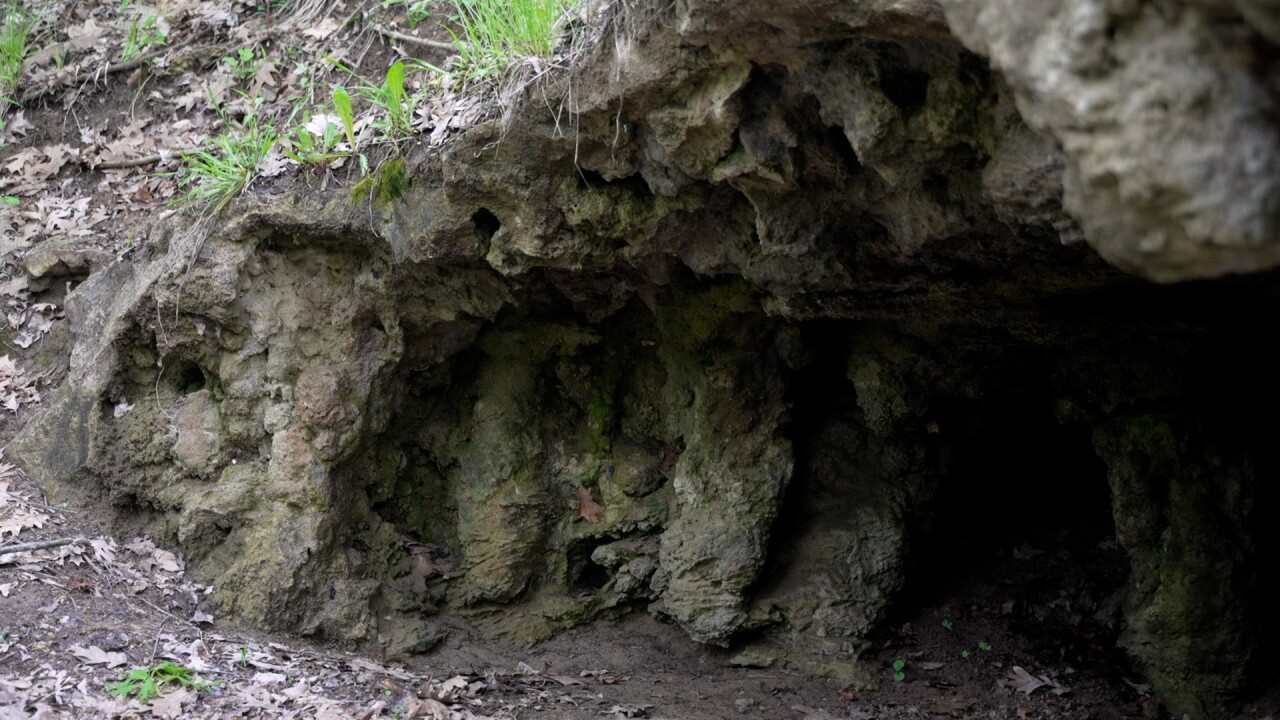
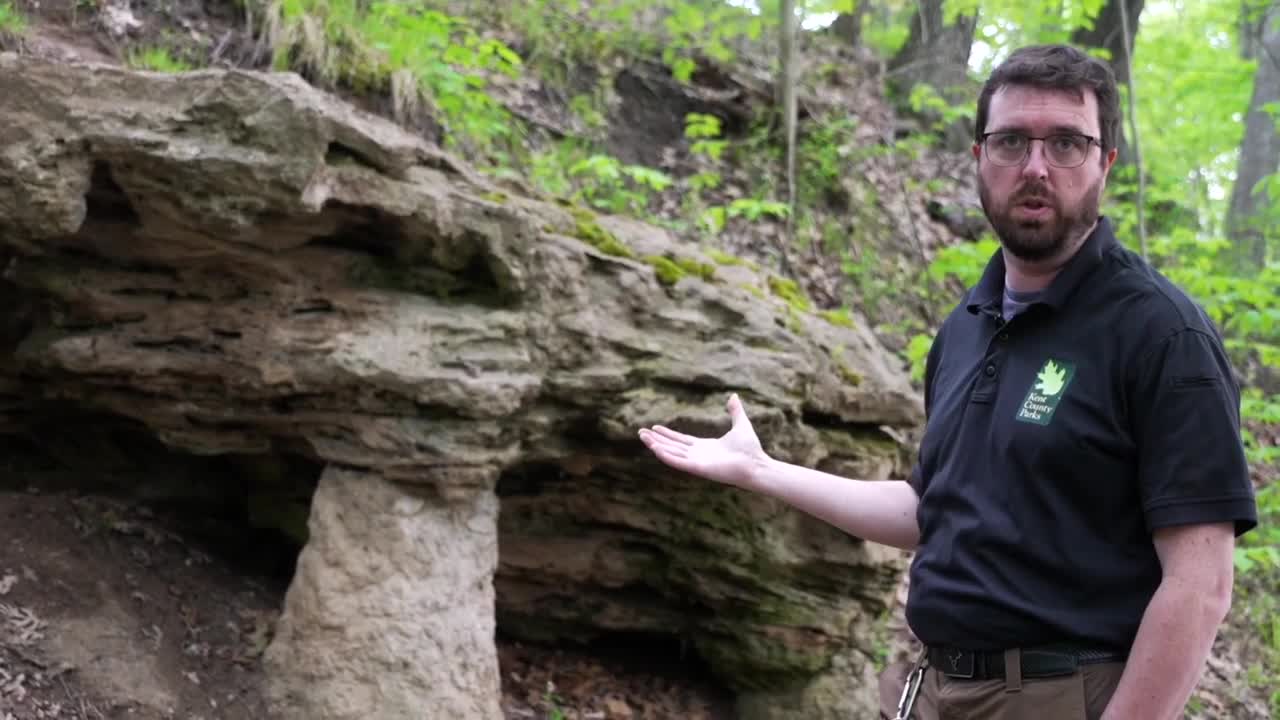
There are tamer versions of this story, too, but they haven't kept treasure hunters away from Wabasis Lake Park. A low-to-the-ground cave located only a few feet off of a trail on the west side of the lake is where many believe it to be buried.
"A lot of folks come to see the cave because there's not a lot of caves around," Wabasis Lake Park Manager Keith Sprague said. "Folks will ask about the gold."
Years ago, the cave was filled in with dirt for safety's sake, and concrete pillars currently prevent its mouth from a possible but unlikely collapse.
"There's a lot of different stories as to what happened to [Wabasis] and what may or may not have happened to him," Sprague said. "Is there actually buried gold? I don't know. I don't think so."

Sprague says if Kent County does somehow hold the supposed chief's buried treasure, it could very well be in Plainfield Township, a theory supported by the Plainfield Township Historical Society.
The historical society believes Wabasis did not become wealthy by running away with money from a treaty, but rather inherited a large amount of land, some of which he sold.
Then one day, Wabasis was warned he was about to be robbed, so he went to his friend's house in Plainfield Township. He stashed his silver and gold in the friend's cast iron cooking pot, buried it and didn't tell a soul where it could be dug up. Later that night, he was murdered.
The historical society says, based off this account, the treasure would likely be located in Plainfield Township near West River Drive and Buth Drive.

Kent
Roadside burial site holds Plainfield Township family history
There is a dignity in the truth, in what can be verified and proven, but even tall tales can do good. Those who've searched Wabasis Lake Park have never left with gold, but certainly have found the park's natural, undisturbed beauty.
"It’s easy to forget the history of the land around us," Sprague said. "At a park like this, you remember some of those connections."
Wabasis means white swan, and Wabasis Lake is home to a number of these elegant waterfowl. When they paddle through the lake's shallow ends and protect their territory, they keep the legend alive in their own way.
"It's still there, and I'm actually glad that it's still there," Yob said about the legend.
"It gives recognition to that treaty, it gives recognition to the Grand River Bands of Ottawa Indians, that we did sign a treaty in this area," he said.
"It shows that we're still in existence."
