

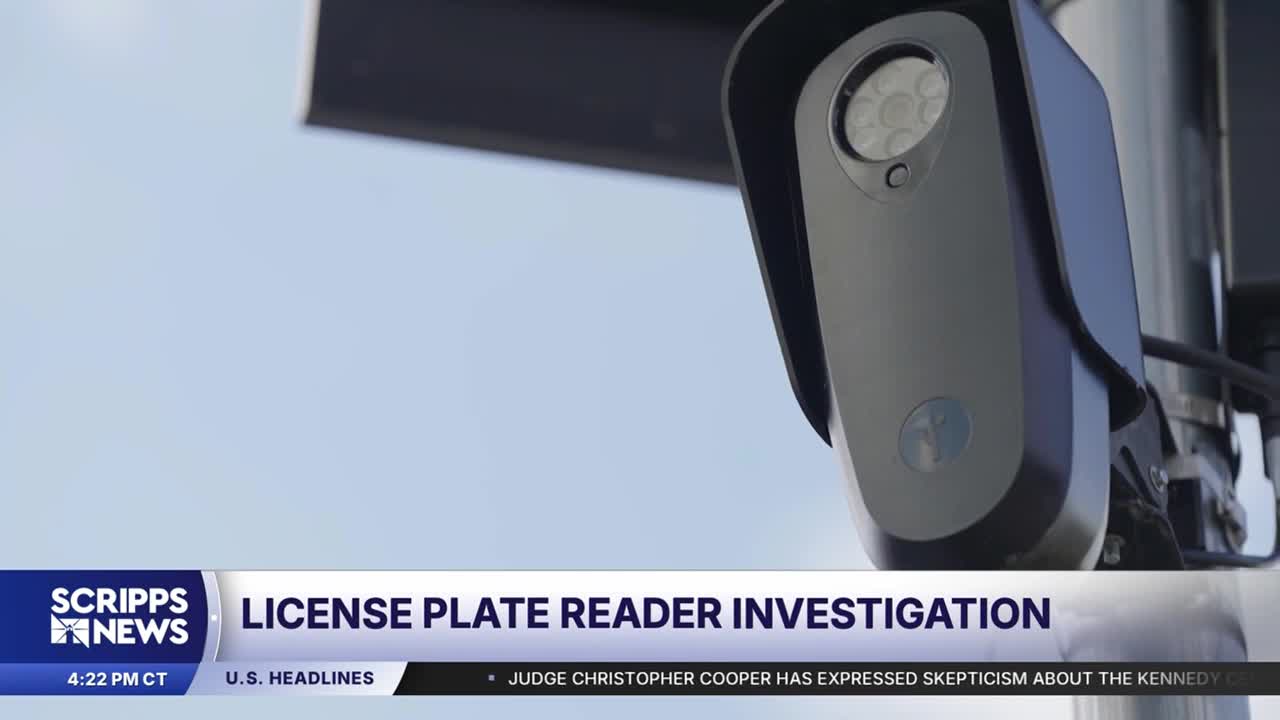


The City of Grand Rapids will put Flock camera and other automated license plate reader systems use under an annual review starting next year, City Manager Mark Washington said on Friday.
Washington said that he will issue an administrative order next month that will put the Grand Rapids Police Department's automated license plate reader system (ALPR) under the City’s Surveillance Technology Policy. It comes after feedback from the city commission and public safety commission.
Under the planned order any future purchase, renewal or expansion of the system will have to go through the Public Safety Committee review and City Commission approval. That's consistent with the process for other surveillance technology.
The move follows concerns from community members. On Tuesday, the department gave a presentation to the public safety committee.
In that meeting, Grand Rapids Police Department Chief Joe Trigg welcomed questions about how his department uses the technology, acknowledging the public's unease.
Watch below: Flock Safety, at Grand Rapids city meeting, says it does not have contracts with ICE, DHS
The new policy will exempt surveillance equipment purchased before March 24, 2015, along with replacement equipment that does not change the technology's capabilities.
“The city was already using license plate readers before the Surveillance Policy existed and it has been extremely helpful in solving crimes and locating missing persons,” Washington said in a statement. “Even so, as technology continues to evolve, feedback from City Commissioners and members of the Public Safety Committee indicated the need for oversight to evolve too."
Watch below: Grand Rapids police address community concerns over Flock camera surveillance system
Grand Rapids Mayor David LaGrand released a statement saying in part "Our city government is committed to transparency and accountability in everything we do, particularly in the work of public safety," and "Our Surveillance Policy allows us to limit the use of this technology, constantly have public review of technology as it evolves, and engage the public in ongoing conversations about best practices and strategies that honor personal freedom, while keeping our community safe.”
"Technology is scary, especially when it's new," Trigg said in Tuesday's meeting. "There was a lot of concern, and rightfully so. I like my privacy as well. I just don't want the government, you know, coming in [for] no reason and watching anything and everything I do either."
Deputy Chief Mike Maycroft explained during Tuesday's Public Safety meeting what GRPD uses Flock for — and what it does not.
The department uses Flock cameras in investigations involving violent crimes, including homicides, criminal sexual conduct, human trafficking, kidnapping, Amber or Silver alerts, stolen vehicles and wanted subjects.
Maycroft said the system does not track or support immigration detainers, warrants or searches; reproductive health-related searches; facial recognition or facial image searches; live camera feeds; audio monitoring or microphone use; or surveillance of private property.
Maycroft described a number of cases in which Flock cameras helped investigators find a murder suspect, locate missing people and solve a shooting.
In one case, a Flock camera placed near an existing surveillance camera helped investigators identify a suspect far more quickly than the surveillance camera alone would have allowed. Maycroft said a man fired a gun into an absentee ballot box, and investigators were able to capture the first character of his license plate from surveillance video.
"After receiving the video, I turned it over to my detectives. They're usually able to use the Flock system to identify a vehicle matching that description. They determined the same individual had been arrested three days later after leaving the same library for drunk driving, and had this firearm on him," Maycroft said.
GRPD conducts monthly audits to ensure officers are not misusing the system. Unless data is saved, the system retains information for 30 days.
The detective sergeant of the Digital Evidence Unit is responsible for overseeing and auditing all license plate searches on a monthly basis. Any non-compliance or misuse would be referred to the Internal Affairs Unit for discipline, up to termination and criminal charges.

