

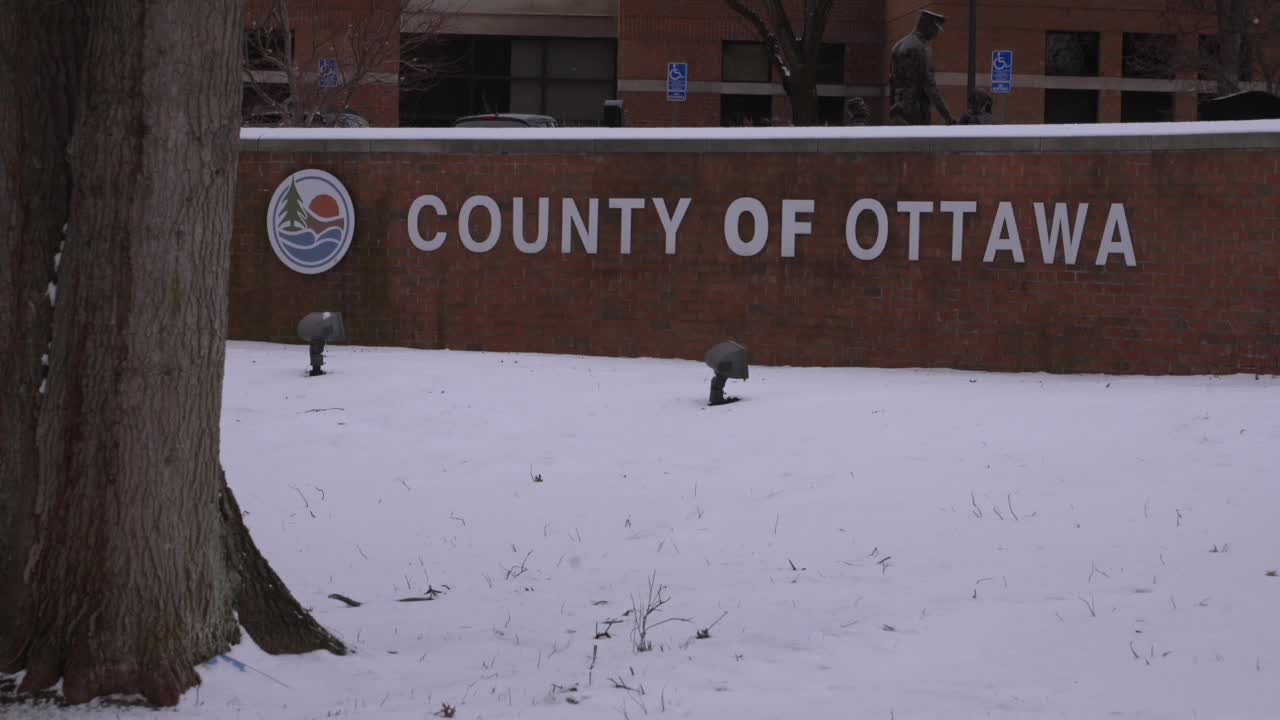


WEST OLIVE, Mich. — Michigan Gov. Gretchen Whitmer is calling on lawmakers to pass legislation that would cut red tape and speed up the process for adding housing across the state — but at least one local official has concerns about how some proposals could impact decision-making at the community level.
WATCH: Ottawa County official raises concerns about Gov. Whitmer's housing proposals
Whitmer made housing a centerpiece of her State of the State address, summing up her approach in a simple phrase.
"Our solution so far has been pretty simple: Build, Baby, Build!" Whitmer said.
Ottawa County is one of the fastest-growing counties in Michigan and needs to create more than 16,000 new housing units and 12,00 for-sale homes by 2030 to keep up with demand.
Whitmer's proposals include establishing a state-level affordable housing tax credit, eliminating "nonsensical" construction requirements, and ending bans that prohibit property owners from building in-law suites and making it easier to build multifamily homes.
Paul Sachs, director of the Ottawa County Department of Strategic Impact, said the new tax credit could be beneficial. But he warned that some legislation could create a top-down approach that rushes projects without proper planning and community feedback.
"It's not a one-size-fits-all scenario," Sachs said.
Sachs said stripping away local authority over housing decisions creates real challenges for those working directly with communities.
"It takes away local control. That's really difficult from a boots on the ground person who works with our local units. There's different ways that we can move the needle without creating unnecessary consternation," Sachs said.
Ottawa County has proposed addressing its housing shortage through smaller footprint homes and by working with local communities to determine the best path forward — rather than mandating zoning changes from above.
"Our approach is not to say hey, 'you need to have zoning reform.' Our approach has been very tactful in providing real projects that decision makers can react to and then decide how to adjust zoning," Sachs said.
Sachs acknowledged the state legislation could offer some benefits, but said local communities should retain a voice in what kind of housing comes to their neighborhoods.
"It's about quality and community character, that's what we want here and a top down approach and forcing a project to go through on a time constraint, I think we're missing something there on how we create healthy communities," Sachs said.
