

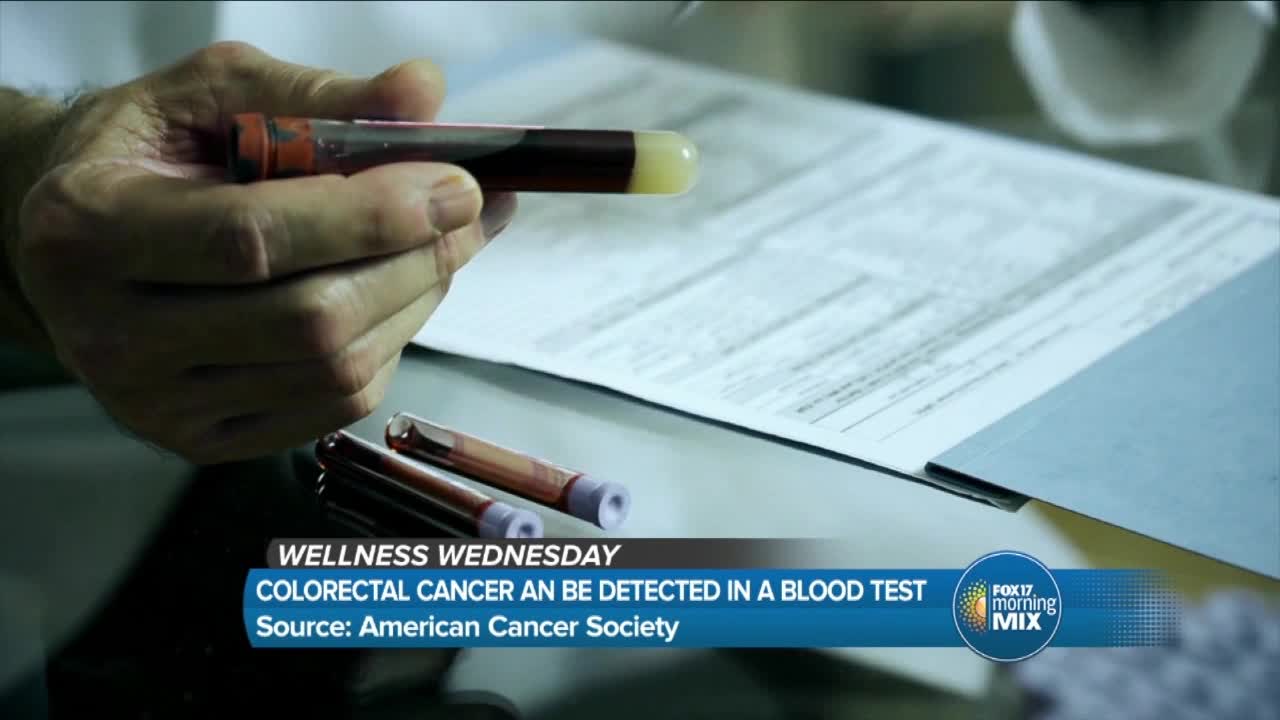


Colorectal cancer screenings may include blood test option
The American Cancer Society is expanding its recommendations for colorectal cancer screening, and for the first time, that includes a blood test.
While colonoscopies remain the gold standard for detecting and preventing colorectal cancer, experts hope the new option will help reach people who have put off or skipped screening altogether. The new recommended blood test is designed for average-risk adults age 45 and older who are unwilling or unable to complete a colonoscopy or stool-based test.
Doctors stress that the blood test is not as effective at finding pre-cancerous polyps as other screening methods, which is why it's considered a backup option rather than a replacement.
Reflecting on death may be beneficial
It may sound counterintuitive, but some experts say thinking about death can actually help us live better.
Research suggests that reflecting on our mortality can reduce anxiety, increase gratitude, and help people focus on what really matters. Health experts say many of us aren't necessarily afraid of death itself, but of suffering, loss of independence, or the unknown.
By talking more openly about aging, end-of-life plans, and what gives our lives meaning, people may feel more prepared and less fearful. The goal isn't to dwell on death, but to use that awareness that life is finate as motivation to appreciate the present, nurture relationships, and make the most of the time we have.
Using A.I. can impair cognitive performance
A new study is raising questions about how quickly people can become dependent on artificial intelligence for problem-solving. Researchers found that participants who used an A.I. assistant to complete math problems performed worse when the tool was suddenly taken away, solving about 20% fewer problems than those who never used A.I. in the first place. They were also twice as likely to skip questions rather than work through them independently.
The findings suggest that relying on A.I. for direct answers may weaken our ability to think through challenges on our own, even after just a short period of use. However, there was an important distinction: people who used A.I. for hints, explanations, or guidance instead of complete answers did not experience the same decline in performance.
Researchers say the takeaway isn't that A.I. is inherently harmful, but that how we use it matters, and should not be used as a substitute for thinking.
Follow the FOX 17 Morning Mix on: Facebook, Instagram, & TikTok
