

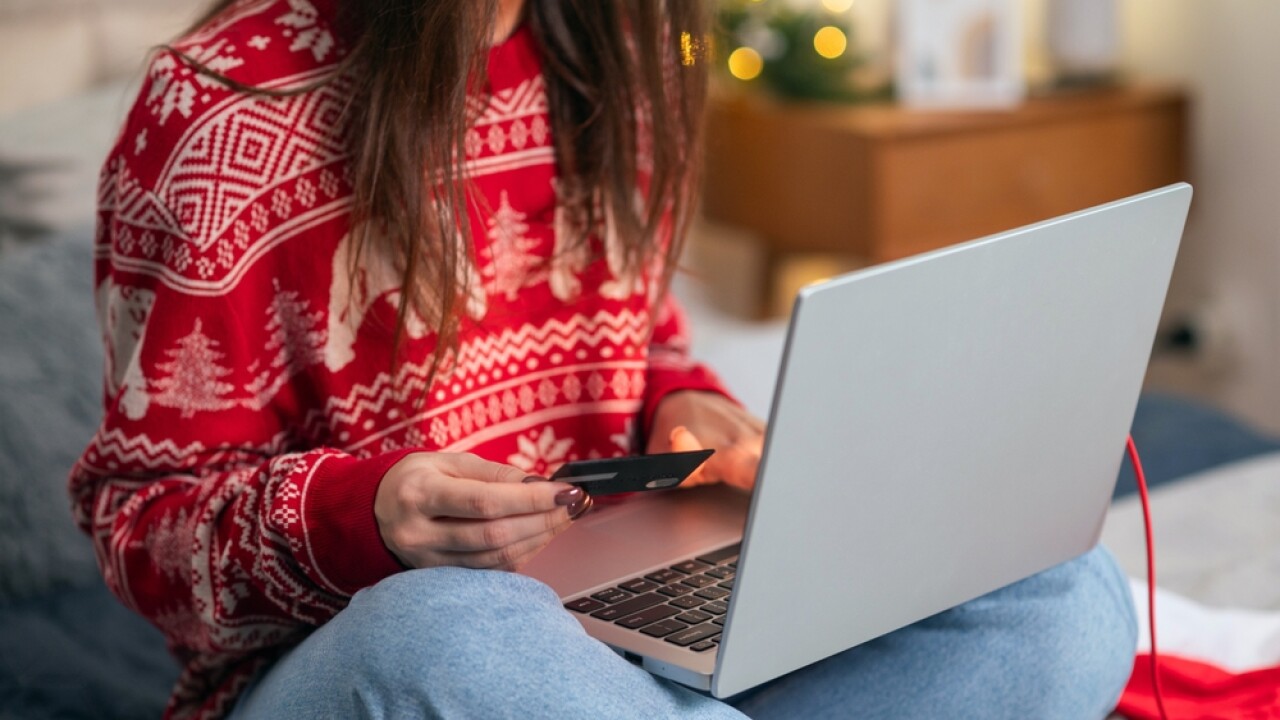

We're in the thick of the holiday shopping season, and U.S. residents are expected to shatter the spending record again this year. The National Retail Federation forecasts that 2025 will be the first time we collectively spend more than $1 trillion on year-end gifts.
A lot of materials, energy, packaging and gasoline have gone into making and moving those gifts. All of those processes release planet-warming gases into the atmosphere.
But a lot of that environmental impact is avoidable. Making, baking, thrifting and avoiding traditional wrapping paper are all more planet-friendly ways to give. We've got tips on how to do them all.
Homemade doesn't have to be difficult
Sure, if you've got the skill to turn a wooden bowl or needlepoint a Christmas stocking, those gifts are guaranteed to be unique and meaningful. But not all of us have the knowledge or time.
Sandra Goldmark, associate dean of Columbia Climate School’s Office of Engagement and Impact, said one of her favorite options is an act of service for a loved one. One year, for example, her husband organized all her passwords for her.
“It was not something easy to wrap and put under the tree, but believe me, it was meaningful and really helped me more than any additional object cluttering up my home could have,” she said.
RELATED STORY | Your holiday shopping could haunt you in January; here’s how to stop it
Another winner: food. If, say, you have a long list of recipients, buy ingredients in bulk and pack them in Mason jars. Cookie mix, soup mix, sourdough starter and spice mixes are all easily sealed and transported that way. Add some ribbon and a sprig of cedar, and it's festive. Homemade baked goods and snacks are other options.
“It’s inexpensive, but it takes care and time and attention,” said sustainable living educator Sarah Robertson-Barnes.
Give experiences instead of buying more stuff
The advice here starts out simple: Buy less stuff. The best way to give gifts more sustainably is to buy fewer new things, said Goldmark.
Stockings can be a common spot for toys that break quickly before going straight to the landfill. Instead, you can fill stockings with things that your friends or family need anyway, like toothbrushes or body wash, or traditional treats like fruit and chocolates.
Giving someone an experience is another popular option. That might mean a pair of concert tickets, a spa day, a gift card to a favorite local restaurant, a local news subscription or a membership to a local garden or zoo that the recipient can use over and over. Research has indicated that experiences strengthen relationships better than material gifts do.
“There is so much that you could do by just saying, ‘I would prefer if you just made me a nice meal or took me out for some sort of adventure,’” said Atar Herziger, environmental psychologist and assistant professor at Technion — Israel Institute of Technology.
Experiences also come with less packaging. Herziger cautions, though, that travel can have a high impact especially if it involves planes. So she recommends local options like a nearby hike or a staycation.
And if you're unsure what experience your loved one would prefer? Herziger said don't overcomplicate it — just ask.
Go vintage
Secondhand gifts are easier on the planet because they involve less manufacturing, packaging and shipping. Robertson-Barnes looks to Facebook Marketplace or her local Buy Nothing group to find items that she would have otherwise bought new.
“I bet somebody has the thing that you’re looking for and they would love to get rid of it,” she said.
RELATED STORY | From Green Monday to Super Saturday, here's when to find the best December deals
Still, for some recipients, secondhand gifts are taboo.
“We do have a weird cultural thing where new is better and used is gross,” said Robertson-Barnes, who suggested reframing used gifts as “vintage.”
Similarly, Herziger said secondhand options might be received better when they're items that can't be bought new, such as a family heirloom or a collectible that isn't produced anymore.
Goldmark looks to thrift stores for smaller toys or mugs. Record stores, used book stores, furniture stores and antique shops are other options. And of course big names like eBay and Goodwill can have rare and unique finds, too.
If buying secondhand simply won't work for a recipient, Goldmark said to focus on items that are high-quality, long-lasting, repairable and really needed. That ensures that it's worth investing in and reduces the chance that it gets returned. Look to buy locally, rather than ordering online, to reduce how far it travels.
The wrapping matters, too
Millions of pounds of wrapping paper end up in the landfill every year. Much of it is blended with plastic to make it shiny or sparkly, so it can't be recycled.
Not sure whether your wrapping paper is recyclable? Check your local recycler's website for guidelines, or try a simple test by crumpling it into a ball. If it holds its shape, it's more likely recyclable. Also, if it rips as easily as printer paper or gets soggy like a saturated brown grocery bag, those are good signs it's recyclable, too.
Robertson-Barnes said if you already have wrapping paper on hand, you should use it rather than waste it. But once it's gone, she recommends reusable wrapping cloths such as furoshiki, a traditional Japanese fabric for presenting gifts.
WATCH | What to buy in January for huge savings
Some experts also recommend gift bags as long as they're reused — and not tossed.
Another cheaper and more planet-friendly alternative to wrapping paper is newspaper or brown paper bags. Tie them off with reusable ribbon, a couple pinecones or a candy cane and suddenly it's festive.
Plus, brown paper is a blank canvas with endless opportunities for customization. “If you’ve got kids, then their drawings are wonderful packaging materials. They make the best wrapping paper,” Herziger said.
