

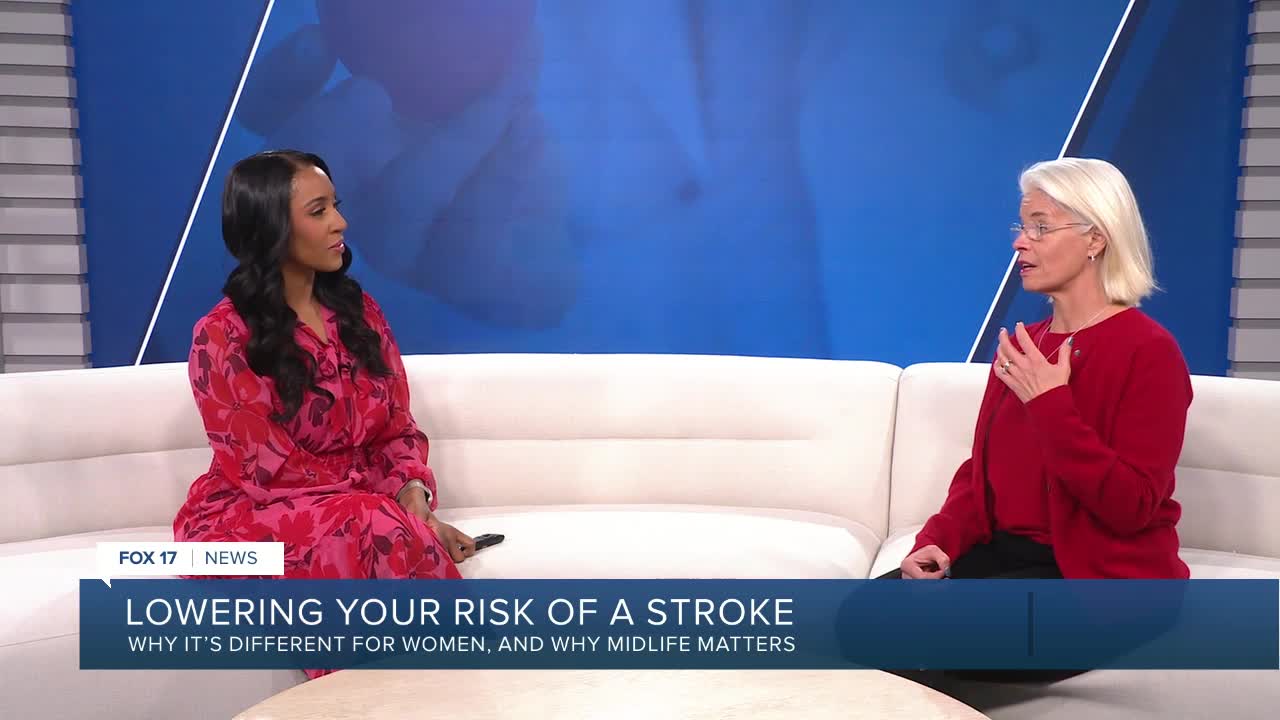

WEST MICHIGAN — Stroke prevention for women can look different for many, but the best way of reducing your risk is to tackle the problem strategically.
Dr. Diana Bitner is the Co-founder and Chief Medical Officer at True. Women's Health, and she says strokes are more common with women, and may have worse outcomes. She says one of the problems is that the discussion surrounding stroke risk is how risks for women change overtime, especially around menopause.
Ischemic strokes can be caused by several factors, including atherosclerosis (artery stiffening) and thrombosis (artery blocking). These conditions can be persistent in women after midlife because they happen as women move through menopause. Hormone therapy is not a stroke treatment, but for the right woman it may support vascular health more than harm it.
- Loss of estrogen's vascular protection = stiffer arteries, worse endothelial function
- Reduced physical activity = insulin ristance, visceral fat, high cholesterol
- Blood pressure creeps up
- Inflammation & plaque formation increase
For women over 50, these factors can increase risk for either a large-artery stroke or a small-vessel stroke. Large vessel disease and stroke can lead to damage that's more obvious, such as a loss of motor function or speech. Small-vessel strokes lead to gait instability, cognitive decline, and vascular dementia. Women can often experience this before anyone labels it a stroke.
How do you prevent or lower your risk?
- Treat high blood pressure, goal 120/70 consistently
- Treat high cholesterol
- Support healthy weight and maintain muscle mass
- Treat insulin resistance early and agressively
- Stay active, at least 30 minutes per day
- Treat hot flashes
- Treat sleep as a necessity
How do we save lives once the risk is present? Most people follow the FAST method
- Face drooping
- Arm weakness
- Speech difficulty
- Time to call 911
Women don't always look like they've had a "textbook" stroke, and are more likely to have non-classic symptoms, such as:
- Sudden confusion
- Severe headache
- Nausea
- Dizziness
- Extreme fatigue
Strokes are often preventable. Midlife is the best moment to act, not later after symptoms appear. If you ever think you're having a stroke, don't wait, dont drive yourself, and don't downplay it. Call 911.
Read more stories from the FOX 17 Morning News team
Do you have an idea for the Morning News team or maybe an idea for a guest segment or something for the gang to come out and try? Send them an email at mornings@fox17online.com or call 616-447-5252 and leave a message.
Follow FOX 17: Facebook - X (formerly Twitter) - Instagram - YouTube

