

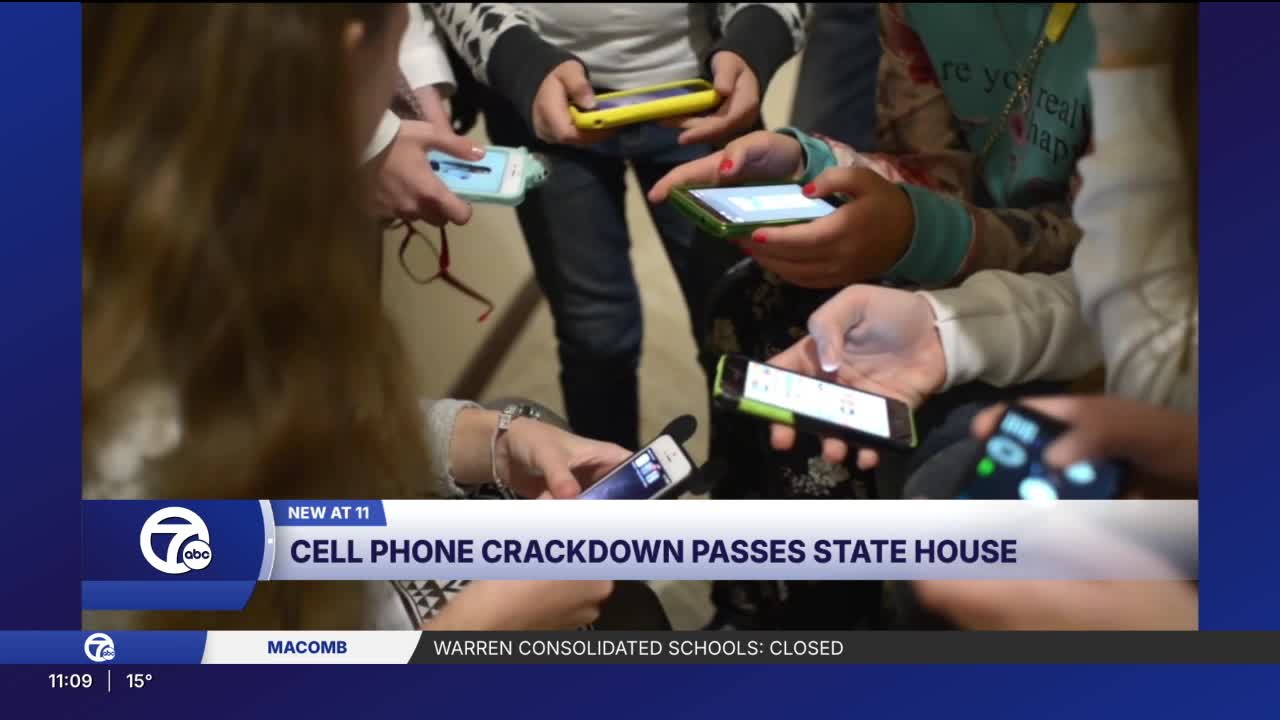


LANSING, Mich. (WXYZ) — The Michigan House passed legislation Wednesday that would ban K-12 students from using cellphones during class time, with exceptions for emergencies. The bill now heads to the state Senate.
Watch Christiana Ford's video report below:
Watch Brittany Toolis' video report below:
The legislation, sponsored by Rep. Mark Tisdel, R-Rochester Hills, would create statewide minimum standards for cellphone restrictions during instruction time.
"People recognize that this is a significant distraction. Michigan schools are not knocking it out of the park on test scores right now, so this is one of the things that we can do to get a significant distraction, the world's most powerful entertainment medium, the internet out of the classroom and put teachers back in charge," Tisdel said.

Individual districts would maintain control over how to implement and enforce the limits. Schools can do a full ban, phone-free school with storage requirements or classroom only restriction. Exceptions are written in for emergencies, teacher discretion, academic purposes, medically necessary devices and non-smart phones like flip phones.
"There are all sorts of strategies for managing that. I have a number of tool kits that I've already distributed, guidance on design, implementation and enforcement," Tisdel said. "And the creativity has really been interesting to see nationwide."
The bill passed with overwhelming bipartisan support after failing to advance last year following contentious debate.
Watch our August 2025 video report when Anchor Bay banned cellphone use:
If it becomes law, Michigan would join dozens of other states with similar cellphone restrictions in schools, according to recent data from ABC News.
Several Michigan districts already have cellphone policies in place. Northville Public Schools has restricted cellphone use for kindergarten through eighth grade students for the past two years, requiring phones to stay in lockers during class and in hallways.
"Our policies have worked. Our teachers and administrators have noticed a difference and it's been good for them," said RJ Webber, superintendent of Northville Public Schools.
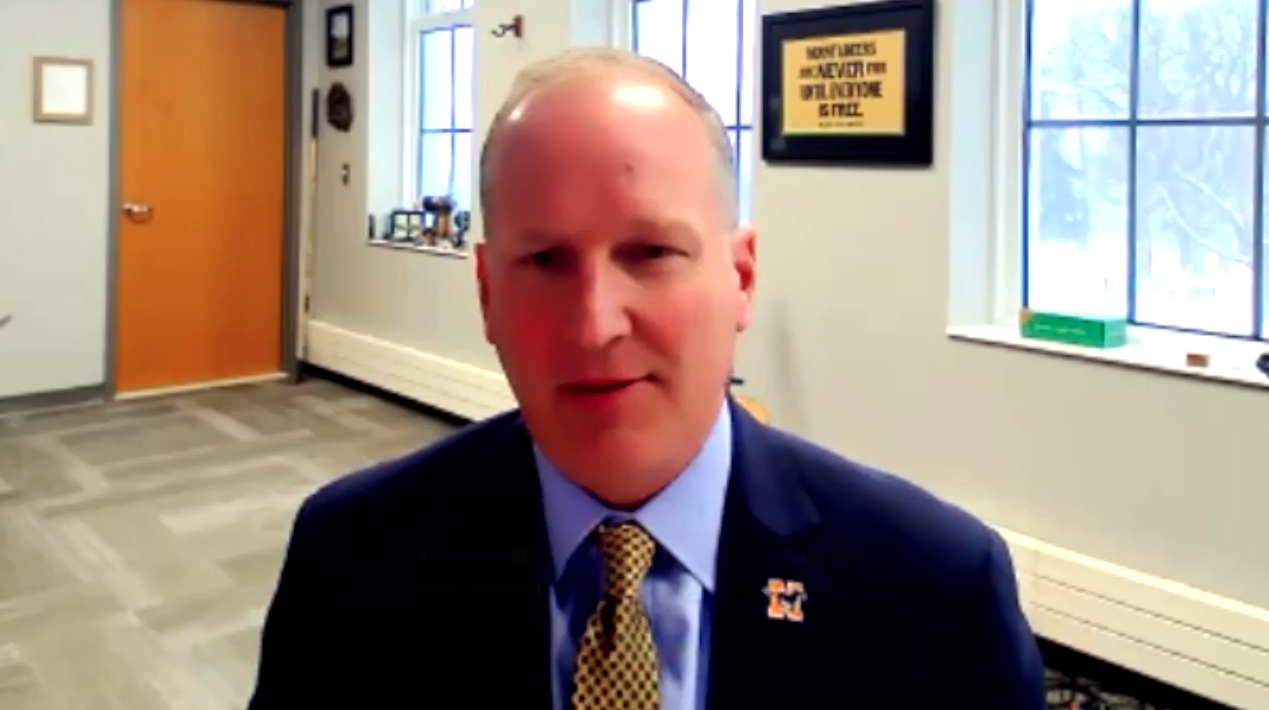
Webber says good communication with parents and students is a key to success.
High school students in the district can keep their phones but are expected not to use them in classrooms. They also implemented an E-Hall pass system to help keep track of students whereabouts during breaks.
"Our belief here is that a policy-driven approach is much more pragmatic in the sense that it teaches kids natural consequences, responsibility and so on. My own proclivity as a lifelong educator, 35 years as a public educator, that when you put clear guidelines in place for students, they will follow them. When the expectations are very clear, they will indeed follow them," Webber said.
Parents have mixed reactions to the proposed statewide policy. Drake Sadler, a Commerce parent, supports the measure.
"Very interesting that the schools will have their own capabilities to decide how they will implement it. I feel like disallowing smartphones is probably a good idea and keeping them out of the classrooms," Sadler said.

However, Maria Swanson, also a Commerce parent, has concerns about safety.
"I'm 50-50 with it. On one hand, it's good for the kids to be aware and be attentive during class. On one hand, it's not really fair for us parents," Swanson said.

The bill still requires approval from the state Senate and the governor's signature. If passed, the policy could be signed into law as soon as February, ahead of the governor's State of the State address.
Tisdel says he's confident it will moved through quickly.
—————
This story was reported on-air by a journalist and has been converted to this platform with the assistance of AI. Our editorial team verifies all reporting on all platforms for fairness and accuracy.
