

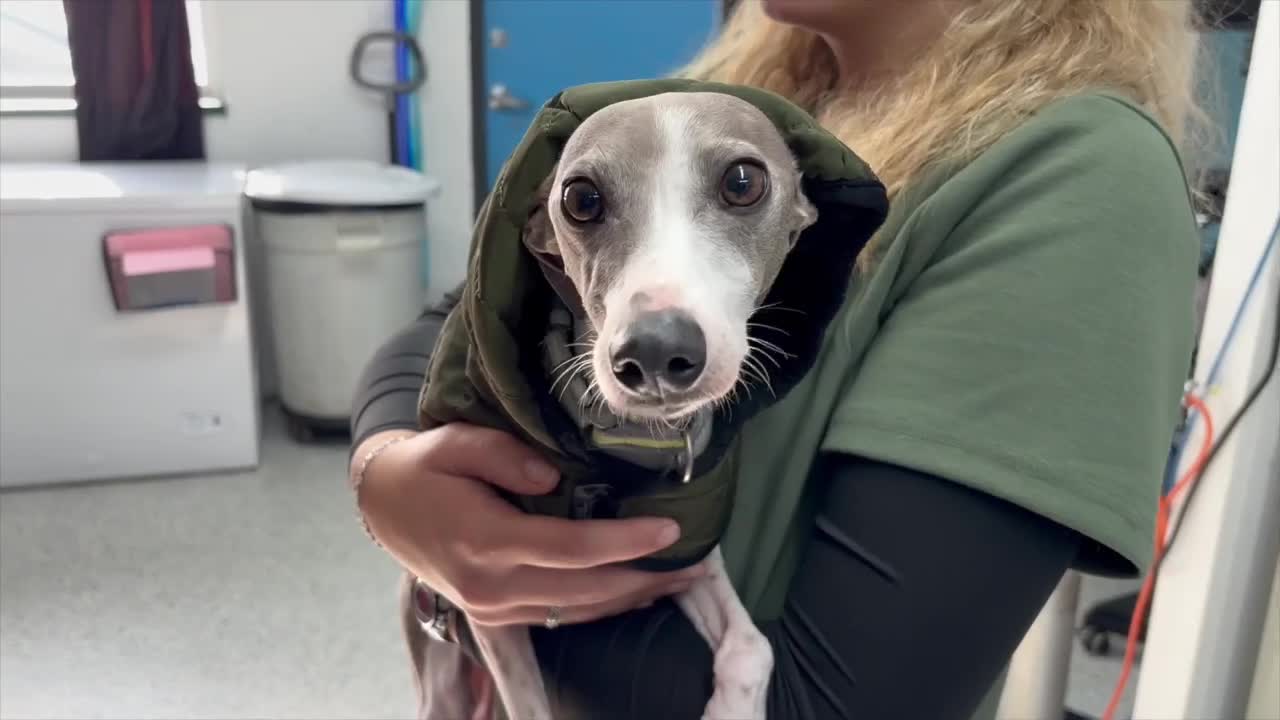


JENISON, Mich. — Inside Jenison Animal Hospital, Paco was getting warmed up after just a couple minutes outside. Wrapped in a sweater and held close, the dog was visibly shaking — a reminder of how quickly extreme cold can affect pets.
"It is cold outside. We just let him out a couple minutes ago for just about two minutes," said Dr. Michael Hilferty, owner and veterinarian at Jenison Animal Hospital.
Dr. Hilferty says in temperatures well below freezing, most dogs should only be outside for a few minutes at a time — just long enough to go to the bathroom. He says hypothermia can begin in as little as five to 10 minutes in extreme cold, regardless of breed.
"Waiting at that back door for them when they're ready to come back in, would be important to help prevent that. No really unnecessary time outside right now would be important too," Hilferty said.
Once inside, he says warming pets safely matters — avoid high heat and focus on comfort.
"Tossing some blankets in the dryer for a little bit, letting them warm up, and then putting them down around where the dogs are usually laying, or the cats are usually laying, would be a good way to do that in a safe way," Dr. Hilferty said.
He says watch for warning signs of hypothermia — including uncontrollable shivering, lethargy, and pale or bluish gums.
"You know, you can look under their lips here. They shouldn't be pale or gray or turning blue or anything like that. Other things too — you know, shivering. And if you do see those things, either contacting your veterinarian... or making sure they get on some sort of warmer area to warm up a little bit," Hilferty said.
Hilferty says during extreme cold, veterinarians and animal shelters often see an increase in reports of stranded or loose dogs. He says if you find a dog outside in arctic temperatures, don't ignore it.
"If you do find any animals outside that are willing to accept your help, certainly trying to warm them up. Checking their paw pads to make sure that they don't have ice or salt, you know, that we've put down to try to prevent the ice stuck in there, because that's a common irritant to dogs and cats outside," Hilferty said.
This story was reported on-air by a journalist and has been converted to this platform with the assistance of AI. Our editorial team verifies all reporting on all platforms for fairness and accuracy.

