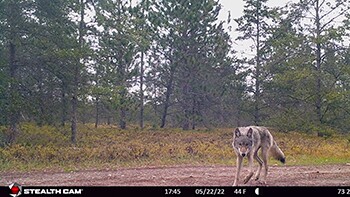
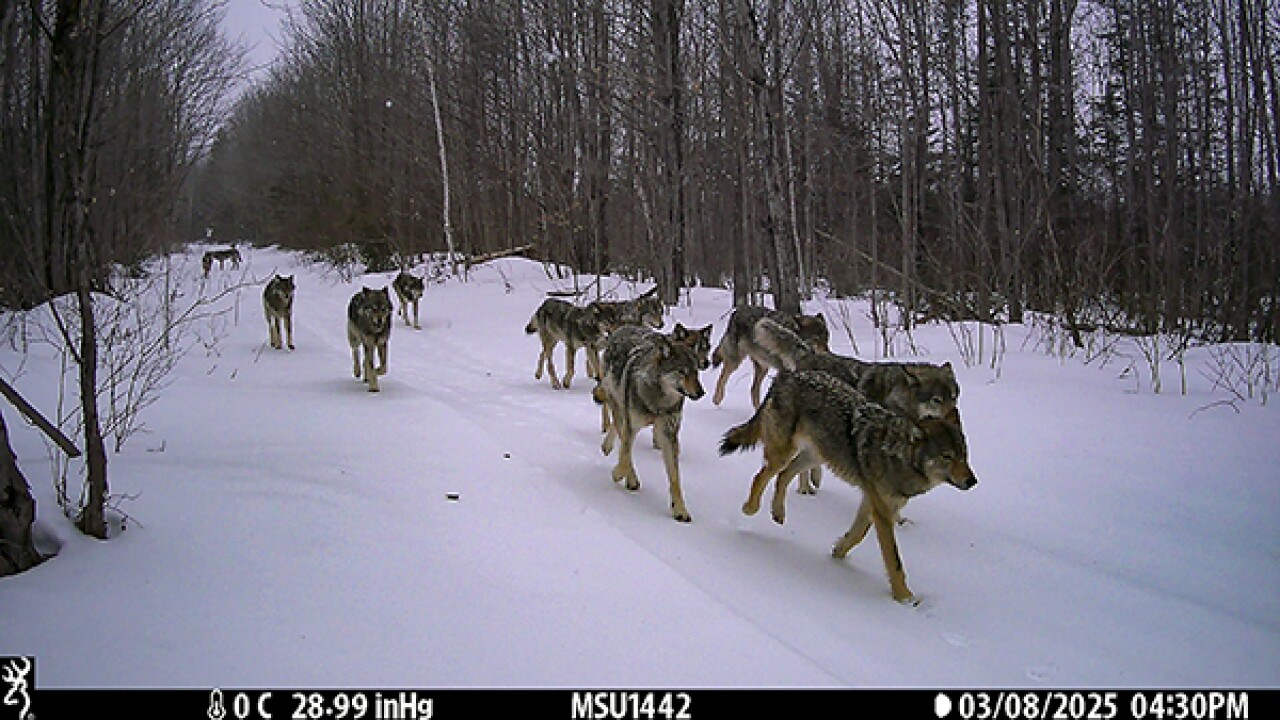


(WXYZ) — For the first time ever, researchers from the Michigan Department of Natural Resources and Michigan State University has estimated Michigan's wolf population in the Upper Peninsula using remote cameras.
According to the DNR, the camera survey method began with a pilot project in 2022 and has expanded throughout the U.P., providing monthly estimates on wolf population throughout the area.
Those estimates aligned with wolf biology, that brings lower counts during the winter, and increasing counts in the spring after the pups are born. It also aligns with the DNR winter track survey, where researchers estimate the population by looking at wolf tracks in the snow. Both surveys in February/March 2024 estimated just under 800 gray wolves in the U.P.
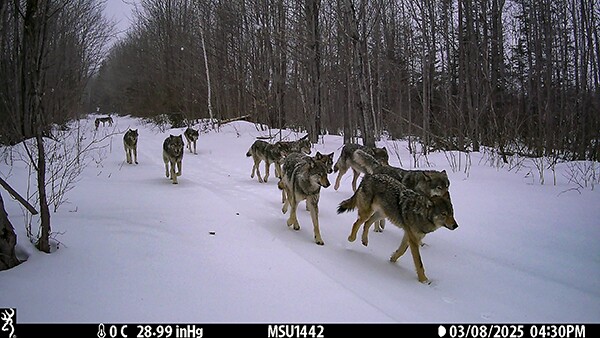
According to the DNR, camera survey estimates ranged from a low of 525 wolves in March 2025 to a high of 1,198 wolves in October 2024.
“Our winter track survey was doing exactly what it was designed to do, and that is to get a minimum count of wolves in wintertime,” said Tyler Petroelje, the DNR’s northern Michigan research specialist. “And now the camera survey is doing exactly what it’s intended to do, and that is to provide information on changes in total abundance throughout the year.”
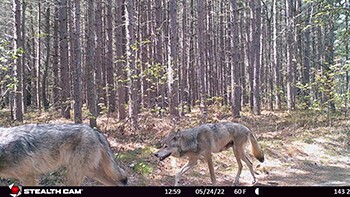
The DNR said that the U.P. camera survey produced more than 2 million total images of various species — including white-tailed deer, gray wolves, coyotes, wild turkeys, red foxes, black bears and bobcats.
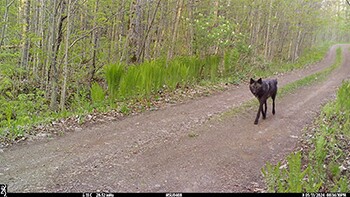
In all, there are more than 1,300 DNR-owned cameras placed throughout the Upper Peninsula. DNR researchers placed them on tree trunks about 4-5 feet high, along low-use roads and trails where wolves are expected to travel. Each year, crews changed the memory cards and batteries.
Results from the first 21 months of the project — October 2023 through June 2025 — showed:
- Three highest monthly population estimates were October 2024 (1,198 wolves), November 2023 (1,084 wolves) and September 2024 (1,061 wolves). Fall produces the greatest estimates because pups are large enough to travel with the pack.
- Three lowest monthly population estimates were March 2025 (525 wolves), February 2025 (538 wolves) and April 2025 (544 wolves). Researchers say this makes sense because late winter is the lowest point, due to denning season and the deaths of wolves.
- Camera population estimates from February 2024 (773 wolves) and March 2024 (794 wolves) were similar to the snow track survey — 768 wolves — conducted during the same timeline.
“There were no real surprises,” Matt Nelson, an MSU doctoral candidate who is coordinating the fieldwork, said. “The camera survey worked really well and aligned with what we know about wolf ecology.”