

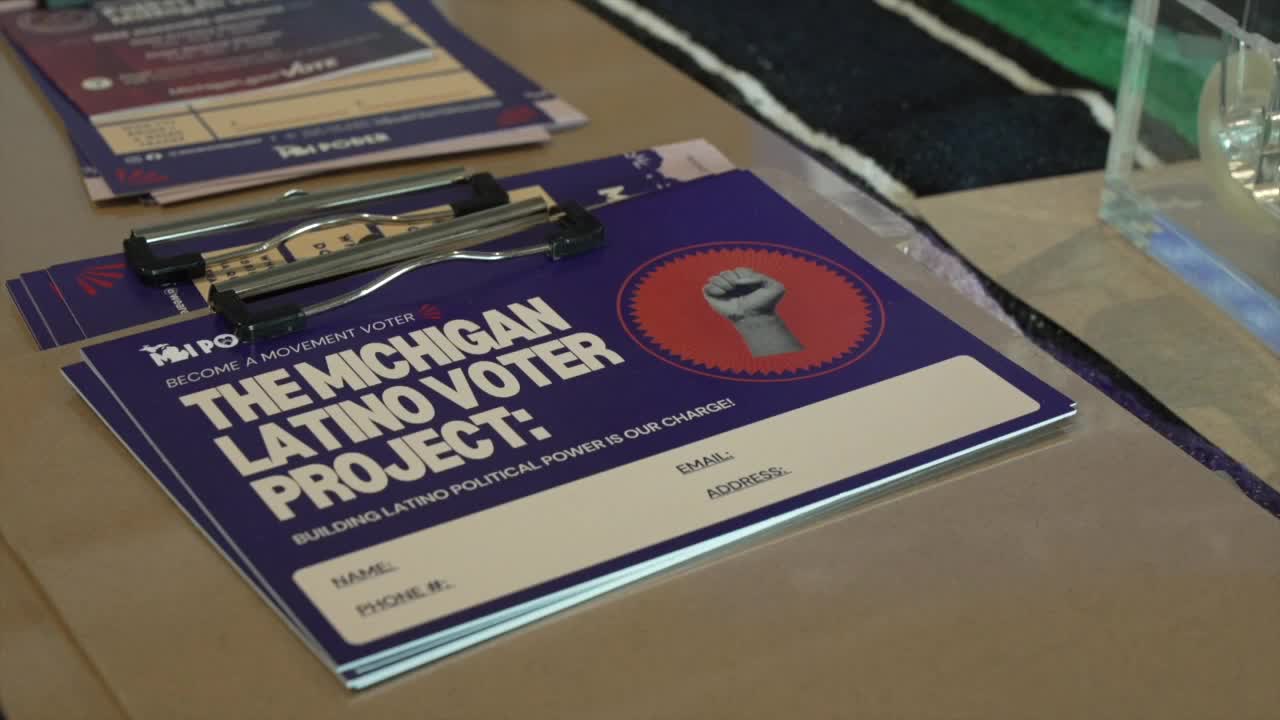


HOLLAND, Mich. — Raquelin Rodriguez began volunteering with MI Poder in September. As a mother of two and the daughter of immigrants, she said her reasons for getting involved start at home.
“I think just to have a voice in the community as a Latina and kind of be an example to my kids to get out there and make their voice heard,” Rodriguez said.
Ahead of Election Day, she is helping families navigate questions about their ballots and voting locations. MI Poder, a Latino-led political organization, reaches Michigan voters through door-knocking, phone calls, text messages and local media.
Rodriguez said speaking Spanish with residents has helped her connect with families.
“I feel like the community has really appreciated us out there and talking to them and sharing more information that maybe they didn't know, especially Latino families and coming out there, speaking their language and teaching them like where to go vote,” she said.
MI Poder Executive Director Cindy Gamboa said she views Latino participation as important to winning elections in Michigan. The organization also works on advocacy and maintaining relationships with residents between election cycles.
“We need to make sure that we have an organization that's going to be advocating for community members not only during elections but also after elections and throughout the year,” Gamboa said.
Education, housing, jobs and small businesses are among the concerns she hears.
She encouraged voters to ask candidates for specific plans, including how residents would be involved in shaping policy.
“How are you ensuring that our community has a voice in the decision-making table to make sure that our communities continue to grow?” she said.
Longtime former Univision TV Journalist Jorge Ramos raised a similar concern about the relationship between campaigns and Latino communities.
“I tell the story that every two years politicians rediscover the Latino vote,” Ramos said. “I call it the Christopher Columbus syndrome, and then they suddenly there's a miracle in which they suddenly speak a few words in Spanish and then they forget about us for two years.”
Despite that frustration, he expressed optimism about Michigan.
“I do see the possibility that Latinos can make history as as we are seeing right here in Michigan,” Ramos said.
For Freddie DeLaRosa, MI Poder’s Holland regional coordinator, expanding participation includes reaching people who have voted for president but have not consistently voted in other elections.
He uses community spending as an example of why those races matter.
“Maybe they're not in national news, but they are in our communities,” DeLaRosa said. “They are the ones controlling our budgets, controlling where the money is going to.”
DeLaRosa said he helped nine of his cousins register to vote. His experience has reinforced the value of reaching people through existing relationships.
“It's your friends. It's your family. It's having those little conversations of like, hey, have you heard about the election? Have you made a plan to vote?” he said.
This story was reported on-air by a journalist and has been converted to this platform with the assistance of AI. Our editorial team verifies all reporting on all platforms for fairness and accuracy.
