

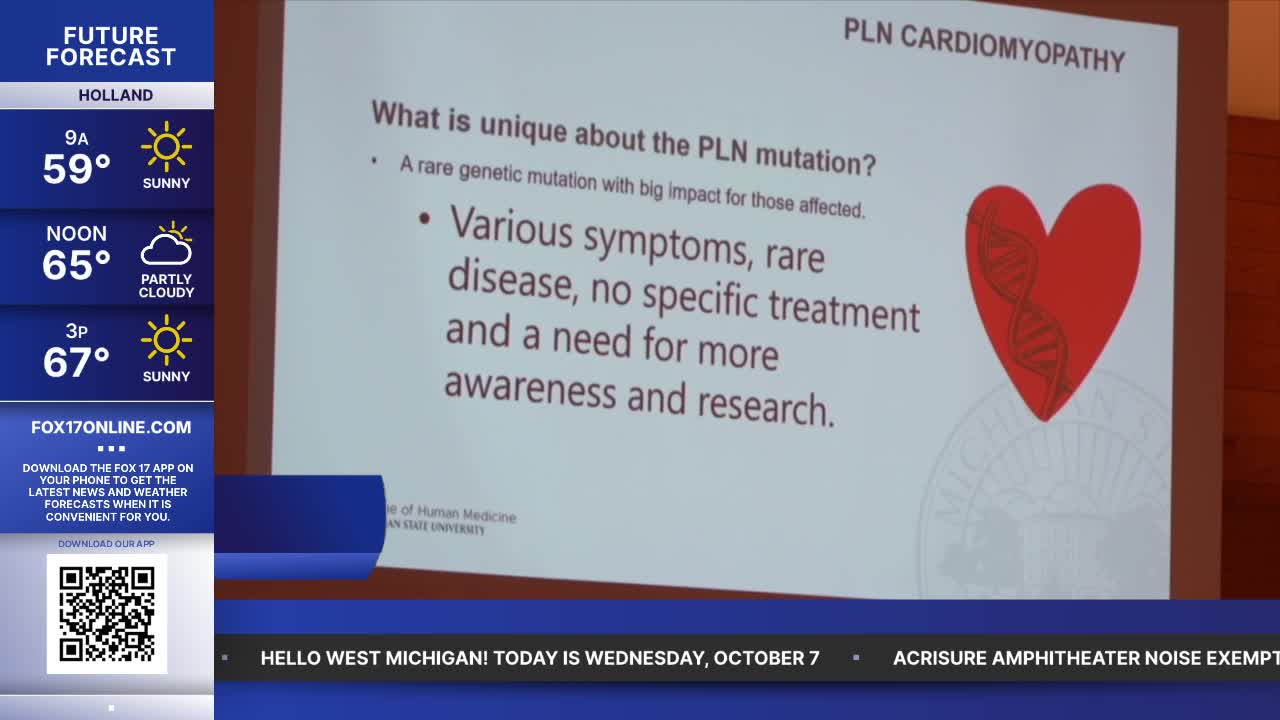


HOLLAND, Mich. — A rare genetic mutation that can lead to heart failure and sudden cardiac death may be more common in West Michigan than many residents realize, prompting Michigan State University researchers to raise awareness among the region's large Dutch-American population.
WATCH: Rare heart gene mutation may be hiding in West Michigan's Dutch community
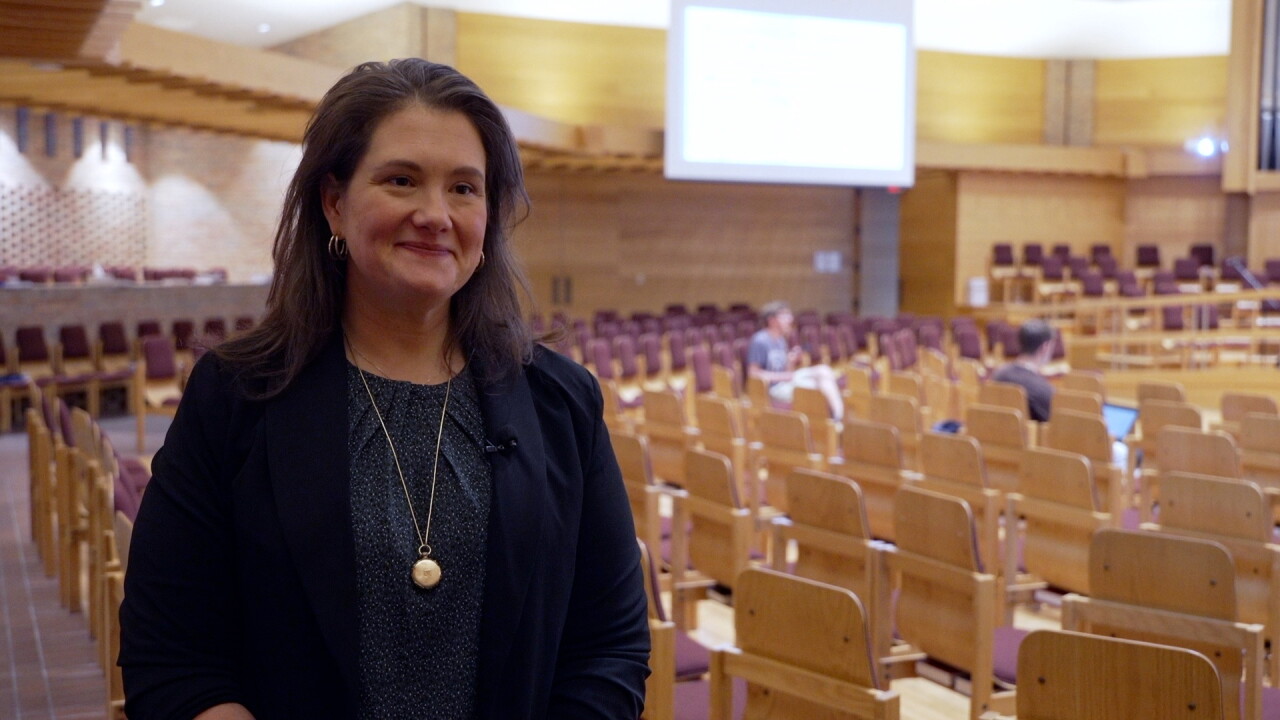
"The PLN Foundation, it's in the Netherlands, but they reached out to West Michigan partners because their research pointed to this region of the world as a place where there's probably a lot of people that have this condition and don't know it," said Dr. Allison Kuipers, associate professor and vice chair for translational research in Michigan State University's College of Human Medicine.
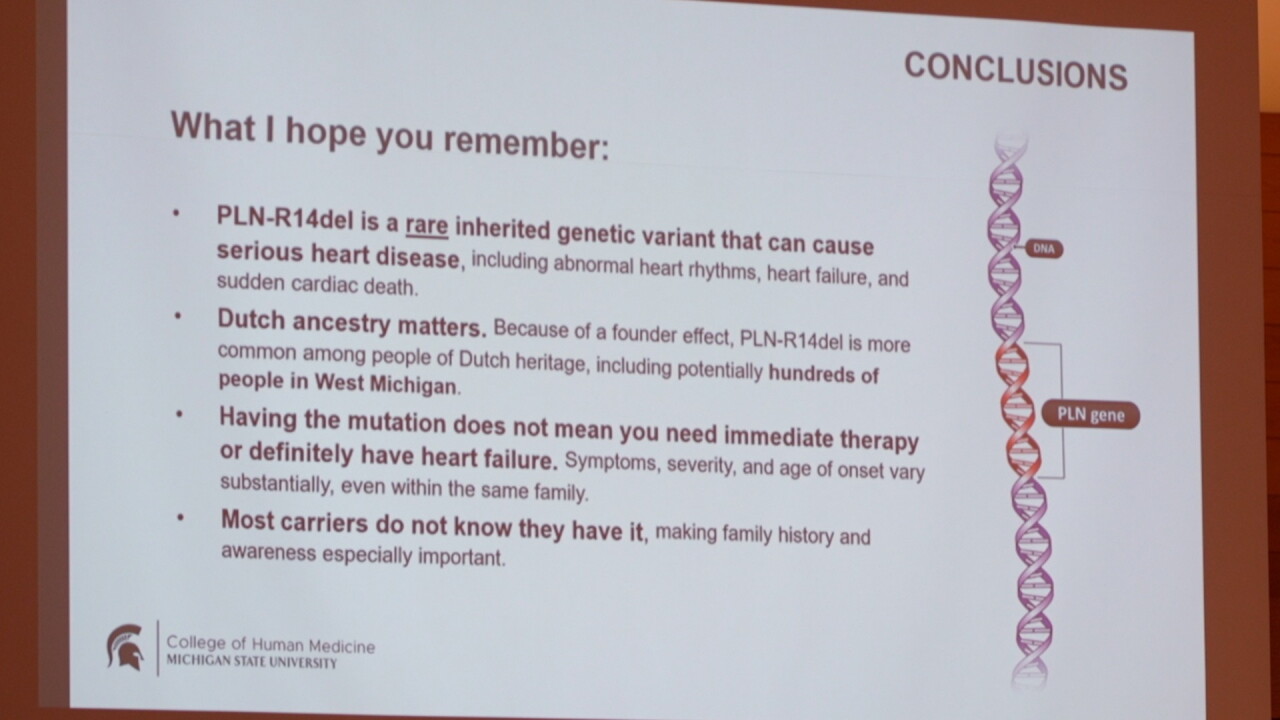
The condition is caused by a mutation in the phospholamban, or PLN gene. Researchers believe the mutation originated in the Netherlands about 500 to 800 years ago and is carried at higher rates among people with Dutch ancestry.
Kuipers, whose father is from Holland, Michigan, said the region's Dutch roots help explain why researchers are focusing attention on communities such as Holland and Zeeland
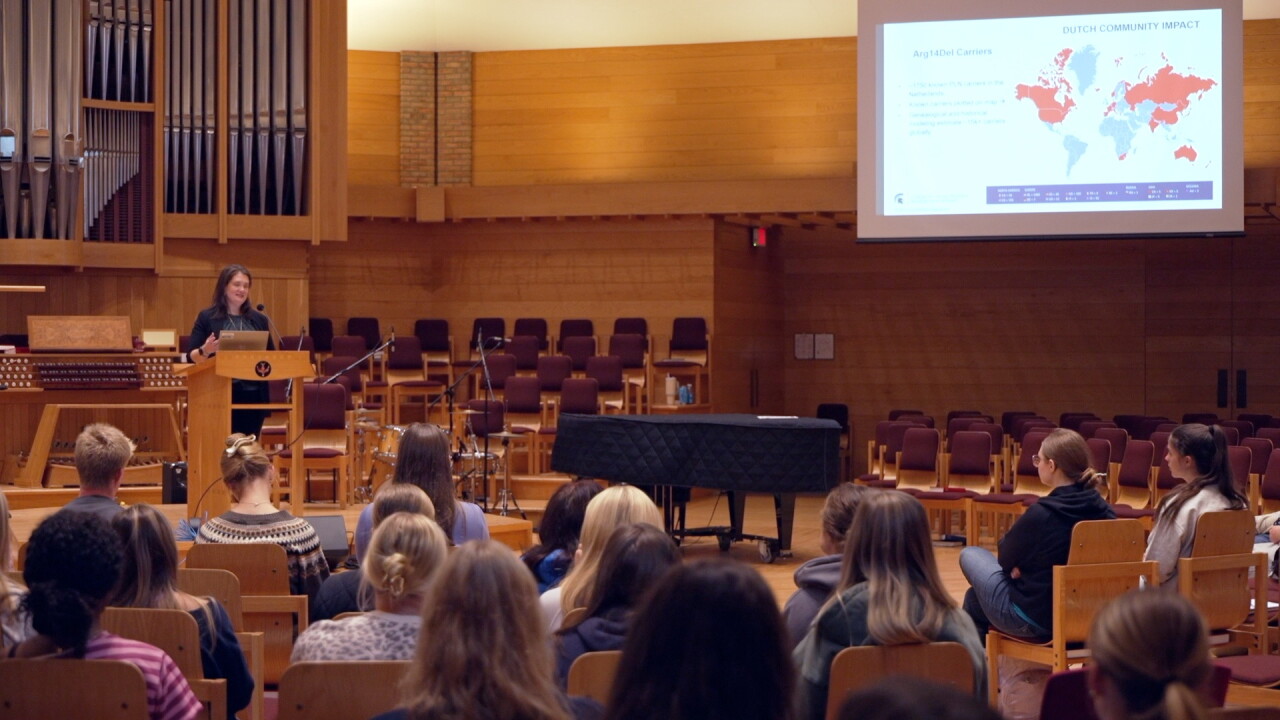
"Between 1820 and 1840, the number of Hollanders, or people from the Netherlands, coming to America was less than 100 a year, but between 1847 and 1857, 10 times that number arrived, and a large majority of them went right here to West Michigan," Kuipers said.
According to the PLN Foundation, the mutation affects about one in 5,000 people worldwide. While rare, the consequences can be severe.
"Unfortunately, this fairly rare variant can lead to really big consequences with heart health and the potential of even sudden cardiac death," Kuipers said.
To help educate the community, Kuipers led a public lecture Tuesday at Calvin University as part of Michigan State University College of Human Medicine's Your Health Lecture Series.
One of the challenges of PLN-mediated cardiomyopathy is that many carriers may never realize they have it.
"Sometimes there are no symptoms, which is a horrible thing to hear," Kuipers said. "But there are some red flags, and those include things like families that have people who unfortunately might pass away kind of unexpectedly."
Symptoms can include fainting, heart palpitations, swelling in the legs and persistent fatigue.
The PLN Foundation has worked with genealogists and migration experts to estimate how widespread the mutation may be among Dutch descendants in West Michigan.
"[They] estimate that there's probably hundreds of carriers here, right here in the West Michigan region," Kuipers said.
The lecture resonated with Calvin University freshman and pre-physician assistant major Taya Schanski, who grew up in Holland.
"It was definitely very interesting to learn about, and just thinking about all the people that live in my community. They're all very much Dutch," Schanski said. "Not very many people know about it quite yet, so it'll be interesting to see how many people in the Holland area specifically are affected by it."
The presentation also reinforced her interest in health care.
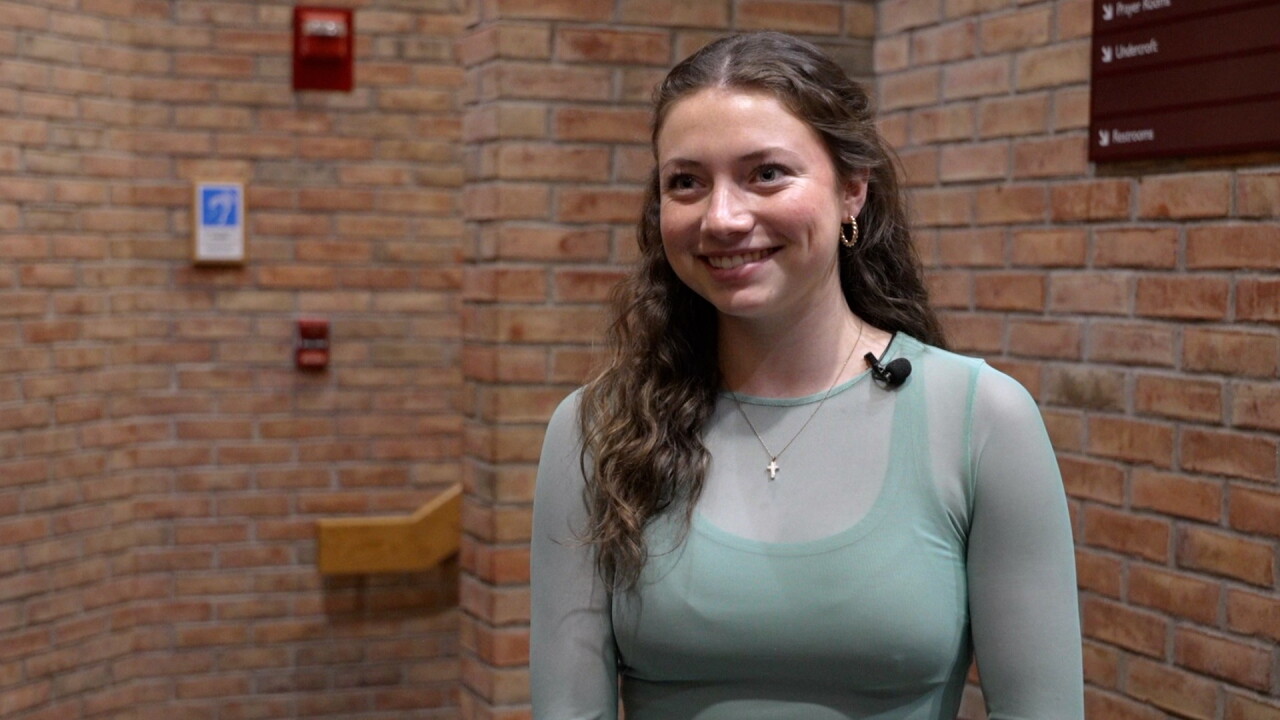
"Definitely makes me excited to learn more about the health world and just know more about little things that might be affecting people that nobody else knows about," Schanski said.
Kuipers said awareness efforts are already producing results. Since speaking at a symposium in March, she said some residents have pursued genetic testing.
"At least one person was found to be a carrier and is now being treated for it," Kuipers said. "It's such a great sort of visual and true output from research that you don't always see. ... To actually have an impact in patients' lives, that's actually why I came to MSU because I had this opportunity to interact directly with patients and with the community, and so that's really important to me."
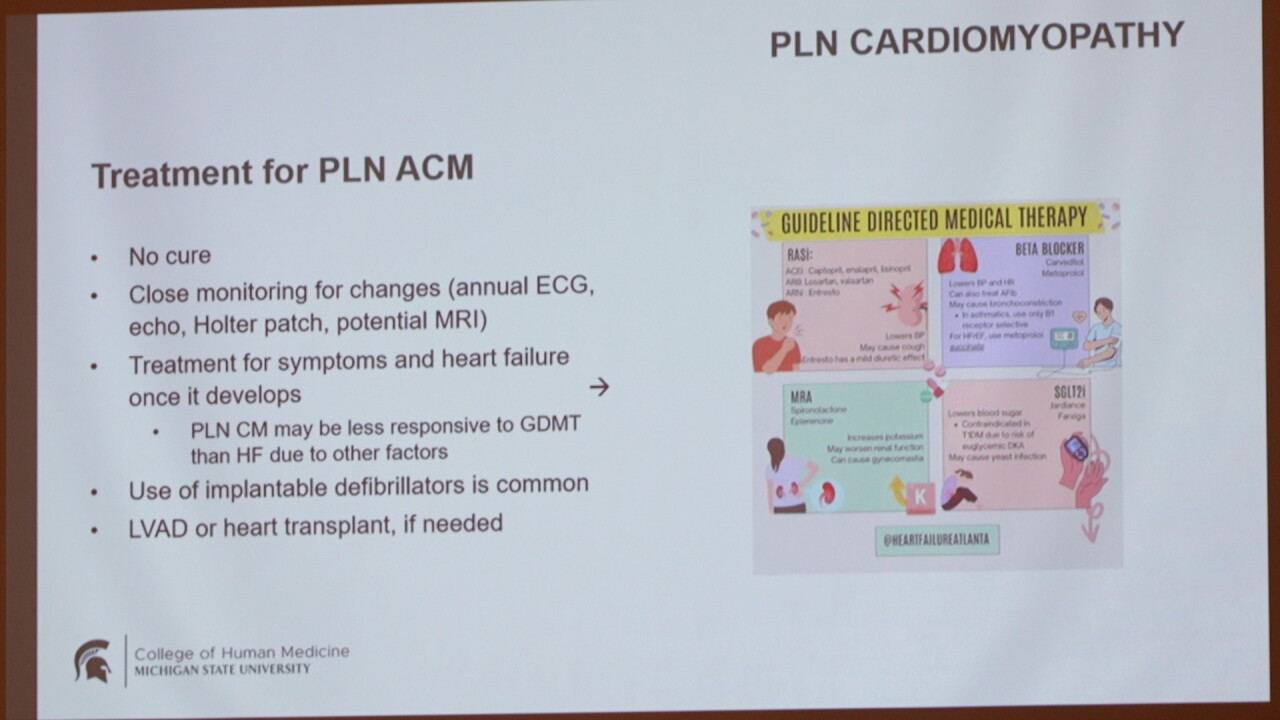
She encourages anyone with Dutch ancestry who has concerning symptoms or a family history of unexplained heart problems to speak with a physician.
"It might be worth talking with your PCP or your cardiologist and just say, 'Do you think that my history, my symptoms, might fit with this disease and mean that we should get some sort of testing?'" Kuipers said.
This story was reported on-air by a journalist and has been converted to this platform with the assistance of AI. Our editorial team verifies all reporting on all platforms for fairness and accuracy.
