

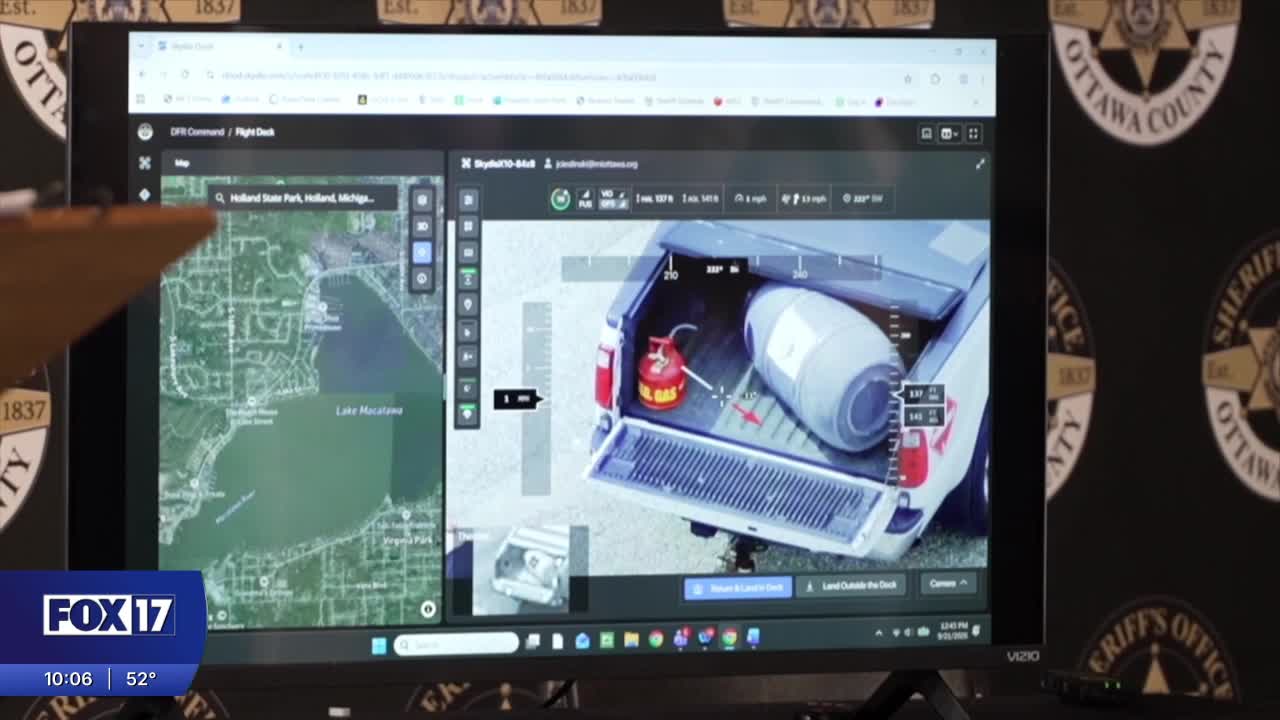


HOLLAND, Mich. — The Ottawa County Sheriff's Office announced Project B.E.A.C.O.N. at Holland State Park Thursday, a high-tech public safety initiative that would build a Real-Time Information Center using drones and security cameras to improve emergency response times across the county.
WATCH: Project B.E.A.C.O.N. aims to transform Ottawa County emergency response with drones and real-time data
B.E.A.C.O.N. stands for Business, Education, Agriculture, and Community Operational Network.
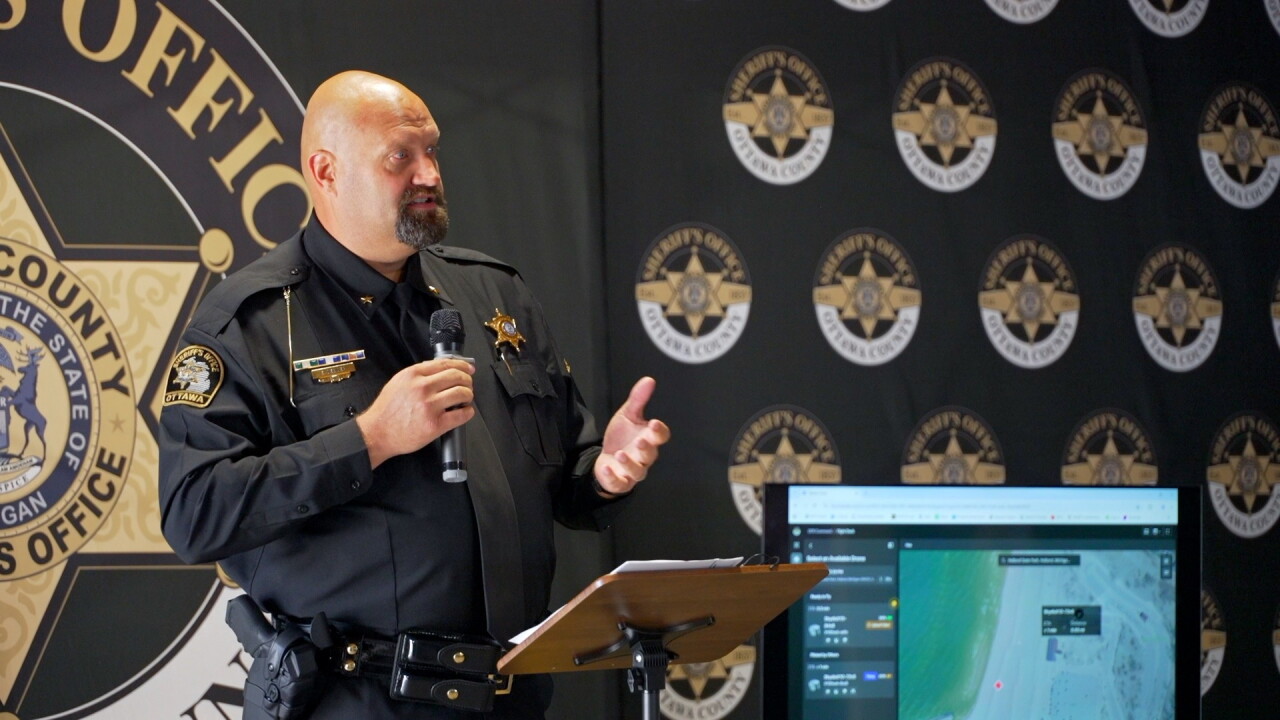
Sheriff Eric DeBoer said the program is designed to make deputies more efficient without the cost of hiring additional staff.
"We can either add deputies, which is cost prohibitive, or we can use technology to make them more efficient, so they can go and do the work that they need to do, and we can save the lives we need," DeBoer said.
The sheriff's office has conducted 449 significant maritime rescues over the last decade, with 45 open-water fatalities occurring within county waters. Conventional land-based responses across beach traffic and sand dune terrain average more than 10 minutes, with a 7-minute median. Project B.E.A.C.O.N.'s drone-as-first-responder architecture is designed to arrive on scene 2 to 5 times faster than ground units.
The initiative also addresses safety beyond the waterfront. The Real-Time Information Center would provide situational awareness for Ottawa County's 16 school districts, 96 schools, and more than 44,000 students, as well as critical infrastructure including 3 power plants, 4 regional water treatment facilities, and major petroleum terminals holding more than 1.1 billion gallons of fuel.
DeBoer said the goal is to connect the county's resources with regional partners.
"How can we leverage technology in law enforcement to both, you know, serve the people of Ottawa County, support the other law enforcement agencies within the county, and then connect to our regional partners in Kent and Allegan and Muskegon," DeBoer said.
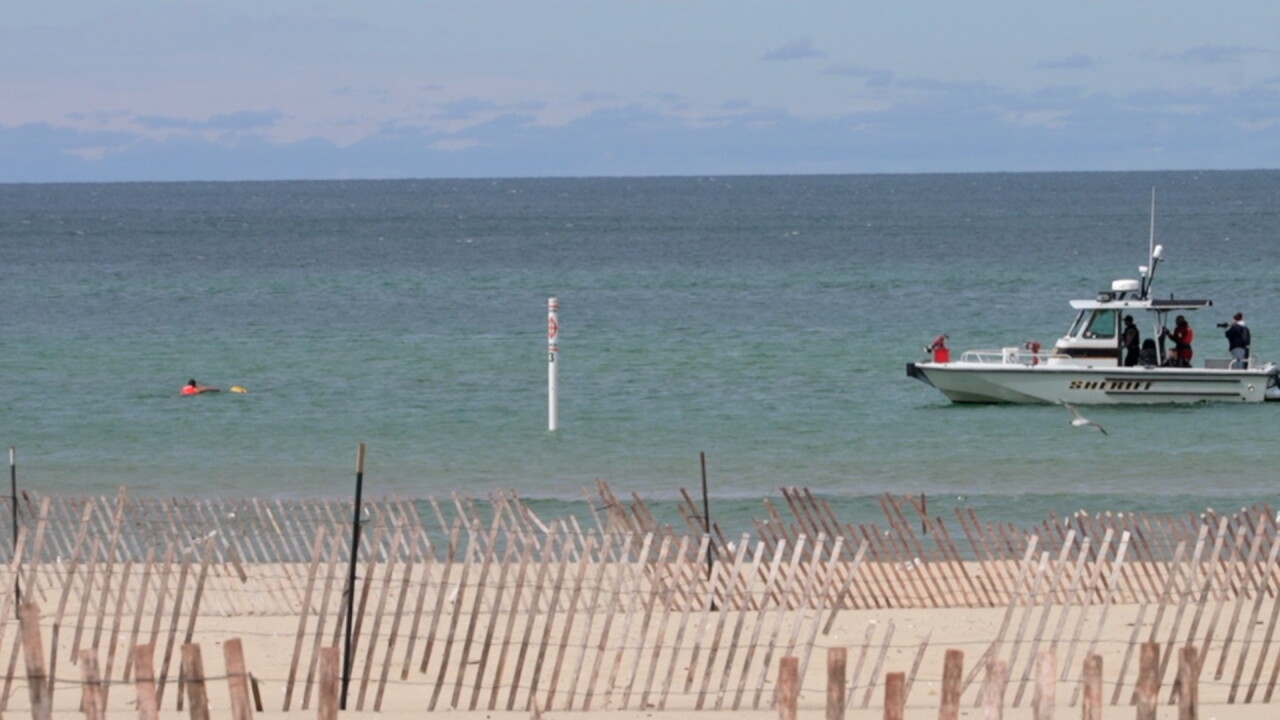
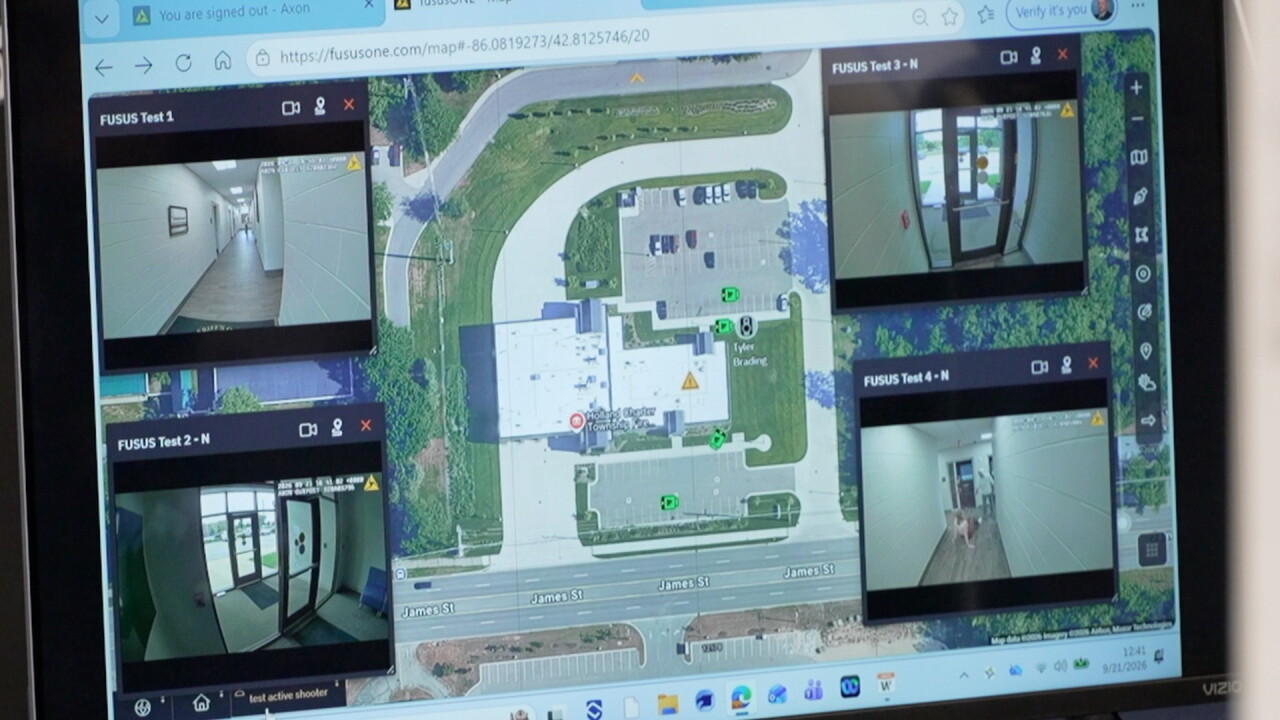
Three demonstrations were held at the event. The first showed a drone locating a missing swimmer and dropping a life jacket. The second featured the Axon Fusus system, which would give law enforcement access to school security cameras during emergencies. The third demonstrated a hazmat operation in which a drone was deployed ahead of first responders.
"What you saw today, all those incidents or all those scenarios were incident-based," DeBoer said. "They're all based on a call into 911 and us pushing a button that allowed the drone to respond there first. It's drone as first responder. This isn't just an autonomous patrol."
DeBoer said privacy protections are built into the program's design.
"We're only going in and looking in [cameras] if there's an event that's significant enough that we're going to have deputies responding, and we need, you know, some real-time information," DeBoer said. "Each community can make its decision on how transparent or how much we could access their system."
The sheriff's office is working to raise $3 million over the next decade to fund the project, at $300,000 per year.
"That'll give us a set of four drones to put along the lakeshore. It will give us integration into loss prevention software for our businesses along our business corridors, that allows us to see people that are victimizing numerous businesses and allow us to key in on some of these bad actors, these organized retail fraud groups," DeBoer said.
The announcement carried personal weight for Holland father Jon Marcus, who lost his 23-year-old son, Nathan, in 2017. Nathan Marcus had graduated from college just 4 months earlier and was working part-time for his uncle's boat business when he was found unresponsive next to a wave runner near Tunnel Park.
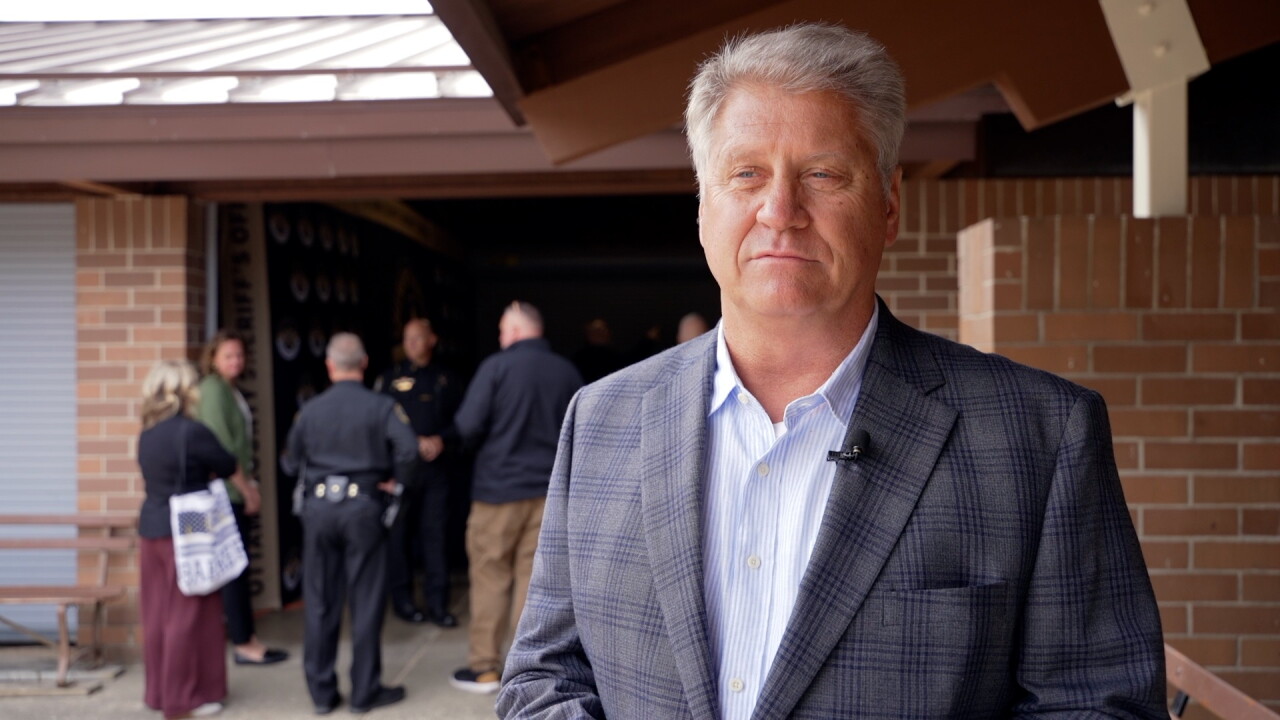
"He was a great kid. He was a friend to many. He was someone who enjoyed time on the water, is very knowledgeable on the water," Jon Marcus said. "He was a great son. He was, we miss him tremendously as a family. There's a void that will likely never be filled."
Jon Marcus said Nathan was wearing a professional-grade flotation device and had extensive experience on the water. The official cause of death was cited as drowning, though the family believes a bad heart rhythm may have been a factor.
"We still ask ourselves these questions: Could today's technology have directed the first responders to the scene more quickly, giving them a better chance to save our son?" Marcus said.
Marcus said he hopes Project B.E.A.C.O.N. will prevent other families from facing the same loss.
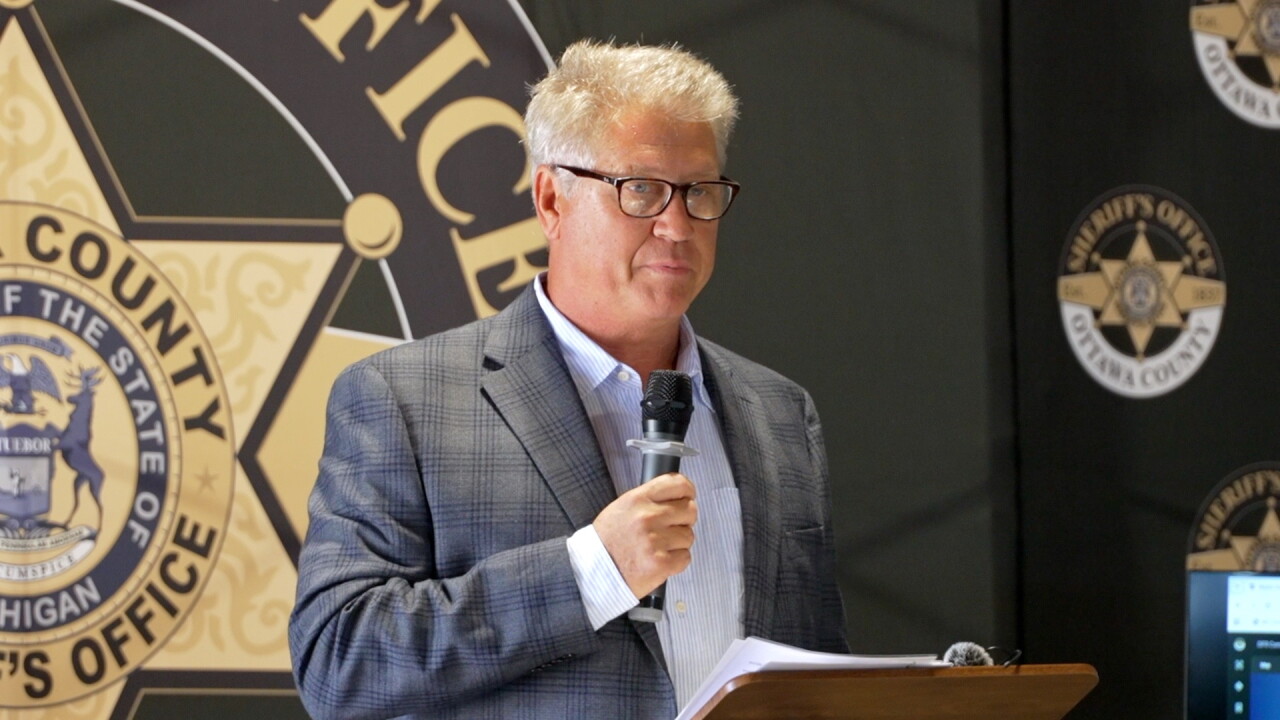
"It's fascinating, right? To think that lives can be saved with this new technology being available, being able to get to those who are going through a crisis and being able to provide aid more quickly is something that's extremely important to us," Marcus said.
State Sen. Roger Victory, who represents Michigan's 31st Senate District, and U.S. Rep. Hillary Scholten, who represents Michigan's 3rd Congressional District, also spoke at the event ahead of the demonstrations.
This story was reported on-air by a journalist and has been converted to this platform with the assistance of AI. Our editorial team verifies all reporting on all platforms for fairness and accuracy.
