



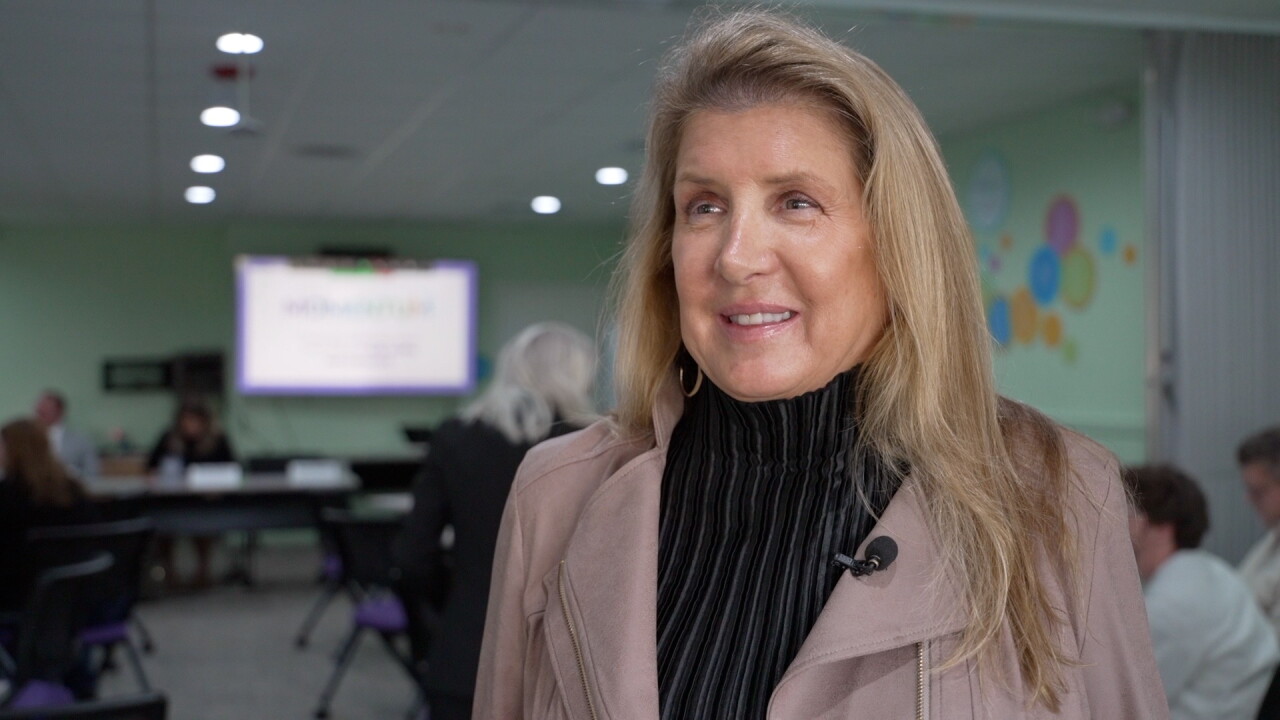
GRAND HAVEN, Mich. — Nine months ago, Fruitport neighbor Kelle Lynn discovered videos of herself posted across multiple social media platforms — videos she said were designed to destroy her reputation.
WATCH: Michigan AG, cyberbullying advocate unite at Grand Haven town hall to push for new laws
"These people were painting me as a criminal that needed to step down from my nonprofit work, and the whole root of it was just for money," Lynn said.
Lynn is the founder of Justice Thru Storytelling, a nonprofit she started 10 years ago that advocates for victims of domestic violence.
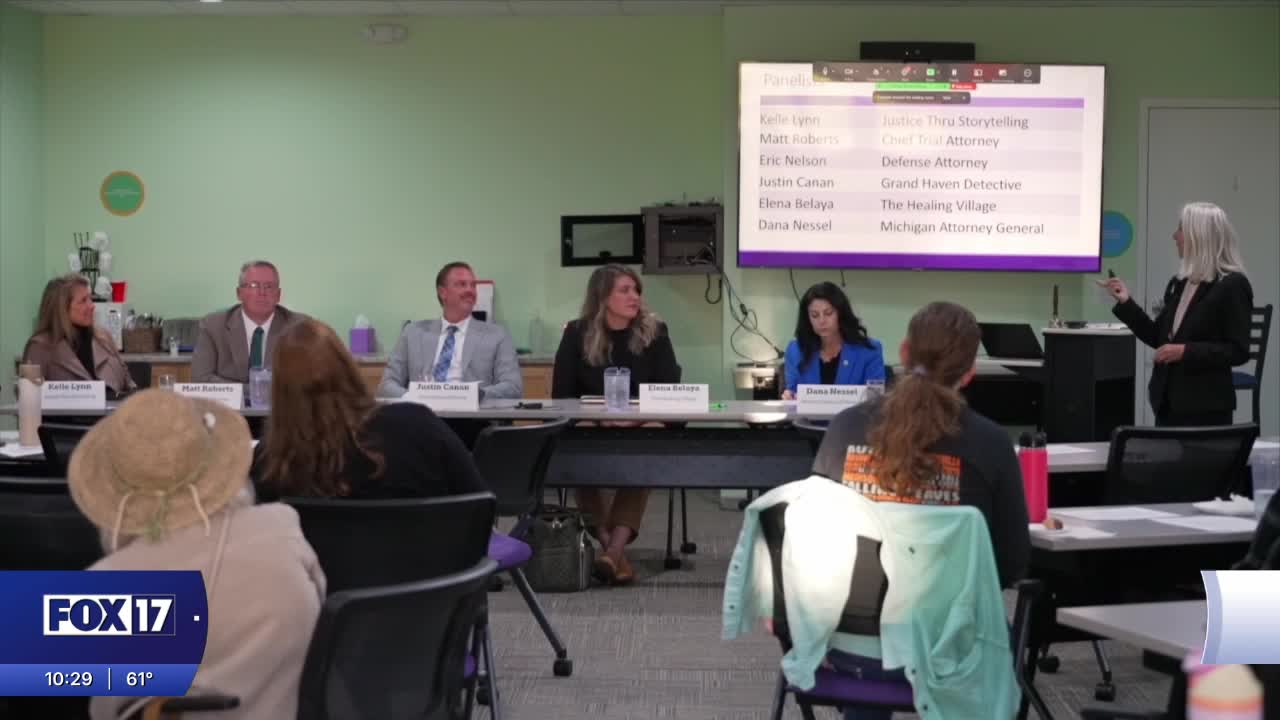
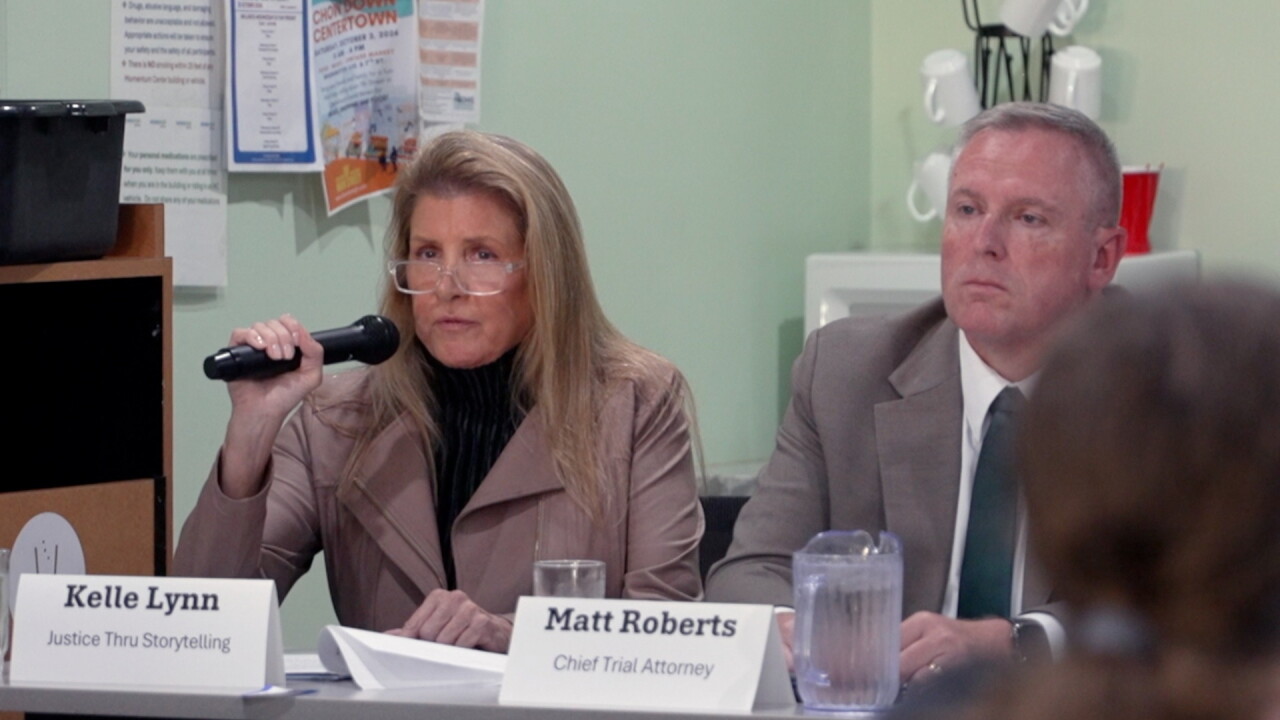
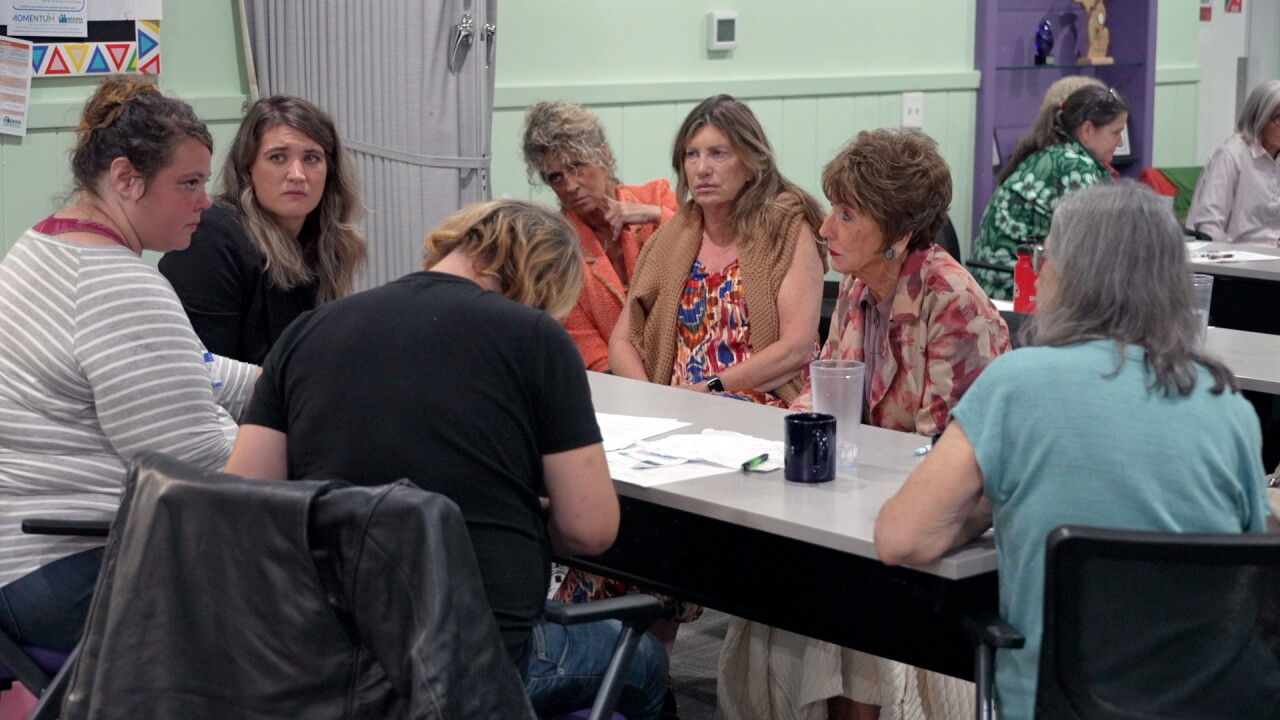
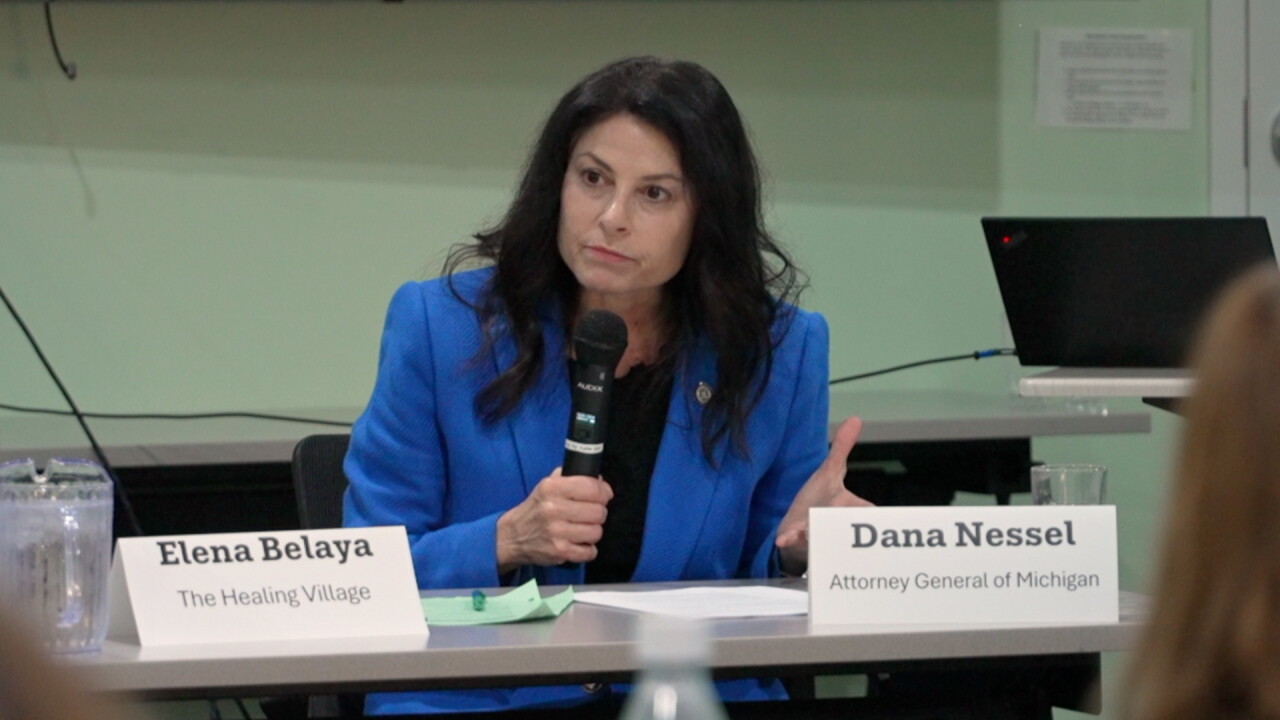
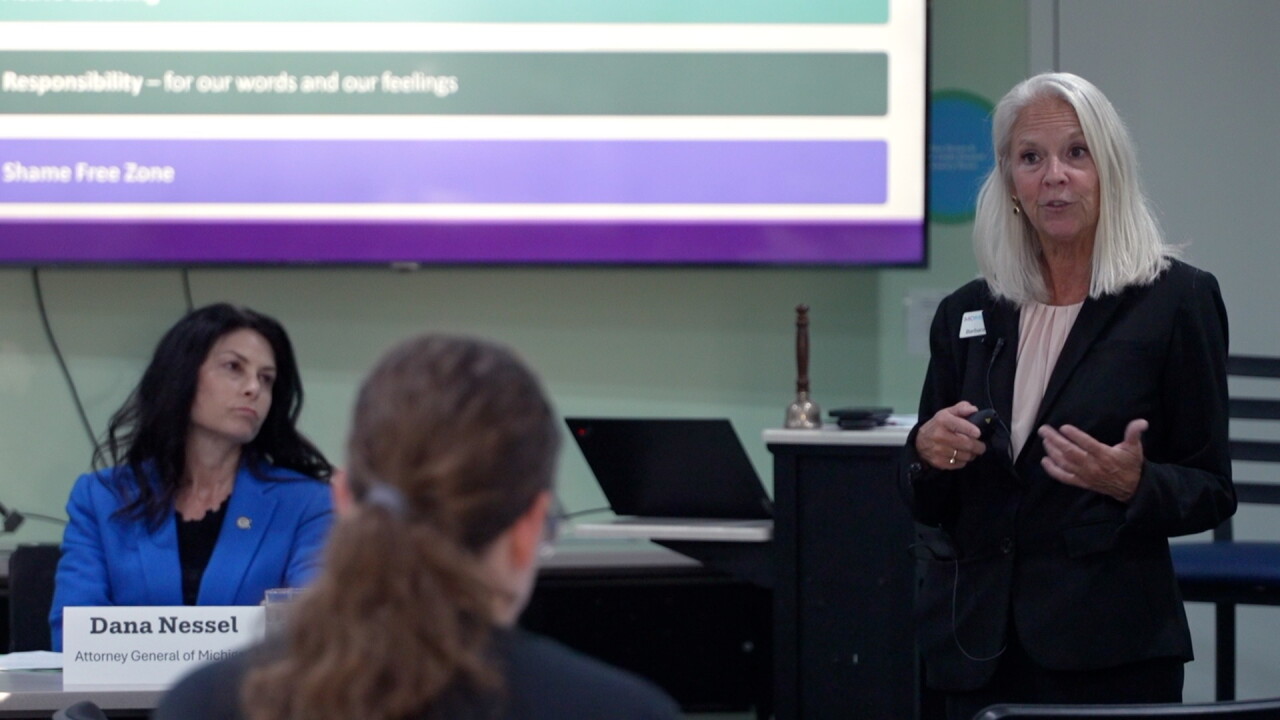
On Monday, Lynn shared her story at The Momentum Center in Grand Haven during a town hall panel alongside four others, including Michigan Attorney General Dana Nessel, Muskegon Chief Trial Attorney Matt Roberts, Grand Haven Public Safety Detective Justin Canan, and mental health practitioner Elena Belaya of The Healing Village in Muskegon.
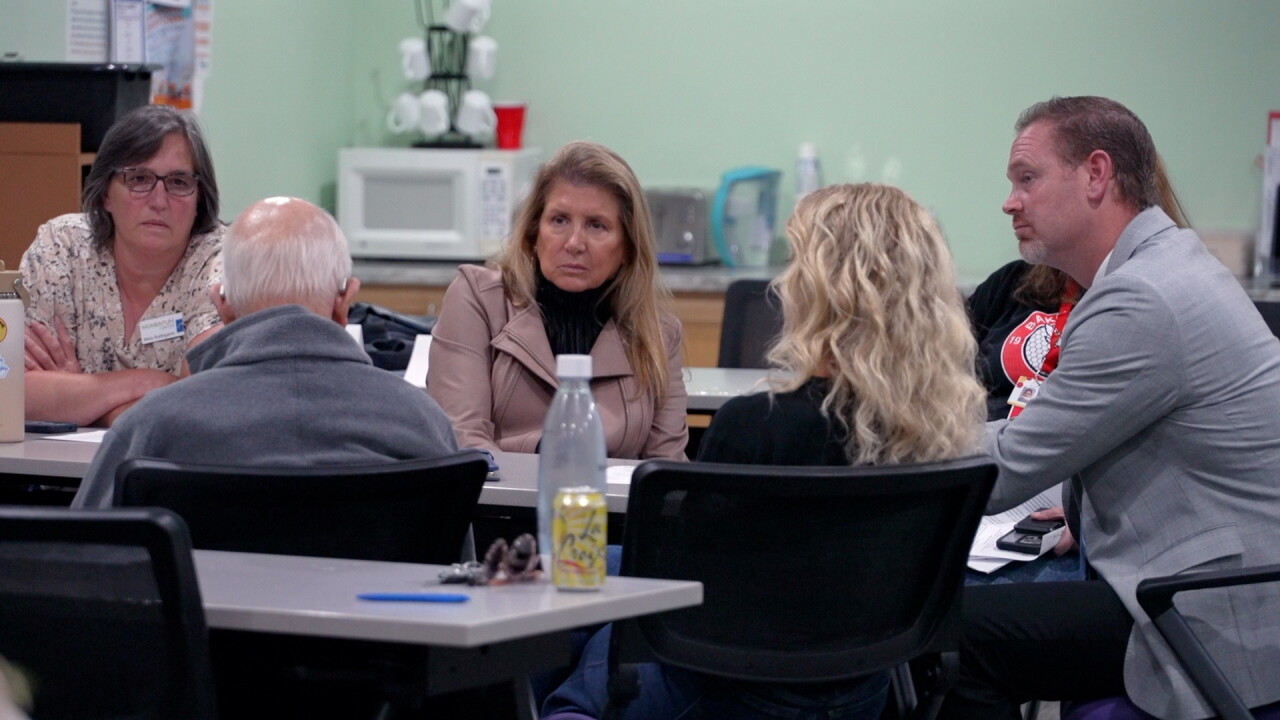
The event aimed to raise awareness about cyberbullying while examining the laws and systems currently in place to protect victims.
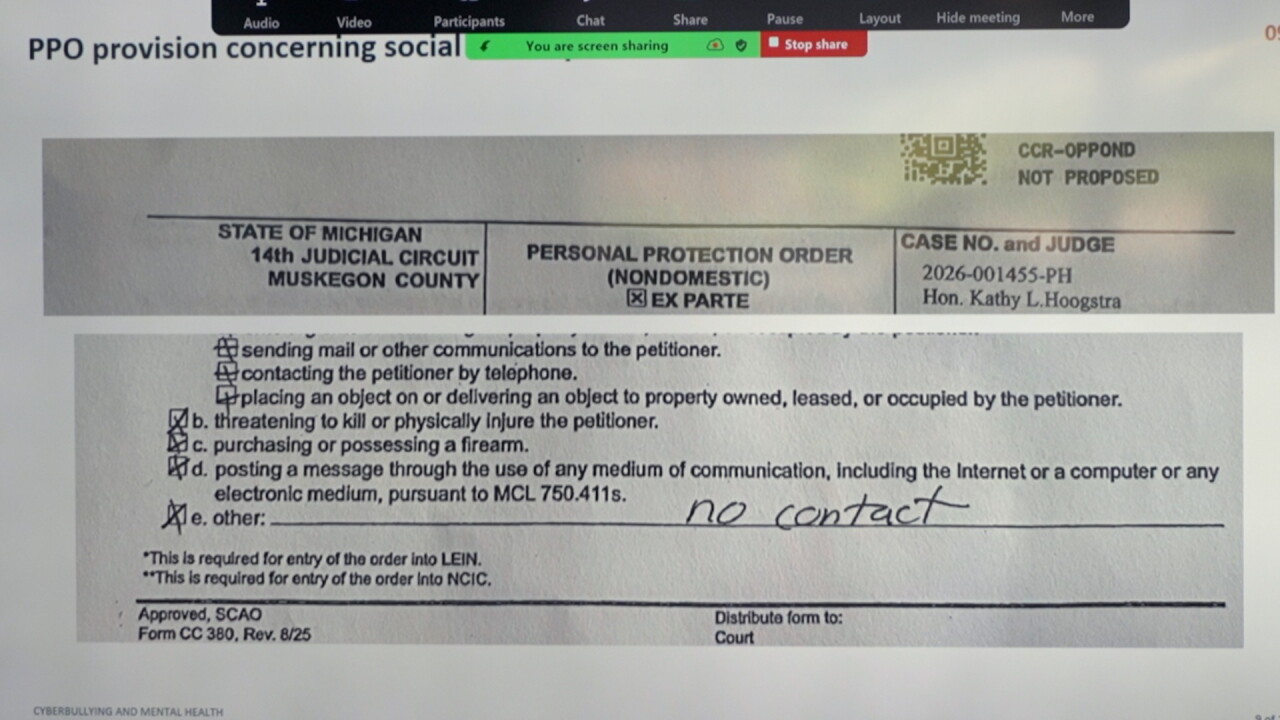
Lynn said she was able to obtain a personal protection order against those responsible.
"I had to submit a petition, provide evidence, and attend a hearing where the judge reviewed my case. While the process can seem overwhelming, taking the step gave me a sense of safety and control during a very difficult time. Throughout this, I gained insight into how Michigan distinguishes between criminal and civil matters," Lynn said.
Her goal in speaking publicly was to push for a closer look at existing laws.
"My case did not fit under the statute as far as falling under criminal. I was told it fell under civil, and that is a whole different animal you're dealing with," Lynn said. "That means I'm responsible for hiring an attorney and paying a lot of money if I want these posts removed, and it's just something not everybody can do. Not everybody can handle that type of expense."
Prosecutors face significant hurdles
Roberts said holding social media companies accountable remains one of the biggest obstacles in cyberbullying cases.
"It's virtually impossible because there is no accountability and nothing built into the statutes and no real help from the federal government on what we can do to hold social media companies accountable for these things," Roberts said. "Send off a search warrant to Facebook. Send off a search warrant to Instagram for some of these things. You're lucky if you get a response within six months."
Roberts said technology has evolved faster than the legislation needed to address it.
"The law is just really not equipped to handle these types of situations, it is just not equipped to handle the changes in technology that we've seen over the last 10 to 15 years, the advancements of social media," Roberts said.
Law enforcement perspective
Canan explained the challenges officers face when responding to cyberbullying complaints.
"With the Matt Epling case law and establishment of the school requirement to affect discipline, which is super important, right? It doesn't necessarily mean that it meets criminal statutes and elements. So we, from a law enforcement standpoint, gauge that, and then we can always write a report and submit it to the prosecutor's office for review. But it doesn't mean that we're necessarily going to be able to have some teeth to affect an arrest on that subject," Canan said.
He said identifying those responsible presents its own set of obstacles.
"It is so difficult for us when it comes to cyberbullying to reach out and say, 'Hey, okay, we know who is on the other end of that computer, and actually identify that person, and then identify the intent of that message, which has to clearly elicit the intent to receive that harm,'" Canan said.
Mental health impact
Belaya outlined the psychological toll cyberbullying takes on victims, noting it often progresses through distinct stages.
"Maybe right away, we see increased symptoms of anxiety. Slightly later, or if it continues, we see increased symptoms of depression. But even later so, we see increased symptoms of PTSD," Belaya said.
She said the digital nature of cyberbullying makes it uniquely damaging compared to in-person bullying.
"The digital world doesn't have a boundary, and that changes how we, as a human, experience the idea of safety. So the threat is no longer confined to one physical environment," Belaya said. "The rumination that we have on when is that threat going to end, it almost never stops at home while you're traveling, literally anywhere, the threat persists. And when what we know about how trauma is experienced by our regulatory system, by the body, by the mind, by the emotions, is that persistence of threat is what creates the severity of the trauma in the system, and how dysregulated we then continue to live."
Social media's role
Roberts did not hold back in his assessment of social media's broader impact on society.
"I'm not the first person; I won't be the last person to say that I think social media is going to be the downfall of Western civilization," Roberts said. "The anonymity that is afforded to people as a result of cyberbullying is the reason we have so many problems we have in society, and extends well beyond cyberbullying."
Attorney General Nessel said social media companies are driven by financial incentives that keep users engaged — often through harmful content.
"They want your information because they want to sell your information. They want to sell you goods and services and products, and they want to manipulate you too, in whatever ways can be beneficial to them from a financial standpoint," Nessel said. "They do that by keeping you online. They want you online as long as possible, and how do they do that? By making the content something that is irresistible, and they use that to scare you, or to anger you, or to put you in a position where you keep scrolling and scrolling and scrolling."
Canan urged parents to take a more active role in monitoring their children's device use.
"It's a tool that they need to be educated in how to use — it's great to reach out and communicate to be able to know where your kid is after practice. But they don't have to have all of these social media apps. They don't need to have carte blanche access to this phone," Canan said. "When a child goes into their room, would you ever let a bad guy stand in front of them with a bat in your own home, right? And elicit fear potentially of raising that bat, and that they're going to receive a battery. That's essentially what you're doing when you allow the social media content that can be presented to a child."
A call for bipartisan action
All panelists agreed that change is needed — through legislation, regulation, or both. Nessel called the issue one of the most important and unifying challenges facing the country.
"I don't care if you're a Democrat, Republican, Independent. This is bad for all of us. It's bad for everyone," Nessel said. "It's a First Amendment right to be able to post things, that don't violate the law, and it's a First Amendment right to seek out content, but it's not to be subjected to these algorithms, and so we can and we must pass laws to ban these social media algorithms. And again, we can do it at the federal level, which would impact all 50 states. But if the federal, if Congress is not willing to do this, our legislature and our governor ought to do it."
Lynn's message to other victims
Lynn acknowledged the emotional weight that comes with being a cyberbullying victim and urged others not to stay silent.
"There's a lot of shame, humiliation that comes with this. And what did I do wrong? What could I have done differently?" Lynn said. "We can't be victim shaming people that fall into, you know, into cyberbullying. That oh, you were hanging out with the wrong crowd — people need compassion."
Her advice to anyone facing a similar situation was direct.
"Go to the police. You know, file a report. Start there, and then you know, if you think you need a personal protection order because somebody is threatening to harm you. Definitely, don't hold back," Lynn said. "It costs a lot of money for an attorney to file a PPO. However, that's why we have that Michigan Legal Help website that can walk you through that detail by detail, and it's really empowering to do it that way."
This story was reported on-air by a journalist and has been converted to this platform with the assistance of AI. Our editorial team verifies all reporting on all platforms for fairness and accuracy.
