



HOLLAND, Mich. — The holidays are often portrayed as a time of celebration and connection. But for many people, the season can also make life's challenges feel heavier.
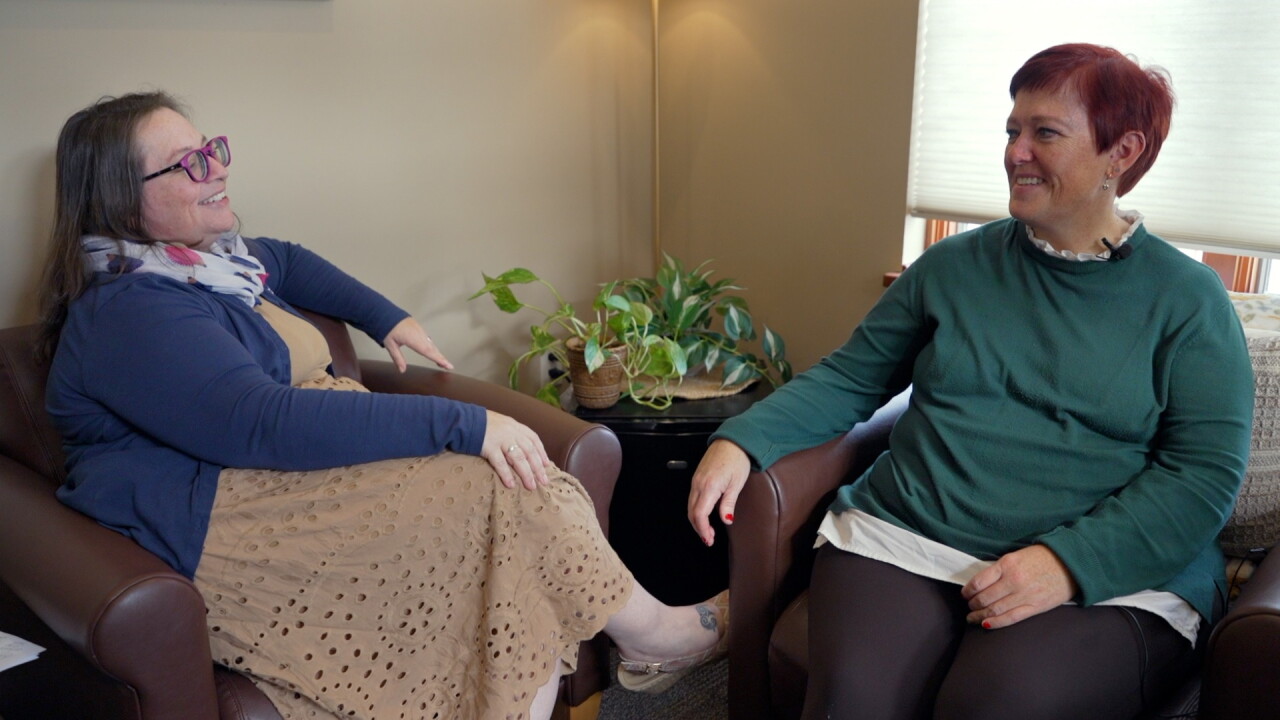
At Holland Hospital's Outpatient Behavioral Health Services, therapist and licensed social worker Heather Holt and dialectical behavior therapy group coordinator Rachel Hinken said they hear about those struggles every day.
WATCH: Holland Hospital providers share ways to manage holiday stress through gratitude, mindfulness
“We have patients who will say, ‘I can't get to my appointment because I can't afford the gas,’” Hinken said.
Holt said changes involving Medicaid are creating uncertainty for some patients.
“Folks who are on disability that are needing to now be looking for jobs or volunteering, and they maybe have never had a job. Folks that aren't on disability, but still are on Medicaid, that have not had a job in 20 years,” Holt said.
Other concerns are also making their way into the therapy room.
“The politics has been really big,” Holt said. “Folks have come into behavioral health just to have a safe space to be able to talk.”
Hinken said the time of year can bring its own challenges.
“The changing of the seasons, changing of the time, definitely contributes to people's emotional health,” Hinken said.
Those pressures can feel even heavier as the holidays approach.
“We have a lot of people that don't have connections with other people, and so it's just stuck in their face that they don't have people to have Thanksgiving with or have meals with,” Holt said.
Finding gratitude in everyday life
Holt and Hinken said people cannot necessarily control what's happening around them, but they can be more intentional about where they direct their attention.
“We talk a lot about mindfulness,” Hinken said. “It's about being present in the moment and not judging.”
Holt said research has examined how positive and negative experiences affect the body.
“We want our happy chemicals, our serotonin, to be like bebopping around here, and when we're stuck in the negative spaces, that brings on our cortisol, which we don't want,” Holt said. “That has shown scientifically to improve life expectancy as well as just improve life experience.”
Practicing mindfulness and gratitude does not have to involve a major change in routine.
“There are the things like writing three things down every day in a journal,” Holt said. “Anything that's causing us to connect with nature or with the things that really bring you joy.”
Even routine activities, like brushing your teeth or playing with your kids, can become opportunities to practice mindfulness.
“Take that time to think about what you appreciate, or that feeling or taste of the toothpaste,” Holt said. “Being present and slowing down. It's OK to slow down.”
Spreading kindness one rock at a time
At the facility, those ideas have taken a more colorful form.
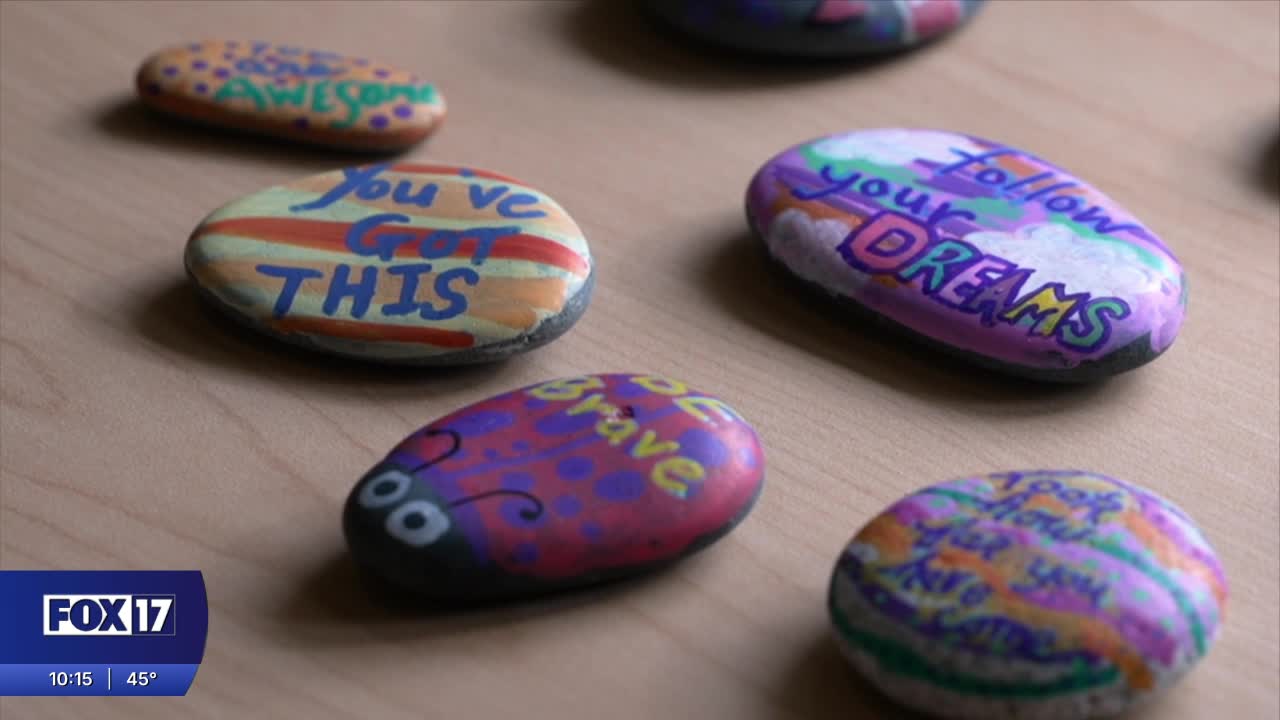
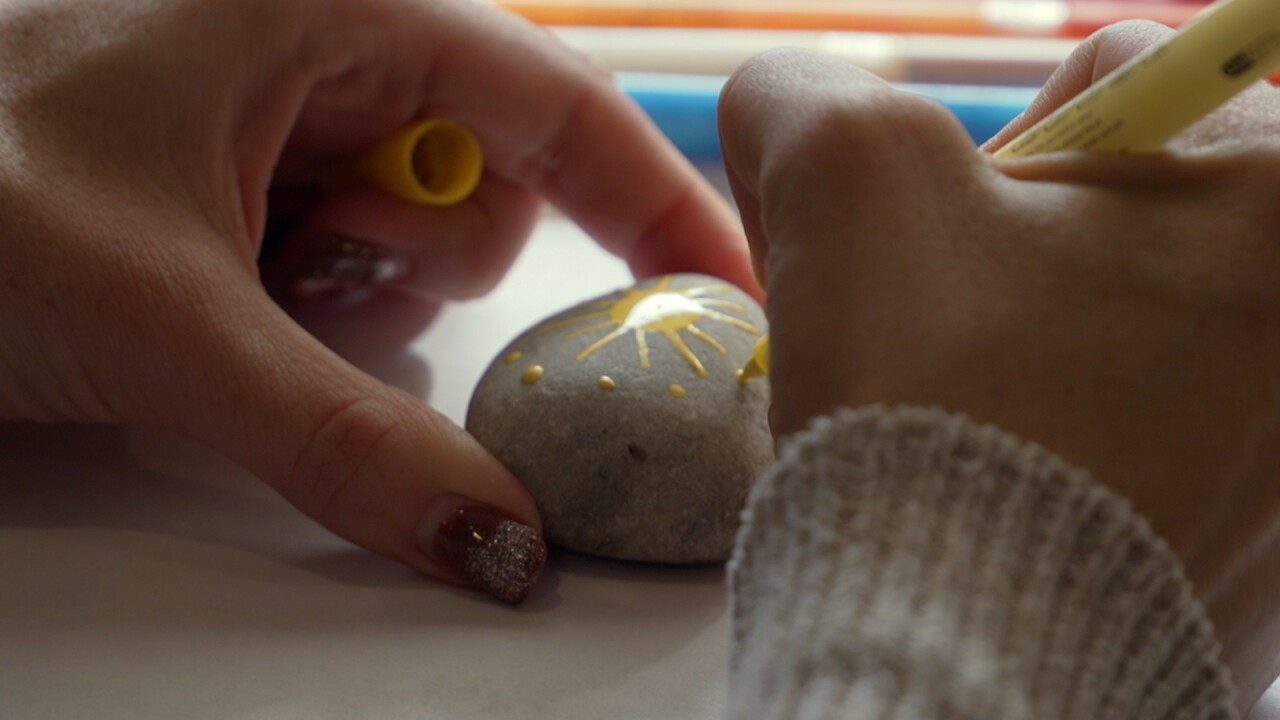
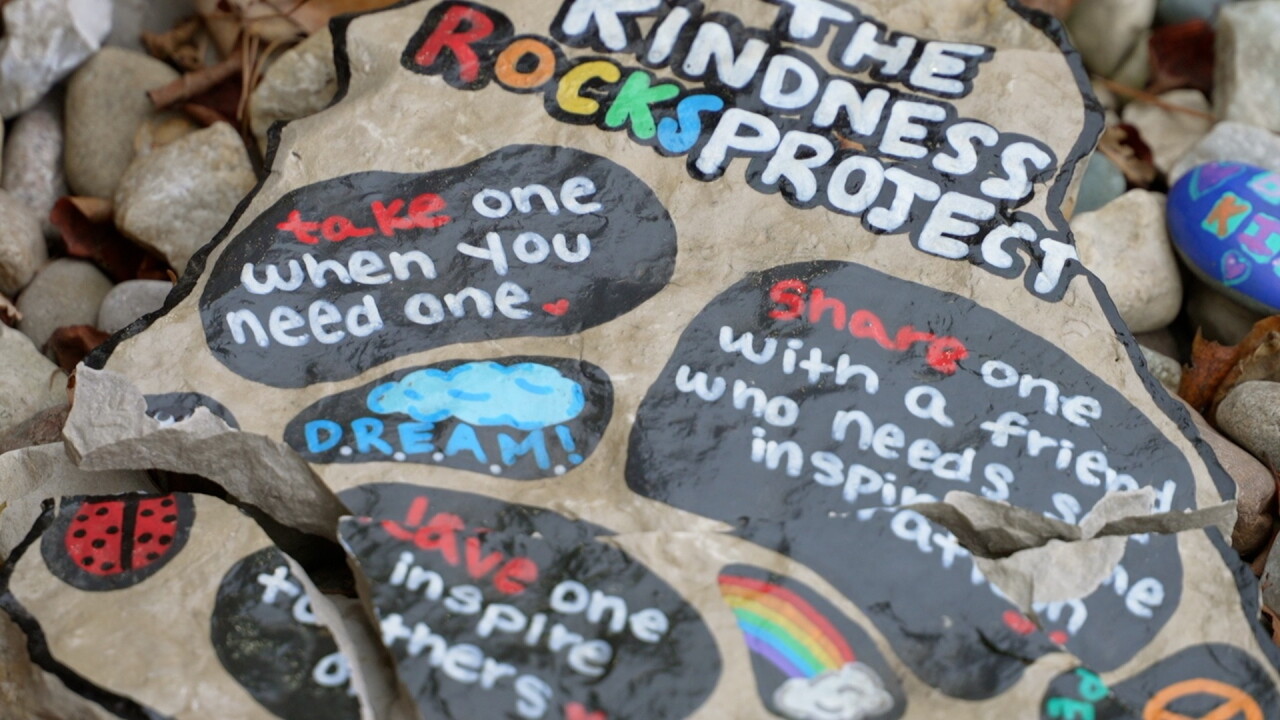
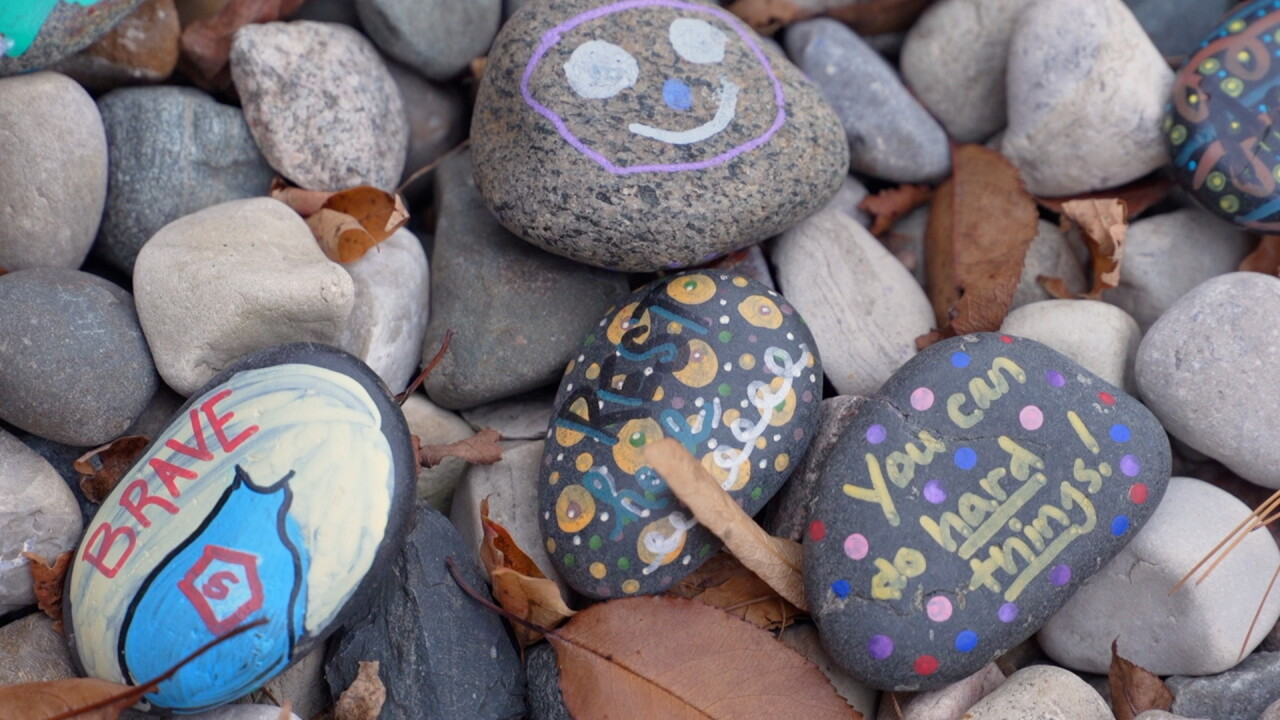
For about six months, patients and staff have painted more than 60 rocks as part of the facility's Kindness Rock Garden. The rocks feature words, phrases and pictures meant to connect with whoever may find them.
“It gives a lot of people encouragement, and also creating the rocks is a mindful activity because you're really focusing on that one thing, and it's fun to do,” Hinken said.
Visitors can take a rock for themselves, leave one behind or pass one along to someone else.
“Even putting it out in the community so someone else can find it. Like, if they're out walking, or I found one in the grocery store one time — it's a really important way to connect and a helpful way to connect with the community as well,” Hinken said.
Hinken took the rock she found at the grocery store home and later gave it to her mother.
“I knew it was something she would enjoy, so yeah, just kind of spreading the sunshine, spreading the joy,” Hinken said.
At the facility, Holt has watched those connections happen firsthand.
“I've seen people pausing at the garden and picking up a rock,” Holt said. “Talking to their therapist about how much it means to them to have something that someone else made that connects with them.”
The project also has a personal connection for Holt.
She said the idea grew out of a suicide prevention conference she attended in Boyne City. During the conference, participants made kindness rocks in memory of a young woman who died by suicide. Holt said the session was led by the young woman's mother.
“That was just a very powerful event,” Holt said. “I was like, here now, I'm connected to this Boyne City thing, and suicide prevention is something that's really important to me, and so I want to make this happen here in Holland too.”
Holt said the Holland garden is intended to carry that idea forward.
“You never know what one word can help,” Holt said. “You never know what other people are going through.”
This story was reported on-air by a journalist and has been converted to this platform with the assistance of AI. Our editorial team verifies all reporting on all platforms for fairness and accuracy.
