



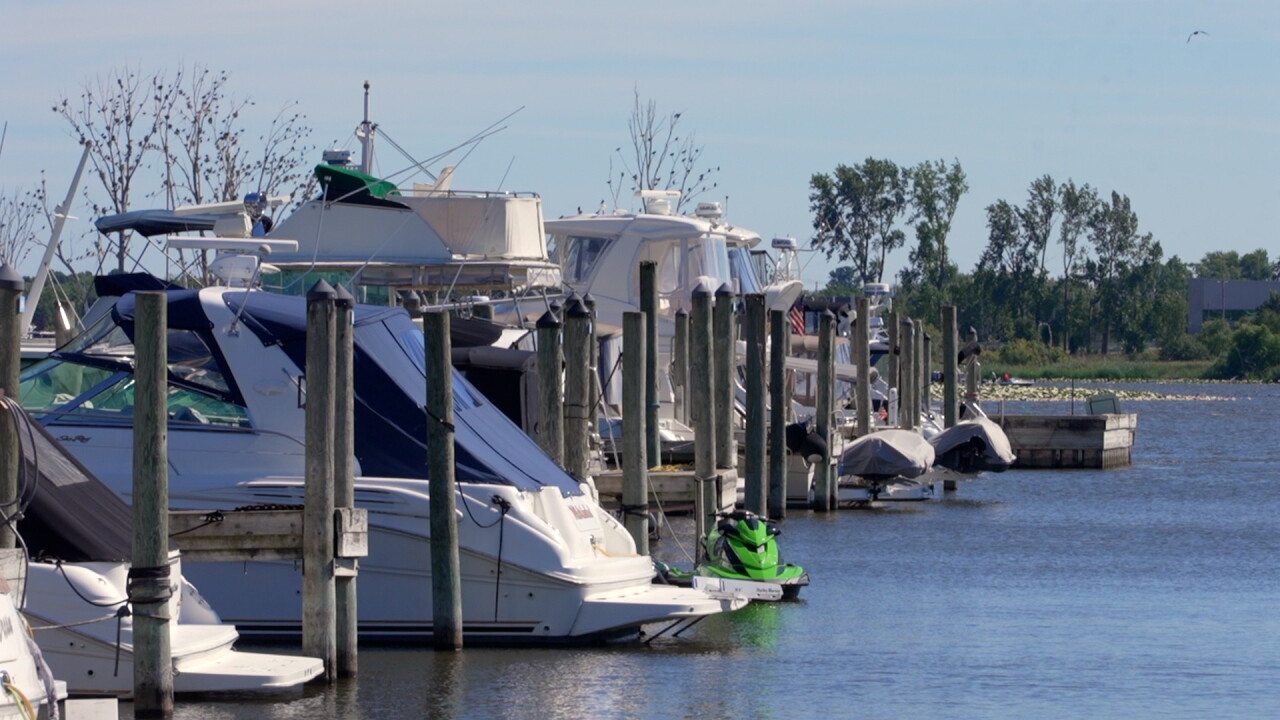
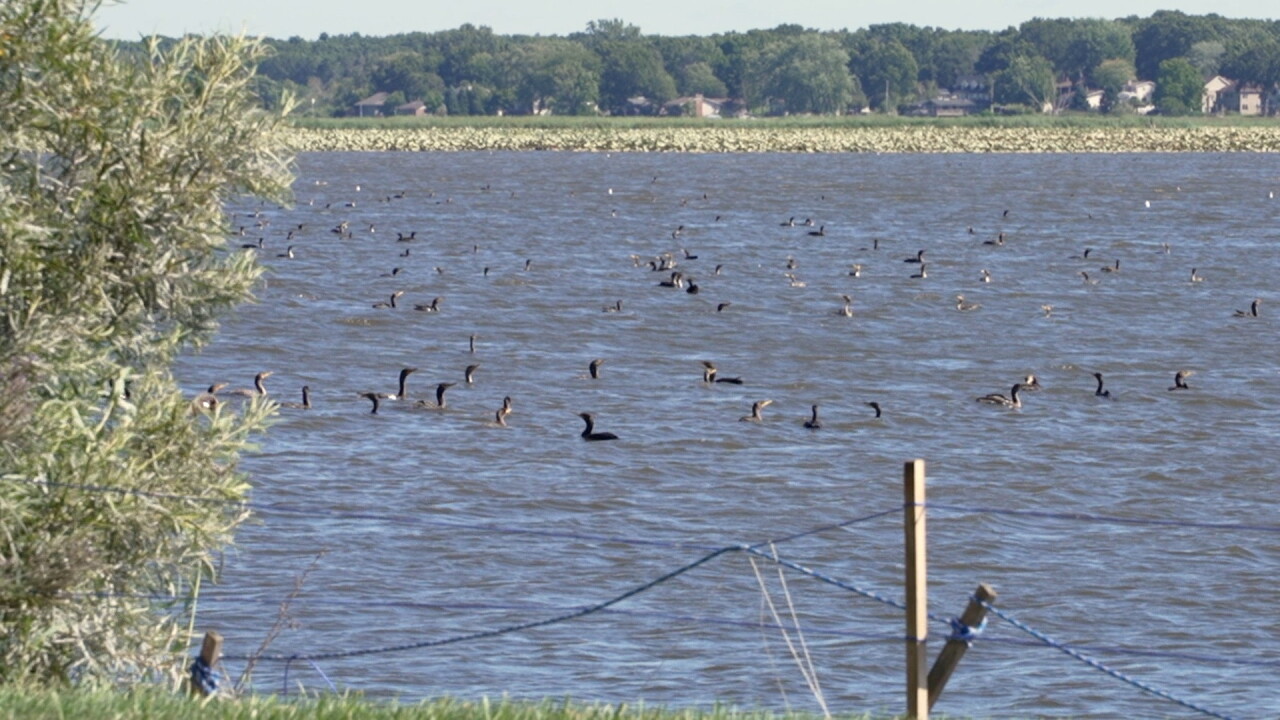
SPRING LAKE, Mich. — A growing double-crested cormorant colony has turned Village Cove Marina in Spring Lake into a complex challenge for frustrated property owners, local officials and state wildlife managers — all working within the boundaries of federal wildlife law.
WATCH: Federally protected cormorants foul Spring Lake marina, leaving neighbors with damage and few options
Jim Burke, Mike Bofysil and dozens of neighbors say the birds have coated the marina's parking lot in toxic waste, damaged vehicles and boats, and created a stench that makes the waterfront nearly unusable.
"They dive-bomb into cars and white stuff all over the place. Our parking lot is covered in white stuff," Burke said.
For Bofysil, the damage goes beyond the surface.
"The biggest concern we have with the birds is it's creating a financial burden on us," Bofysil said. "Their waste is very toxic. It will destroy that asphalt pavement. It will eat through fiberglass gelcoat if not attended to, and also etches through car paint."

The health implications concern neighbors as well, especially with families regularly visiting the marina.
"We are also concerned about health hazard. There's most days out here the stench is unbearable, and there are young children out here," Bofysil said.
The colony was not always this close. Neighbors say the birds previously nested on Dornbos Island, across the marina, before moving to trees directly adjacent to the property.
"If you look at the Dornbos Island out here ... they had just decimated it, and that's what they're starting to do [at the marina]," Burke said.

Neighbors say they have offered to take matters into their own hands, but the nesting trees sit on Spring Lake Village property — complicating who is responsible.
"We have offered since then to not have them cut them down, but we'll cut them down," Burke said. "Ideally, if they took care of it, because it's their property, they're causing the issue."
Bofysil said the village has not been responsive.
"We're very frustrated that we are not getting any cooperation from the village whatsoever," Bofysil said.

The village's ability to act unilaterally is limited. Double-crested cormorants are federally protected under the Migratory Bird Species Treaty Act, meaning any management effort requires coordination with state and federal agencies.
The Michigan Department of Natural Resources had already been monitoring the colony — not because of the marina, but because of the birds' impact on fish stocking in the Grand River.
Doug Schultz, Lake Huron Basin Coordinator for the DNR Fisheries Department, said the concerns from the community have not gone unnoticed.
"The call volume has picked up in the last six weeks associated with this colony," said Schultz.

The DNR's interest in the colony is tied to the birds' impact on a key fishery.
"The Grand Haven River is one of our stocking sites for salmon on the Lake Michigan side, so salmon and trout. And cormorants can take a pretty heavy toll on newly stocked fish," Schultz said. "Cormorants can consume up to roughly 1.3 pounds per day per adult of fish. They're pretty expensive fingerlings to rear, obviously that can be a real management concern."
The DNR has already started exploring management options, a process that begins with a visit from the U.S. Department of Agriculture's Animal and Plant Health Inspection Service to the impacted site.
"As far as the Spring Lake side is concerned, firearms discharge proximity to occupied buildings was too close. Firearms use there is not a viable solution per their recommendation. So that leaves us with tree removal as the likely next best alternative," Schultz said.
Removing the trees would force the birds to relocate or nest on the ground, which would then allow for additional management tools — but only with the landowner's consent.
"That opens the door then with landowner permission for us to at least keep up with egg oiling, nest oiling, which can help dampen nest production, and in turn over time manage at least the number of birds," Schultz said.
Schultz emphasized that the goal is management, not eradication.

"It's worth pointing out that cormorants are a native species. You know, historically have been here and been very abundant, and obviously we're not trying to manage these colonies down to zero," Schultz said.
Schultz said the cormorants' guano, or waste, is acidic enough to have a lasting impact on the surrounding environment.
"When cormorants inhabit live trees and begin nesting in live trees, their guano under their nests, under the colony, acidifies the soil and eventually kills the trees," Schultz said. "From a landscape perspective and a colonial waterbird perspective, they are beneficial in that they open up nesting habitat for other waterbirds such as terns and gulls."
The DNR says it is ready to help, however, Schultz said little can be done within this calendar year regardless.
"By the time we would be able to do something, most of those birds are going to be pretty well gone for the season anyway. So if there's any solutions that will emerge, hopefully it's in time for the next field season, beginning next April," Schultz said. "I know the local manager Brian Gunnerman has been contacted at least by some stakeholders, I have as well. I haven't had direct communication with the property owner yet. So, waiting to see what happens."
Village President Mark Powers said the DNR recently requested a meeting with the village and that they intend to participate. Village Manager Brady Selner said that meeting has been tentatively scheduled for either Sept. 13, 23 or 25.

For neighbors, the wait has already gone on too long.
"We're asking for assistance. We're not trying to cause problems. We're trying to protect our property that we pay taxes for," Bofysil said.
This story was reported on-air by a journalist and has been converted to this platform with the assistance of AI. Our editorial team verifies all reporting on all platforms for fairness and accuracy.
