

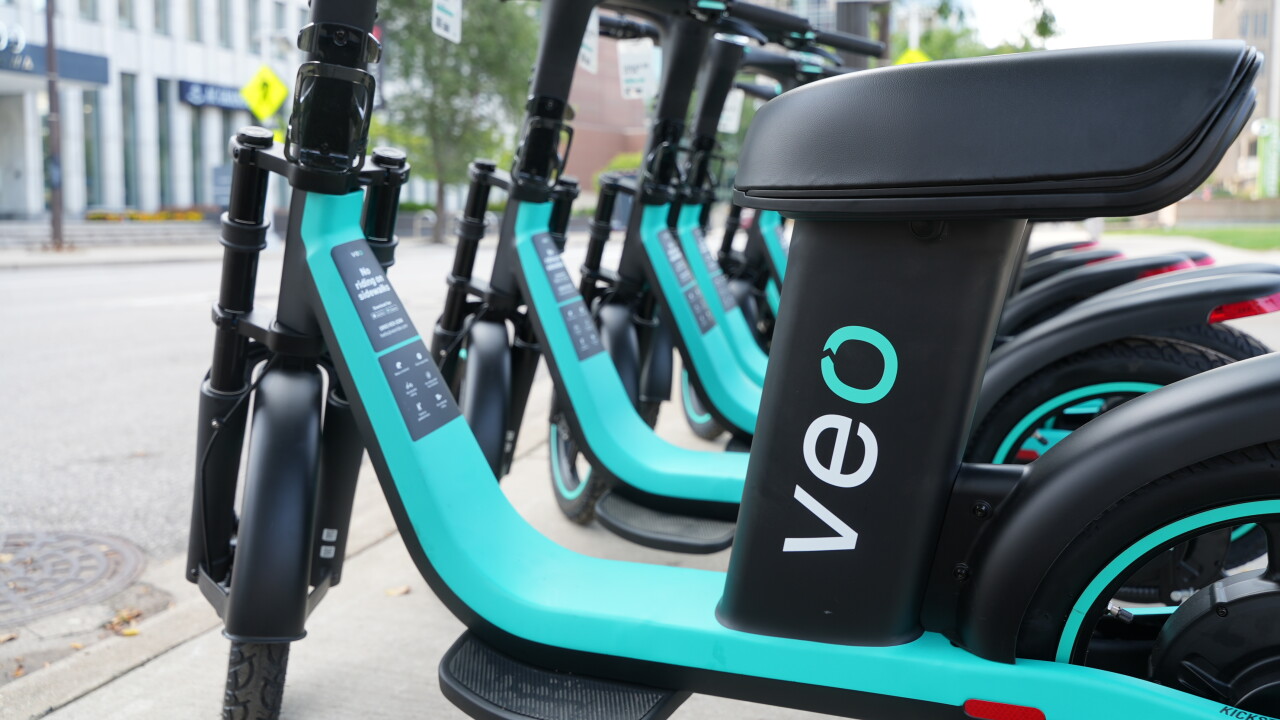


GRAND RAPIDS, Mich. — Grand Rapids is transitioning from Lime to Veo as its micromobility provider, with the city citing cost savings for riders and improved safety as the primary reasons for the switch.
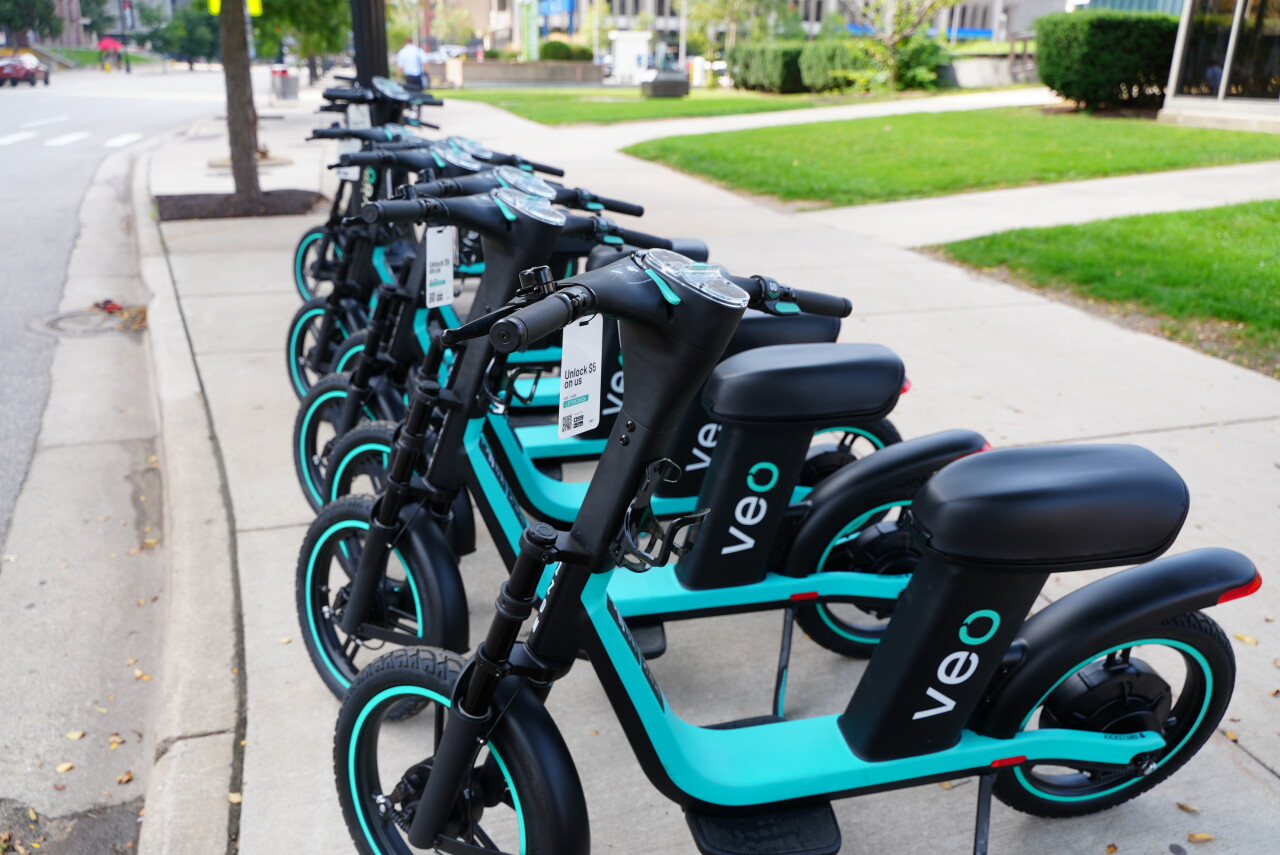
Riders will need to download the Veo app to access the new fleet, which currently includes e-scooters and e-bikes, with tricycles coming soon.
Veo Director of Government Partnerships Jeff Hoover said the company is focused on making shared micromobility work for everyone.
"We recognize that shared micromobility works best when it's affordable, when it's accessible, and when it's carefully managed. And that's exactly sort of the guiding tenets that we're bringing to this program here," Hoover said.
WATCH: Veo on full charge as Lime's battery runs low in Grand Rapids
Hoover said the seated vehicles, like the e-bike and tricycle, are expected to expand how people use the system.
"The average trip distance on the seated vehicles is more than double the average trip on the standing vehicles. And so it really does unlock kind of a whole new set of use cases for the shared system," Hoover said.
Pricing breakdown
The city points to lower per-minute rates and a more accessible low-income option as key advantages of the new program.
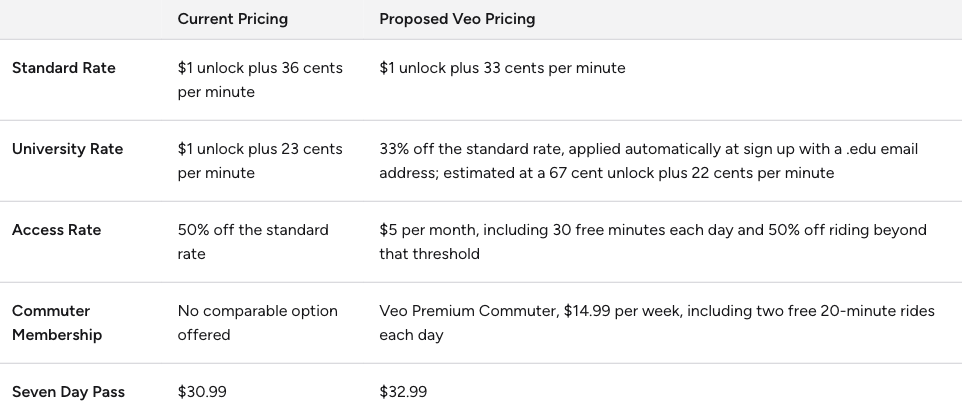
Mobile GR Strategic Initiatives Manager Max Gilles highlighted the impact of the new Access Rate for low-income riders.
"If you qualify for this program, for $5 a month, you get 30 minutes for free per day. So under the old program, even if you qualified for the Access Program, that would cost you roughly $40 a week," Gilles said.
Safety measures
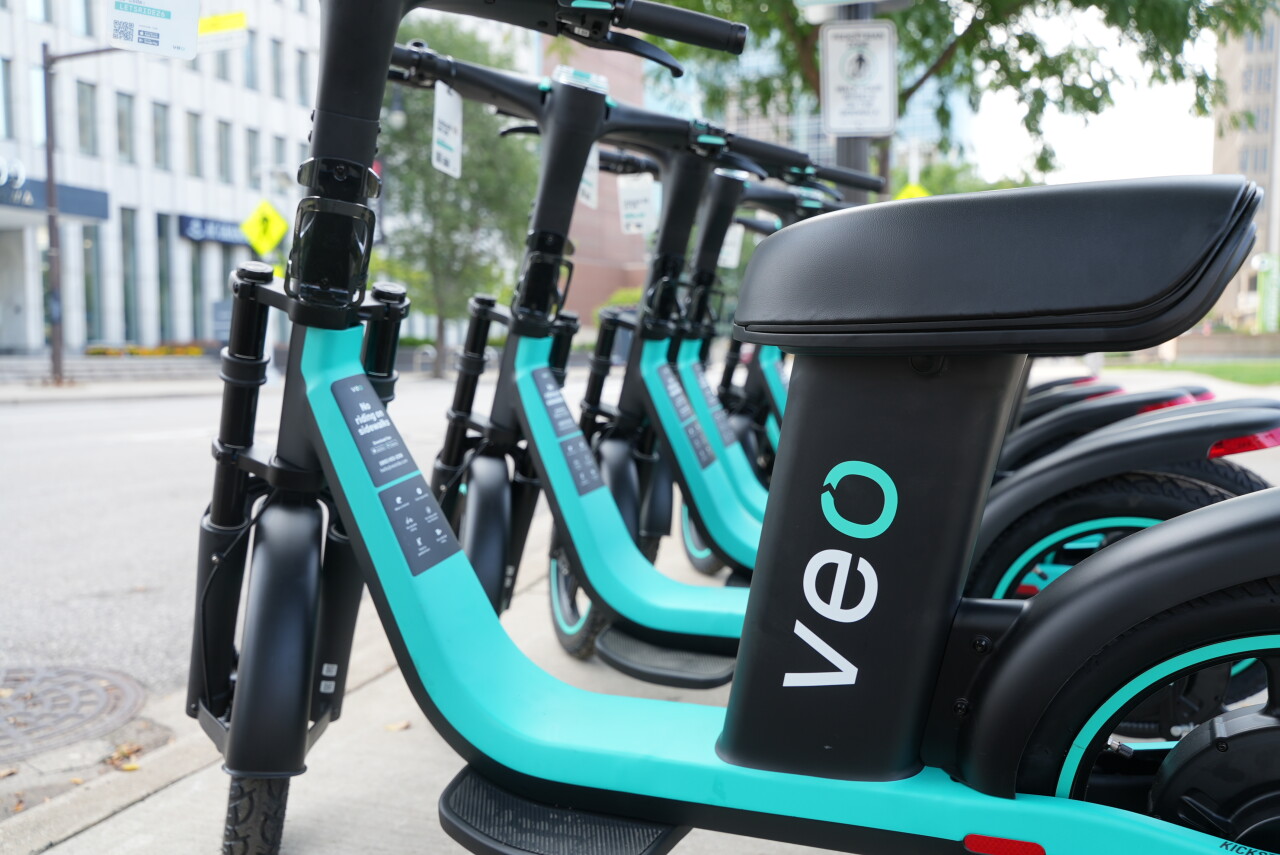
Veo and the city are partnering to provide helmets to riders. Veo is also working on software to limit riders' speed on sidewalks, though Hoover acknowledged there are limits to what technology can solve.
"There's no silver bullet that really can eliminate it in its entirety," Hoover said.
Keeping vehicles out of the river
Concerns about scooters ending up in the river — an issue that arose with Lime — came up during a media preview at Calder Plaza. Hoover said city regulations and Veo's own operational practices are designed to address the problem.
"So the city's own regulations are a big tool for us here. You can only park our vehicles in certain locations," Hoover said. "We're also realists and recognize that, unfortunately, at times it does happen. We're very much prepared and operate in many cities with significant bodies of water, whether it be rivers, bays, oceans, you name it. If one does go in, Ryan and his team will be very well prepared to take the lead in getting that out and not rely on the city to do so."
This story was initially reported by a journalist and has been converted to this platform with the assistance of AI. Our editorial team verifies all reporting on all platforms for fairness and accuracy.

