

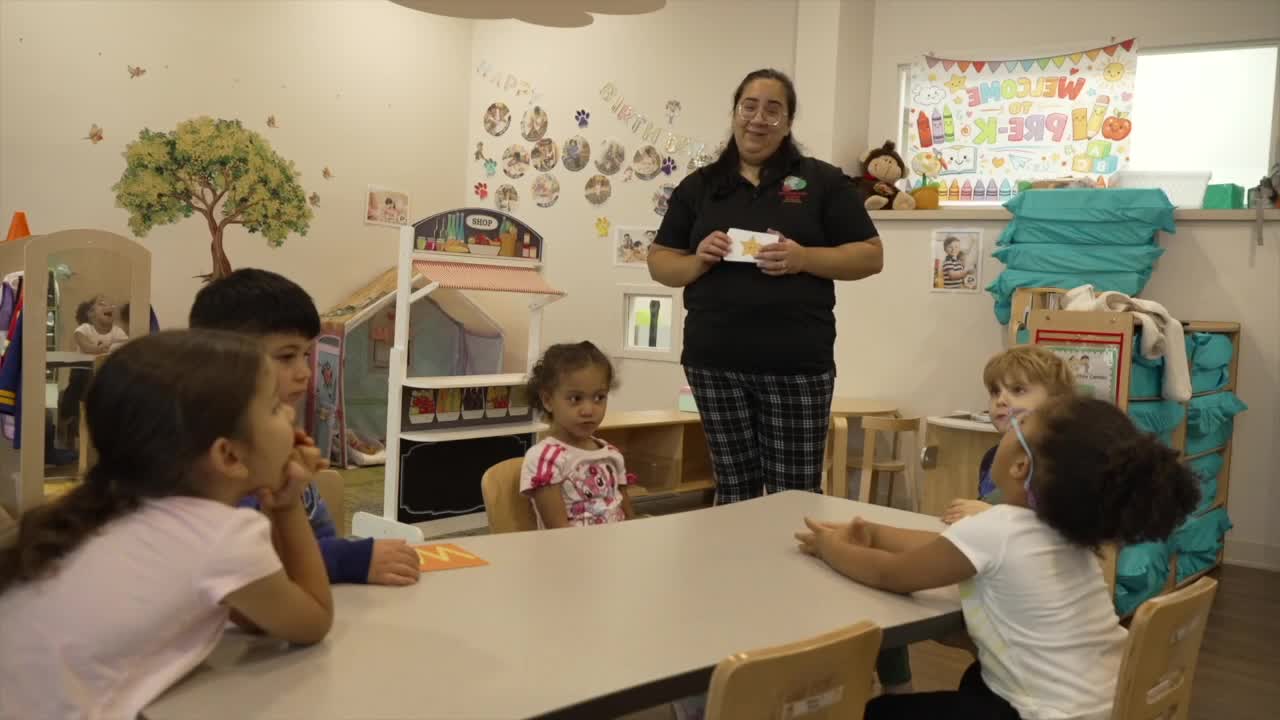


GRAND RAPIDS, Mich. — At Tata’s Daycare, children encounter English and Spanish through books, play and conversations with their teachers. For owner Clarivel Martinez, those lessons are also a way to carry on her mother’s legacy.
Martinez, who is from the Dominican Republic, said her mother’s career in education inspired her to open the daycare.
“My mom was a teacher for more than 30 years in my country. She changed the life of a lot of people, and I would like to be like her and to keep her legacy alive,” Martinez said.
The daycare’s name has a family connection, too. Martinez’s daughter called her grandmother “Tata” as a baby, and the nickname stuck.
Martinez started with a home-based daycare about four years ago before moving into a center about six months ago. Her approach brings both languages into activities children already enjoy.
“Our philosophy is to learn through play, we play a lot with the kids,” Martinez said.
Teachers divide their time between speaking English and Spanish, she said. The curriculum is in English, with Spanish-language materials incorporated to support learning.
Alongside language learning, Martinez introduces children to parts of her culture through food, flags and other activities.
For parent Kayra Bencosme, the program gives her children, Miguel and Fatima, opportunities to build their English while continuing to use the Spanish they first learned at home.
Bencosme, who is also from the Dominican Republic, said maintaining Spanish is important to her family. She wants her children to stay connected to their culture while being able to communicate with more people.
“Spanish is really important to my family because we all speak Spanish,” Bencosme said.
She said knowing both languages could open more doors for her children in the future. It is also making a difference in how comfortable her son feels at his first daycare.
“He feels like in family because the teacher speaks both of the languages,” Bencosme said.
For teacher Fatima Diaz, who is from Mexico, the classroom offers a chance to share her own background with the children.
“It's really beautiful to be able to teach the kids my first language, and where I live my whole life,” she said.
She said teachers begin with small, familiar words and phrases, including colors and greetings, to help children start using Spanish.
Parents are noticing the lessons carry over into everyday life, Martinez said. Children are using Spanish at home to ask for food and water or sing songs they learned at daycare.
For parents who do not speak Spanish, those moments offer a glimpse of their children’s progress. Some have asked teachers to explain the new words and phrases they are hearing, Martinez said.
For Martinez, building those relationships with children and their families continues the example her mother set.
“We are here trying to serve in my community like she used to do, and to keep her name alive,” Martinez said.
This story was initially reported by a journalist and has been converted to this platform with the assistance of AI. Our editorial team verifies all reporting on all platforms for fairness and accuracy.

